

Just as with other industries, the pandemic has dramatically shifted consumer behavior in the global insurance market. In-office claim processes are now viewed as cumbersome, a shift to “phygital” is already in progress, and personalization is at the forefront of customer preferences.
The auto insurance sector is no different. It’s a sector where personalized offers are in high demand. Since 29% of consumers who can drive expect to drive less in the long term, they want their rates and plans to be catered to such habits.
So how can auto insurance providers stay competitive amidst these new customer demands? Embracing digital transformation and innovative technologies is the only way to do it. But it’s not just us saying that.
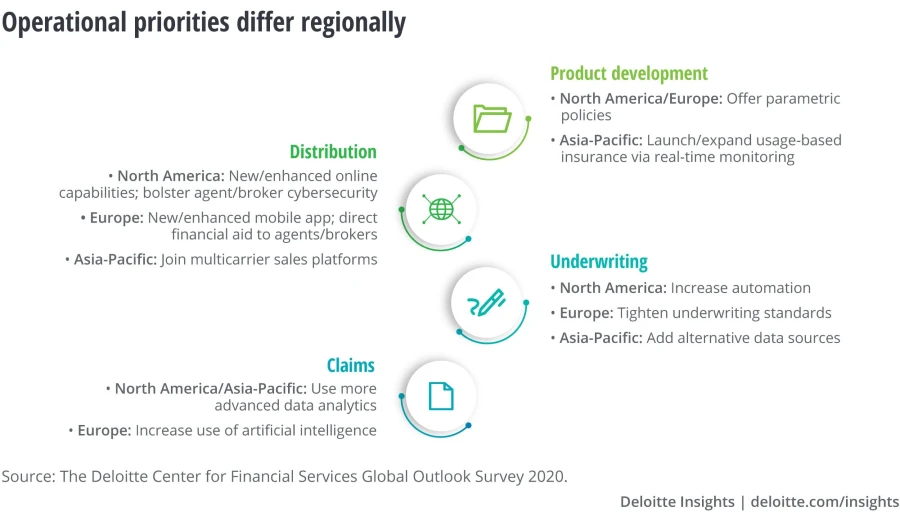
As you can see from Deloitte’s research, operational priorities differ for insurers across regions, but one thing remains clear — the majority are looking at ways to optimize their business with technology.
95% of those surveyed are already accelerating their digital transformation efforts. Hence, postponing the development of insurance software is no longer an option if you want to stay in the game and avoid losing customers to competitors.
To help you navigate your digitalization initiatives, we will discuss the most in-demand software solutions in the auto insurance industry. You will also discover the benefits of developing such tools and find out how to get started with what may seem like an overwhelming process.
What is Auto Insurance Software?
Auto insurance software may sound like a complicated term but in reality, it’s just a digital solution created specifically for car insurance companies, agencies, or affiliates. The goal of this solution is to help with different business areas, be it sales and marketing, internal operations, or customer service.
At its core, auto insurance digital tools aim to optimize an insurer’s performance to positively affect the bottom line and keep customers happy.
Who Needs Auto Insurance Solutions?

Any company working in the auto insurance space that values customer retention, efficient workflow, and seeks to improve profitability would benefit from process automation and implementation of innovative software solutions.
Typically, car insurance carriers, agencies and brokers, affiliate partners, and even end-users will benefit from automation and software tools improvements, no matter where these changes are originally applied. For example, a CRM update at an insurance brokerage will affect all stakeholders thanks to an improved customer interaction process.
However, increased contentment for all involved parties isn’t the only thing that should keep you interested. There’s also profit to be made from investing in digital transformation.
The global auto insurance market is projected to reach $1.06 trillion by 2027. The bigger chunk of that pie will go to those who deliver the best customer service, competitive quotes, and quick claim management.
Top 7 Auto Insurance Software Initiatives
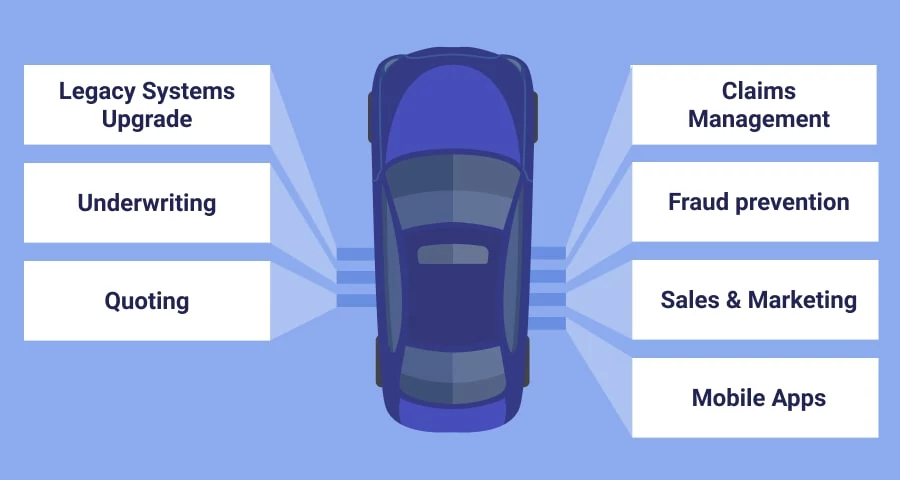
Now that you’ve got an idea about car insurance digital trends and the potential modern technologies can bring, let’s talk about some common use cases of auto insurance software.
1. Legacy Systems Upgrade
Often, car insurance companies who have already started their digital transformation efforts realize that the previous solution has become out-of-date or requires too much manual handling. That’s when they turn to upgrading legacy systems.
It may be in the form of infrastructure migration to the cloud which helps automate manual tasks and become more self-sufficient. Or, if the company has its legacy system operating solely on outdated Windows machines, then extending the usability to a mobile app could be an excellent option.
What usually attracts auto insurance companies to update software is the opportunity to become more self-reliant and implement advanced analytics and automation tools. Since cost-effectiveness is a priority for any business, this software initiative is one of the most in-demand.
Learn how to diagnose and update a legacy system
2. Underwriting Automation
Auto insurance underwriting can be a time-consuming process. Even though many auto insurers already turn to software programs to handle this task, there’s always room for further improvement.
Besides automating data gathering and processing, auto insurance providers who choose to invest in underwriting solutions can see dramatic improvements in productivity and hence customer service. How? Thanks to AI, machine learning, Big Data, and other emerging tech that work to enhance an underwriter’s skills.
With custom software development, you can receive a solution specifically catered to your company’s needs. Such solutions will reduce your turnaround time and free up underwriters to focus on more strategic work which will ultimately reflect on your bottom line.

Gaining Control of Customer Engagements
3. Auto Insurance Quoting Software
One of the greatest advantages of auto insurance quoting software is that it provides a self-service opportunity to your potential clients. Instead of contacting employees face-to-face or via phone, customers can fill out the needed information and quickly get their quote estimates.
Coming up with the most fitting quotes isn’t always a smooth and quick procedure for insurers or clients. So, why damage your customer experience by forcing them to take extra steps to get their quote estimates? Especially when you can develop a solution that will not only deliver accurate pricing but also minimize friction along the customer journey.
The truth is, if you don’t provide customers with this opportunity they might just go over to someone who does and eliminate you from consideration completely.
4. Claims Management Optimization
Dealing with claims is rarely a pleasant process for either side and, as an auto insurance provider, one of your differentiating points can be a smooth claims settlement process.
Claims management software helps auto insurers address claims requests and settle disputes with customers. Need help automating workflows? Reducing fraudulent claims? Providing a transparent and quick settlement process? Then it’s time to consider investing in claims management automation.
This type of software development should be prioritized by insurers who want to increase customer retention. Word travels fast in the modern world and unsatisfied clients will be quick to talk about their experiences. You want to avoid that. Since getting compensation is precisely what your customers need you for — the smoother you make your process the longer they will stay.
5. Fraud Prevention Software
We briefly touched on fraud prevention in the previous point but it should also be emphasized separately.

Studies show that the majority of insurance industry professionals believe 10% of all claims contain an element of fraud. Now, go ahead and calculate what that would amount to for your business. We bet it’s a frustrating number.
“It’s the cost of being in this business”, you may say. Well, it doesn’t have to be. If you want to reduce this percentage for your auto insurance company you need to be able to separate low-risk claims from high-risk ones and direct your manpower to deal with the latter.
In the auto insurance business, there are countless ways for criminals to try and deceive your organization. Staged car accidents, false theft reports, exaggerated repair costs can all amount to a substantial sum for the insurer.
Preventing these events can be done with AI, machine learning, text mining, and other intelligent analytics solutions. They all work together to provide insurers with accurate risk insights.
Information is power and fraud prevention software can help your company take that power back into your hands while keeping honest customers happy.
6. Sales and Marketing Automation
Scaling your auto insurance business without investing in sales and marketing is close to impossible. You need potential clients to find out about your services, lock in those who have already shown interest, and keep existing customers happy and loyal. This can only be done by having a 360° overview of your customer journey.
“How you gather, manage, and use information will determine whether you win or lose.”
— Bill Gates
Effectively managing your customer journey requires aggregating and analyzing large amounts of information. This information is often dispersed across a variety of different platforms. However, with custom-tailored CRM software all customer data will be consolidated in one place and you won’t have to waste valuable time on switching between the tools and endless searches.
Manage all your sales and marketing from one place. Ensure that both departments are in perfect sync. Automate repetitive and time-consuming processes. Your team and your car insurance clients will thank you for it.
Discover how an insurance company leveraged sales and marketing automation for business growth.
7. Mobile Apps
It is projected that by 2024 there will be 7.41 billion mobile users worldwide. That’s practically our entire population. People are spending more and more time on their mobile devices and they want to get their services from the palms of their hands. In short, if you’re not on mobile, you are missing out.

Source: Statista
So, how can motor insurance providers leverage mobile? By developing a coherent mobile strategy and crafting a mobile experience that prioritizes customer service.
Think you can add value to your clients with a mobile customer portal? Or allow them to manage claims from their phone? Perhaps you want to add an online consultation feature? It’s all possible if you develop your very own mobile app.
Benefits of Auto Insurance Software Solutions
As you can see, there are quite a few digital tools for auto insurance. Listing all of them simply wouldn’t fit here as custom development can come up with totally unique solutions that nobody else has. However, the benefits of all these uses are universal, so let’s do a recap.
- Increased efficiency
- Reduced operational costs due to automation
- Improved customer experience
- Decreased fraudulent activity
- Higher customer lifetime value
These are all benefits you can observe shortly after investing in auto insurance software solutions. Think you’re ready to give it a go?
How to Get Started With Auto Insurance Software Development
You face many challenges if you’re just starting your digital transformation journey. There are a lot of decisions to be made.
- Develop in-house or outsource?
- Which software projects to prioritize?
- What partner to pick if help is needed?
- How to keep customer data secure?
These and many more questions are often asked by insurance professionals who choose to take software development seriously.
What works for some may not work for others. That’s what you’ve got to keep in mind when making your decision. Start by identifying your goals, budgets, and priorities. Try not to look at competitors too much but still keep an eye out to make sure you don’t fall behind. Then, compare different options, talk to a couple of potential partners, and settle on a plan of action.