Investment applications have become a powerful tool in recent years, altering the way individuals manage their finances. The reason these apps are so enticing is that they allow people to control their financial assets anytime and anywhere.
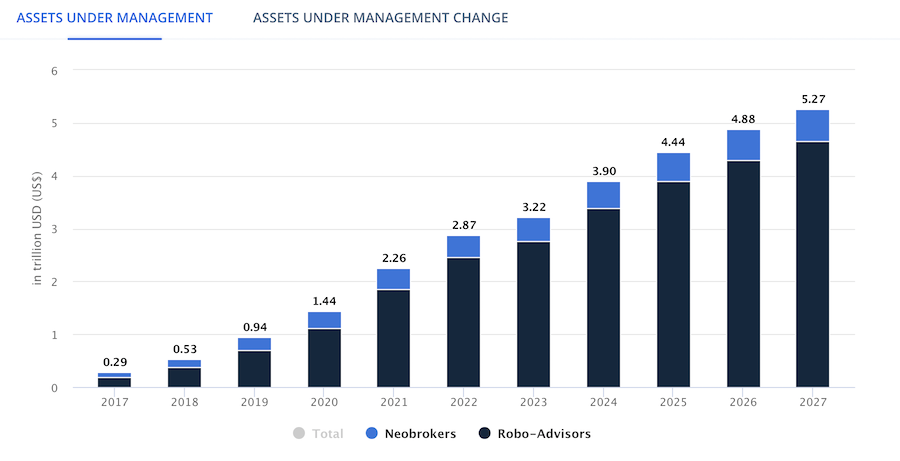
The digital investment market is experiencing rapid growth with a projected global value of US$5.27 trillion by 2027, according to Statista. With this forecast in mind, it is clear that this market is going to remain highly competitive and yet very lucrative. Hence, if you aim to gain an edge in this market, you definitely shouldn’t overlook the development of an investment application.
In today’s post, we’ll explore the essential steps you should take to create an investment app, ensuring you leverage its full potential. To make your solution financially viable, we’ll delve into various app types and features, providing you with a better understanding of what to consider when building an investment platform. Let’s get started!
Key Highlights
- With AI algorithms at the forefront, robo-advisor apps can significantly elevate personalized recommendations.
- Do-it-yourself apps are perfectly suited for advanced traders who do not need analytics and advice on investment strategies.
- By integrating social feeds into your investment app, you can notably foster a sense of community and enhance the overall investment experience.
- Starting with MVP is the best way to ensure the success of your full-scale investment app in the future.
The Essence of Investment Apps
Speaking frankly, accessing your financial portfolio from anywhere and even on the go via your mobile device is really attractive. And that’s exactly what investment applications are made for.
Basically, an investment app is a mobile service that enables users to invest in and manage their funds across diverse financial markets. It can be stocks, bonds, mutual funds, as well as cryptocurrencies.
In particular, online investing apps provide individuals with a variety of tools to monitor portfolios in real-time, make informed decisions about transactions, access research and educational resources, and much more.

Choosing a Winning App Development Strategy
Types of Investment Applications
To develop an exceptional investment app, you need to know what types are available on the market today. Let’s skim through the most popular ones.
1. Banking

Some banking applications offer integration with third-party tools. They include lending software, investment platforms, and personal finance management applications. However, such banking apps can scarcely attract avid traders that often look for more specific solutions.
Read on how to Develop an Exceptional Mobile Banking App
2. Robo-Advisors

These apps also incorporate market trend forecasts to discover potential buying opportunities. It particularly makes robo-advisor apps an excellent choice for beginners who may benefit from the guidance and support provided by advanced algorithms.
Check how AI Shapes the Finance Industry
3. Do It Yourself

Find out more about the Development of a Platform for Self-Directed Investors
4. Hybrid

As a result, they become quite appealing both for new and seasoned traders. For beginners, they offer a user-friendly interface and educational resources that help them understand the basics of investing.
As for professional investors, hybrid apps offer advanced tools and features to conduct in-depth research, analysis, and customization according to specific investment strategies.
5. Exchange Platforms

Yes, building an investment app is legal. Yet tap into development carefully, keeping all the required regulations and international laws in mind. Specifically, your app should meet regulations like GDPR, CCPA, FINRA, Anti-Money Laundering, and Know-Your-Customer.
Depending on your app type, you may also need to adhere to additional regulations. For example, if your app provides investment advice, complying with Investment Advisor Regulations will be a must.
Last but not least, you should consider consumer protection laws to keep customers’ data safe.
Important Features of Investment Apps
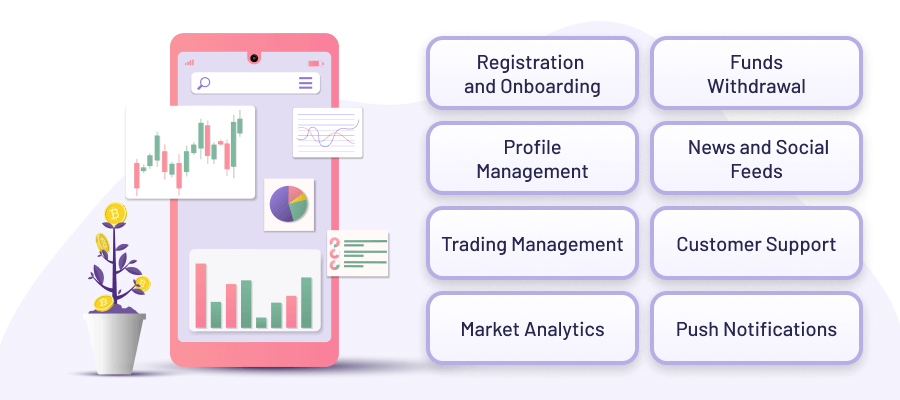
We have discussed the main types of investment applications, so now we can move on to their features. In this section, we will explore essential elements that every high-quality product should possess.
Registration and Onboarding
The first thing you want your app users to do is to sign up. For example, you can offer registration via email address, phone number, social media, or simply via a username. The more options you’ll provide them with, the easier and faster they will start with your app.
To avoid login and security issues, it will be good to use biometric authentication like face ID, fingerprint, etc. In addition, it is worth adding two-factor authentication for enhanced security and better user data protection.
Onboarding is another important thing to keep in mind in the registration stage. By providing a comprehensive guide about your product and its overall features, you enable users to understand the benefits it offers. Furthermore, onboarding assists them in navigating through the application more effectively and leads to a better user experience.
Learn how we built Onboarding Software for a HealthTech Company
Personal Profile
As you can guess, the personal profile is an essential component that helps users manage their personal data. Here, they can fill out details like name, age, trading experience, financial goals, etc.
These insights help the app understand the user’s investment preferences and provide relevant options and recommendations aligned with the user’s objectives.
Trading Management
Obviously, the trading management feature is the most essential for your app. Without it users won’t be able to make any deals at all. So make sure to implement efficient tools to allow investors to buy and sell orders, monitor stocks, and generally manage their finances. This functionality should also enable tracking transaction history and reviewing account balances.
To enhance trading management within your investment app, it is worth integrating it with payment services for seamless online transactions. When done effectively, it has the potential to increase user retention for your products.
Read the case study about the Implementation of the Intelligent Trading Platform
Market Analytics
Market analytics is another essential feature that is valuable for investors. It provides users with insightful data and tools to make informed financial decisions. In particular, clients can gain access to real-time market data and charts. They can assess performance indicators and track stocks, analyze trends, outline potential risks, etc.
On top of that, market analytics offers insights on portfolio and personal recommendations based on market trends and customer goals.
Funds Withdrawal
This feature allows users to withdraw their invested funds from the app when they need to access their money. It provides users with flexibility and control over their investments.
Withdrawing funds ensures that traders can easily convert their investments into cash when needed. With it, they can adjust their investment portfolio, reallocate funds, or withdraw profits without any unnecessary delays or restrictions.
News and Social Feeds
These two can noticeably ramp up users’ engagement with your app. By integrating market news within your app, you offer up-to-date information and insights about the financial markets. The social feed, in its turn, encompasses comments and allows traders to discuss common challenges.
In short, these features can foster a sense of community and enhance the overall investment experience.
Customer Support
“Customers don’t expect you to be perfect. They DO expect you to fix things when they go wrong.”
— Donald Porter, former Vice President of British Airways
Stitch in time saves nine. That’s why you need to think in advance of customer support that can definitely improve user comfort and satisfaction with your application. For example, you can consider implementing live chats, a callback option, or direct contact with the support team. It will help investors easily take the right actions in case of any questions or issues.
Push Notifications
The last feature in our list is push notifications. This handy tool plays a crucial role in keeping users well-informed about various trading aspects, such as market news, emerging trends, and prices.
Notifications can also provide insightful data on the investment portfolios, helping maximize profits. Or alert traders about stop-loss and take-profit orders. Additionally, you can use push notifications to announce essential app updates and new feature releases.
Proven Steps to Build an Outstanding Investment App
Having discussed the main types and important features of investment applications, we can move on to their building process. Here are the key steps to consider if you want to create a doozy app.
1. Set Goals and Conduct Market Research

Overall, these insights will help you better understand customer pain points and needs, thus making it possible to differentiate your product and gain a competitive edge.
2. Choose a Monetization Strategy

Alternatively, you can opt to keep your application free by integrating in-app ads. Though it sounds quite appealing, this method should be implemented carefully, as in-app advertisements may be overwhelming and drive users away from your solution.
3. Select the Platform

Before making a final decision on what platform to go for, consider your target audience, budget, and required functionalities for your app.
4. Make a List of Features

MVPs are perfect if you’re on a low budget or uncertain about what functionality to begin with. Once your product shows potential, you can go on, add features, and develop a full-fledged investment app.
5. Elaborate UI/UX Design

UI/UX design is also important for keeping your app responsive across different screen sizes and orientations, thus making it possible for users to leverage it on various devices.
Watch our webinar to discover How to Design a User-Driven Product
6. Consider Integration

For example, you can ensure the connection of your app with financial data providers through their APIs. It will allow the application to access real-time market data, stock prices, financial news, and other relevant information. As a result, users can stay up to date with market trends and make informed investment decisions.
Moreover, API integration not only enables investors to execute trades directly within the app but also helps prevent unauthorized access and safeguard sensitive financial information.
7. Follow Regulatory Compliance

Next, following relevant regulations and guidelines, such as Financial Industry Regulatory Authority (FINRA) Rules or Anti-Money Laundering (AML) regulations, will help you ensure the app operates within the legal framework.
FINRA sets rules and standards for brokerage firms and investment professionals. As for AML regulations, they require verifying the identity of customers and implementing measures to prevent money laundering and terrorist financing.
These are just a few examples. Of course, there are more regulations to adhere to when developing investment software. So it is worth being aware of them and following the relevant ones for your product.
8. Keep Your App Secure

In addition to following best coding practices, implementing end-to-end encryption, and conducting regular security audits, there are some fundamental steps to consider:
- Two-factor authentication. By implementing two-factor authentication, you can add an extra layer of security to your app. In this case, users will be required to provide additional verification beyond their passwords.
- Secure networks. To reduce the risk of unauthorized access and data interception, encourage your users to avoid connecting to public Wi-Fi networks when accessing investment apps.
- Privacy policies. Provide a comprehensive privacy policy on how your app will collect, use, and share personal data within the app and its associated entities.
- Account protection. Asking users to create strong and unique passwords will help prevent unauthorized access and enhance overall account security.
Investment apps process plenty of critical private information, so they should be designed with security best practices in mind. In this regard, employing the following security protocols and frameworks may be very useful:
- Encryption Protocols
- Multi-Factor Authentication
- OAuth 2.0
- Regular Penetration Testing
- Zero Trust Architecture
Examples of Powerful Investment Apps to Get Inspired
Before wrapping up, we suggest going through some most popular investment apps available in the market today. It’s always good to know successful examples to get inspired.
Robinhood

Binance

To enhance the user experience, Binance has developed its native cryptocurrency called Binance Coin. It can be used for discounted trading fees, participating in token sales, and various other purposes within the Binance ecosystem.
Discover how we help build the First Crypto-Mining Browser
Betterment

One of the key advantages of Betterment is its user-friendly interface. The platform provides a streamlined and straightforward experience that allows customers to easily set up and manage their investment accounts.
Technical failures may cause serious consequences, from data breaches to financial losses and compliance issues. As such, you will have to pay penalties for violations. Mitigating the consequences of tech issues can also cost you a fortune. Eventually, you may lose users’ trust.
The best way not to get there is through thorough testing of your app before launch and continuous monitoring of its performance afterward. Additionally, you need to conduct regular security audits and updates. It’s also wise to have backup and incident response plans to minimize downtime.
Start Your Investment App Journey Today
The temptation to embark on the journey of investment app development can be too high to ignore. However, building an outstanding investment solution is a challenging endeavor.
We have explored the key features to include in your solution and the steps that will guide you on your path to success. If you want to start investment app development and need help with it, we can assist you with getting a piece of the pie in this highly competitive market.
Our team of professionals will help you find the right approach for your specific needs and deliver a secure and efficient application. Don’t hesitate to reach out to us.
About the author