Nowadays financial institutions grapple with an ever-increasing volume of data. Aiming to extract valuable insights from digital information, companies often turn to advanced data analytics tools. And predictive analytics is one of the most powerful among them.
This type of analysis offers the ability to forecast future outcomes, understand market trends, as well as identify anomalies that may go unnoticed by traditional methods.
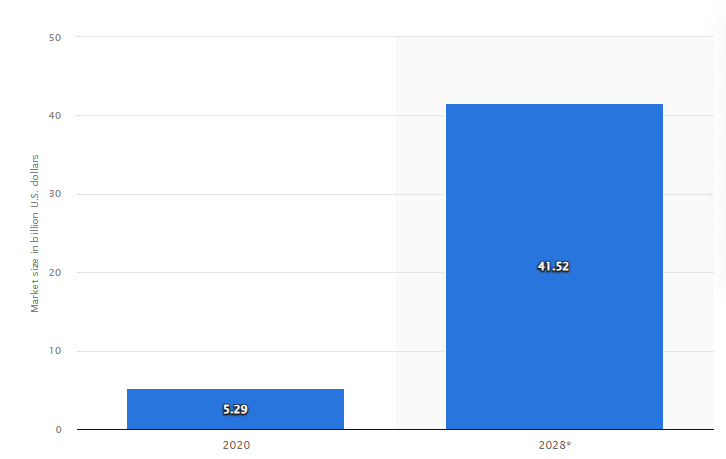
According to Statista, the predictive analytics software market will reach USD 41.52 billion by 2028. So, it is obvious that the importance of this approach will increase in the upcoming years, and the financial sector can capitalize on it greatly.
If you are interested in the adoption of advanced data analytics practices to your business and reaping its full benefits, then this blog post will get you covered. Keep reading to explore how predictive analytics in pair with fintech tools can help your business to stay ahead of the curve.
- What is predictive analytics in finance
- Fundamental models of predictive analytics
- The key advantages it provides
- Core challenges to know about
- How fintech companies use predictive analytics
- Best practices to implement it
- Current trends to follow
Without further ado, let’s dive in.
Exploring the Essence of Predictive Analytics in Finance
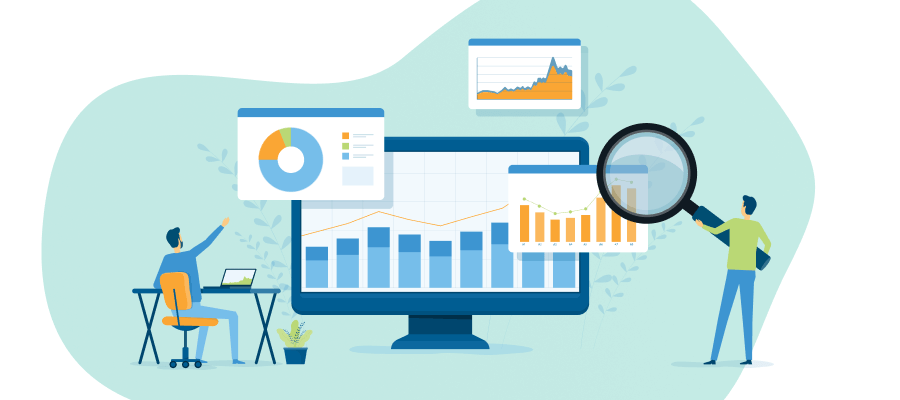
Before delving into the realm of predictive analytics in financial services, let’s first explain what it is. Basically, it is a powerful technique that processes large amounts of information, helping make predictions about future actions.
This approach goes beyond historical analysis and forecasting. It utilizes advanced tools to identify hidden patterns, connections, and dependencies within vast amounts of data. Thus helping fintech organizations improve underwriting and pricing processes, predict loan defaults, and make well-informed decisions in general.
Typically, this type of data analytics uses machine learning and artificial intelligence algorithms, statistical models, data visualization, etc. Overall, by embracing these technologies, financial institutions can optimize their operations and drive sustainable growth in an increasingly complex and dynamic industry.
Discover top Types of Data Analysis that Help Decision-Makers
Key Predictive Analytics Models in Finance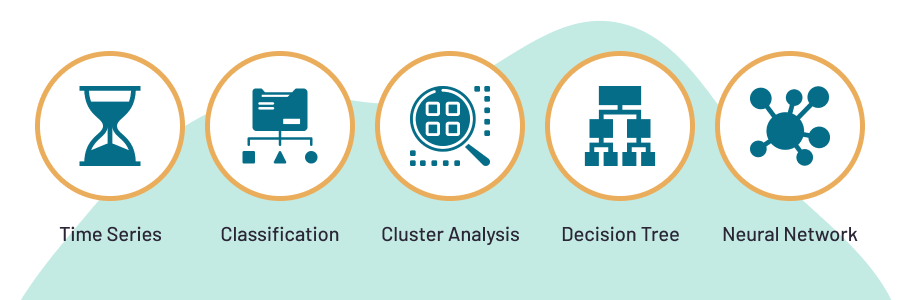
When it comes to predictive analytics models, you can find a variety of options to explore. However, it’s crucial to narrow down our focus to those that are extensively used and proven effective in the field of finance. So, here are the most common fives.
#1. Time Series
This model, as the name implies, focuses on analyzing and forecasting data that is collected over time. To provide you with a better understanding of how this approach works, let’s go over an example of call center operations that many financial companies have as an integral part of their business.
Contact centers often experience fluctuations in call volume throughout the day, depending on things like office hours, days of the week, holidays, etc. Here, the time series model can come to help. With the use of the Autoregressive Integrated Moving Average (ARIMA), it’s possible to forecast the number of calls organizations are likely to receive per hour.
As a result, it enables efficient resource planning and workforce allocation and helps establish better call management.
Read on how Velvetech implemented Intelligent Call Analytics to Improve Sales Efficiency
#2. Classification Model
This is a fundamental approach that is widely used to categorize data into discrete classes or groups. Fintech organizations leverage classification models to optimize processes, mitigate risks, and enhance customer services.
For example, by employing this model of predictive analytics in the banking sector, it is possible to gain valuable foresight and make informed decisions on various issues like optimal interest rate setting, client retention, and so on.
Speaking of client retention in particular, classification methods can be used for customer churn prediction. Based on historical data, it is possible to foresee which customers are likely to stop using your products or services. It enables financial institutions to take proactive measures to retain valuable clients.
#3. Cluster Analysis
Next on our list is the cluster analysis. It aims to group together entities with similar features. In finance, this method can be used to categorize customers based on data like financial behavior, characteristics, or preferences. Typically, it empowers businesses to tailor their marketing strategies and product recommendations.
Let’s take a look at another example. This time, of how this model of predictive analytics is used in accounting. In this context, clustering can be employed to categorize and group similar expenses in accounting data.
For instance, clustering algorithms can automatically compile similar transactions, such as travel expenses, office supplies, or utility bills. Thus making it easier for accountants to manage and analyze expenses.
#4. Decision Tree
Decision tree algorithms are another powerful tool to consider. They work by breaking data into branches, similar to the structure of a tree, to illustrate all possible results of certain decisions. This method aids in identifying the customer journey, allowing businesses to understand their clients better and come up with more personalized service.
A decision tree model is quite simple to interpret. You can easily understand how it gets its predictions because of the visual representation. It is often used in combination with financial solutions for credit risk assessment, fraud detection, client segmentation, and a variety of other purposes.
#5. Neural Network
This method was inspired by human brain neurophysiology and, compared to the previous models, might be quite hard to use. In simple terms, it’s a computing system made up of linked nodes that function similarly to neurons in the human brain.
Neural networks can recognize hidden patterns and correlations in raw data and categorize them by using algorithms. Thanks to the adoption of artificial intelligence tools, this method is highly adaptable and capable of addressing complex tasks.
Discover how AI Transforms Finance and Banking
Neural networks can detect even the most subtle and intricate correlations between variables. For example, by leveraging these technologies, financial firms can understand market perceptions and customer preferences. Specifically, neural networks can be used to analyze social media posts, news articles, and other textual data to gauge customer sentiment toward a particular company or financial product.
Find out more about neural networks by watching a video from IBM Technology.
Core Benefits of Predictive Analytics to Capitalize on
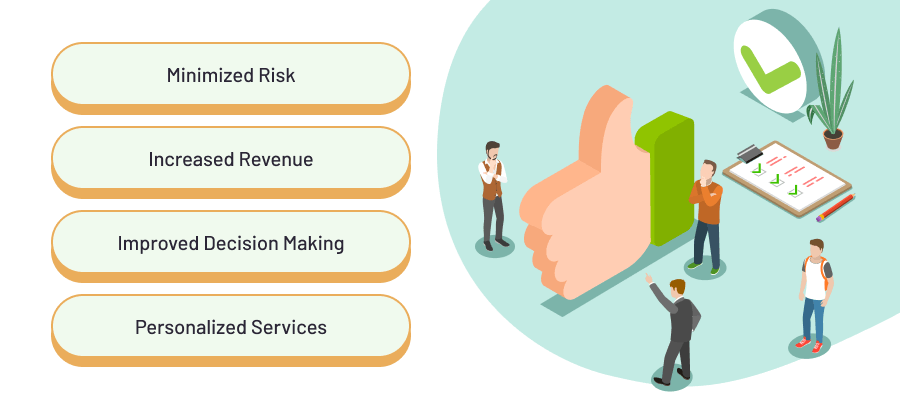
We discussed top predictive analytics models that are widely spread today. Probably you have already been inspired to leverage one of them for your business. But before you get on track, let’s make sure you’re acquainted with the main benefits this type of analytics can offer to you.
1. Minimized Risks
Through the use of a predictive analytics approach, you can examine vast amounts of data to anticipate and prevent fraud, detect vulnerabilities, and mitigate significant losses. As a result, it enhances overall risk management. We will talk more about that in the upcoming chapter.
2. Increased Revenue
The right data analytics tools help businesses increase revenue. By leveraging them, companies can optimize pricing strategies and identify cross-selling and upselling options. As a result, it not only maximizes sales opportunities and improves overall revenue generation but also enhances user engagement.
3. Improved Decision-Making
Typically, when you are aware of customer behavior, the latest market trends, and potential risks, you can put a strong strategy on the table. With robust predictive data analytics in hand, you can make appropriate decisions. Eventually, it will lead to better outcomes and optimized performance, allowing your businesses to stay competitive and achieve your goals effectively.
4. Personalized Services
By analyzing extensive customer and market data, businesses can gain deeper insights into customer profiles and market dynamics. It allows them to deliver personalized financial services and recommendations on finance management, including investment strategies. Additionally, it fosters long-term client relationships.

User-Driven Approach
Challenges of Predictive Analytics to Consider
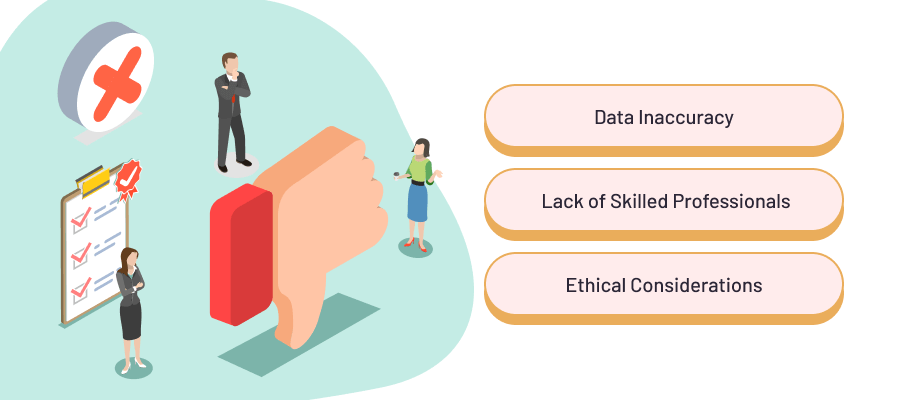
Even if it might be tempting to hit the road and incorporate analytics into your financial tools, don’t rush. Like any great voyage, there are some challenges to navigate. So, now let’s skim through the most common cons to take into account before starting your journey.
1. Data Inaccuracy
If the data used for modeling is incomplete, outdated, or contains errors, it can lead to flawed predictions and unreliable insights. So, when collecting data from various sources, it is important to make sure that you pay attention to its quality.
Here, it is a good idea to consider data governance practices. They ensure that information is collected, stored, and managed in a consistent and regulated manner. This way, it decreases the possibility of incorrect predictions and false insights.
2. Lack of Skilled Professionals
Another significant challenge in predictive analytics is the lack of skilled professionals. Ideally, your team should have the expertise to effectively harness the full potential of advanced data analytics techniques.
Make sure that data engineers and analysts you work with possess a deep understanding of statistical modeling, machine learning algorithms, data manipulation, and other specific tools.

Lack of Developers
3. Ethical Considerations
Ethical considerations are a crucial and serious challenge in the overall data analytics process, despite not appearing as such at first glance. Analytics relies heavily on vast amounts of personal data, so there are growing concerns about privacy, bias, and fairness of this process.
Financial organizations must implement strong data protection policies and procedures in order to ensure that customer information is used responsibly and securely. Otherwise, they can’t protect clients from potential fraud or identity theft.
Use Cases of Predictive Analytics in Finance
Now that you know the key advantages and considerations of predictive analytics, you might want to see how other fintech companies leverage this approach. Even if we’ve already highlighted some examples in the sections above, let’s get more specific and take a look at the popular use cases.
Risk Management and Fraud Detection

This type of analysis offers insight into applicant credit history, income, employment status, and other relevant factors to assess their creditworthiness. As a result, financial institutions can make informed decisions about loan approvals and set appropriate interest rates, minimizing credit risk.
Moreover, by analyzing transactional data, predictive analytics helps recognize unusual patterns that may indicate fraudulent behavior. It assists businesses with the swift detection and prevention of potential fraud, safeguarding their assets and protecting customers from financial loss.
Customer Segmentation and Targeting

Forecasting and Budgeting

Like we’ve already mentioned, predictive financial modeling tools scrutinize vast amounts of historical data, leading to better budgeting, planning, and informed decision-making processes.
Pricing Optimization

You can also employ machine learning algorithms and statistical models to optimize your prices according to current customer needs and market demand. It will ultimately help you develop an effective market positioning strategy and gain a competitive advantage.
Stock Market Forecasting

Furthermore, this type of analytics can identify potential investment opportunities by assessing the level of risk and predict future price movements. From that perspective, predictive analytics can be quite a useful tool in investment management.
Discover how we helped our client Advance Alternative Investment Management
Best Practices for Implementing Predictive Analytics in Finance
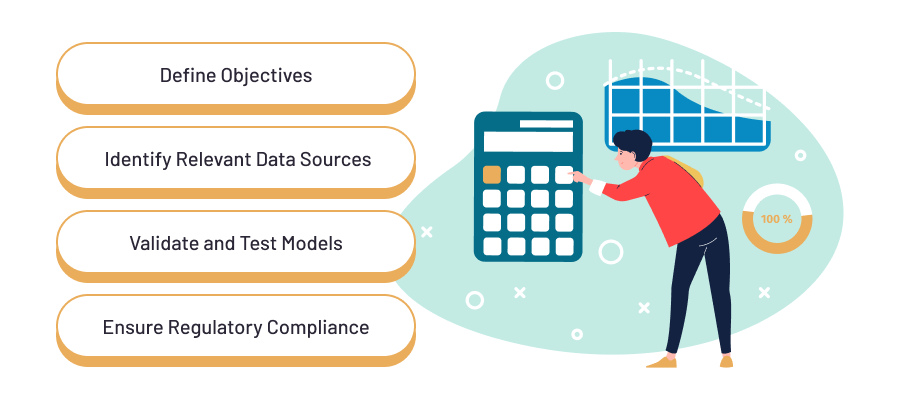
Before you leap into the world of predictive analytics, let’s navigate the essential steps taken into account when leveraging this approach. Below are the key points of the process to follow in order to pave the way for successful implementation.
- Define Objectives. First, you should outline why you need this method of analytics. There can be various reasons like reducing operating expenses, enhancing customer experience, mitigating potential credit risk, etc. Additionally, setting the goals first will help you choose the right tools.
- Identify Relevant Data Sources. Make sure that you use trustworthy and relevant internal and external data sources. Depending on your needs, you can consider transactional records, customer and market data, economic indicators, and the like.
- Validate and Test Models. It is imperative to validate and test predictive models for accuracy and reliability before deploying them. Here you can use techniques like cross-validation and backtesting. These methods reduce the possibility of generating incorrect forecasts.
- Ensure Regulatory Compliance. Adhering to privacy regulations, data protection laws, and industry standards is a must. Obviously, safeguarding sensitive data and establishing compliance not only ensures your customer privacy but also upholds the reputation of your organization.
Future Trends of Financial Predictive Analytics
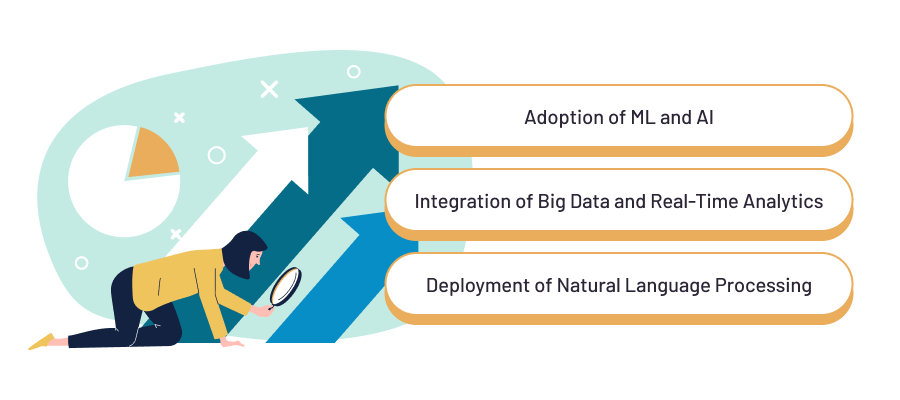
As we see the use of analytics grow in popularity, we’d like to pause and highlight future trends in the field. Businesses looking to harness the power of data should be aware of these tendencies. So let’s look at the top three prominent trends that are transforming the way companies approach data analysis and forecasting.
Adoption of ML and AI
We have already talked about the importance of AI and ML in predictive analytics. Obviously, when dealing with massive datasets, these two technologies are foolproof options to make highly accurate predictions and recommendations based on their learning from historical data.
One of the most prominent examples of ML and AI in finance is the use of regression models to predict stock prices, enabling traders and investors to make data-driven decisions. Additionally, these technologies excel in swiftly evaluating borrower creditworthiness, streamlining lending procedures, and mitigating the risk of default.
Discover how AI Can Help Your Business Get Ahead of Competition
Integration of Big Data and Real-Time Analytics
These two technologies have revolutionized how businesses extract insights and make intelligent decisions. Through big data integration, predictive analytics can identify emerging market trends and customer preferences. Thus empowering businesses to tailor their products and services accordingly.
As for real-time analytics, it enables businesses to process and analyze data immediately, providing up-to-date insights. On top of that, real-time data ensures that predictive models remain relevant and accurate in dynamic environments.
Deployment of Natural Language Processing
Natural Language Processing (NLP) is one of the leading branches of AI that focuses on computer-human interaction. It enables businesses to leverage vast amounts of unstructured textual information that was previously challenging to analyze in a comprehensive way.
NLP also uses sentiment analysis. In simple terms, it examines text to identify its sentiments, such as “positive,” “negative,” or “neutral.” For example, it can be used to outline the most important keywords or phrases in the text and help businesses better understand customer feedback.
Revolutionize Your Business with the Powerful Predictive Analytics
Predictive analytics reveals numerous opportunities for financial companies that are ready to encompass it. The right data analytics tools integrated with the rest of your tech solutions can really drive your business forward and propel it to the next level.
At Velvetech, we know exactly how to harness the full potential of data. With a wealth of successful projects under our belt, we possess a deep understanding of both data analytics and financial software development — a powerful combination that sets us apart.
If you are on your way to leveraging data and need some assistance, we are here to cover you. Reach out to us today to embark together on a transformational experience
About the author