Blockchain in healthcare is steadily getting traction with businesses as we watch Bitcoin shake the world of finances. Thanks to Bitcoin and other cryptocurrencies that have been making the headlines, by now nearly everybody knows what blockchain is.
Let’s briefly recap its main idea.
The Role of Blockchain
Simply put, blockchain is a system or data structure that stores records in a secure, transparent, and decentralized manner. It’s a technology that has enough potential to revolutionize the IT world and just about every industry that relies heavily on IT – one chain at a time.
“The most popular connectivity strategy circulating among healthcare technologists, and even ONC*, is blockchain technology”
Doug Brown, Managing Partner at Black Book
*The Office of the National Coordinator for Health Information Technology
Blockchain-in-Healthcare Hype
No wonder tech pioneers from various industries are searching high and low for ways to implement blockchain solutions into business operations. Healthcare is certainly one of these industries where blockchain implementation is a welcome change.
As reported by Mordor Intelligence, the blockchain market for medical care was valued at USD 2.12 billion in 2020, and is expected to reach USD 3.49 billion by 2026.
According to Healthcare Weekly, 40% of healthcare executives see blockchain as top 5 priorities. Some large-scale partnerships take place to research the benefits of blockchain in the medical industry.
Blockchain Opportunities for Healthcare
Blockchain technology provides exceptional opportunities for the healthcare sector. Its potential, when realized fully, offers transparency and immutability, which are essential for secure management and storage of Protected Health Information (PHI).
In particular, blockchain application in healthcare leads to reduced complexity and paves the way to trustless collaboration between network participants while tracking all interactions.
Adopting Blockchain in Healthcare
The relevance and value of blockchain for medical care can be proved by real-world scenarios where this technology has already found its way. Medical organizations should consider existing challenges that blockchain can tackle rather than adopting the technology in vain.
Blockchain application in healthcare drives the improvements in medical health records where it enhances the management and accuracy of health data.
Another use case for this technology is shaping a secure environment for remote patient monitoring. It guarantees confidentiality while storing, sharing, and retrieving remotely collected PHI.
Medical companies actively collaborate to leverage blockchain for the pharmaceutical industry. For example, it majorly helps the drug supply chain fight against counterfeits and inadequate medications, verifying compliance to quality control standards.
Lastly, blockchain boosts insurance claim and payment transaction processing. Offering immutability and transparency of stored data, it creates a network that propels the medical insurance processes.
Privacy Policy in Blockchain Technology for Healthcare
Having a solid understanding of what privacy rules and standards to follow is highly essential when you deal with storing and sharing sensitive data. Applying blockchain technology in the healthcare field must consider regulatory compliance.
In the US, if the software solutions processes PHI that’s used by covered entities and business associates, then you should pay close attention to HIPAA rules early in your initiative.
Besides, there’s another important rule to consider — 42 CFR Part 2. It protects medical records created under federally assisted programs.
Similarly, the implementation of blockchain technology for medical care that involves data belonging to a citizen of the European Union requires compliance with GDPR regulations.
Pain Points in Health Care for Blockchain to Allay
Pain Point #1: Interoperability
Interoperability is a buzzword you hear a lot in discussions around ways for integration of blockchain applications into healthcare businesses. In 2015 The Office of the National Coordinator for Health Information Technology (ONC) issued a Shared Nationwide Interoperability Roadmap.
The roadmap spans from 2015 to 2025 and basically formulates the strategy for healthcare development during this decade. First and foremost, it focuses on efficient sharing of electronic health information between all major stakeholders, i.e. care providers, patients, regulators, etc.
The same report outlines the major challenges that lie in the data interoperability sphere:
- Health information is not sufficiently standardized
- Aligning payment incentives
- Lack of trust between stakeholders
- Misinterpretation and differences in existing privacy laws
Here is a great infographic that perfectly describes the issues health care is facing in data management.
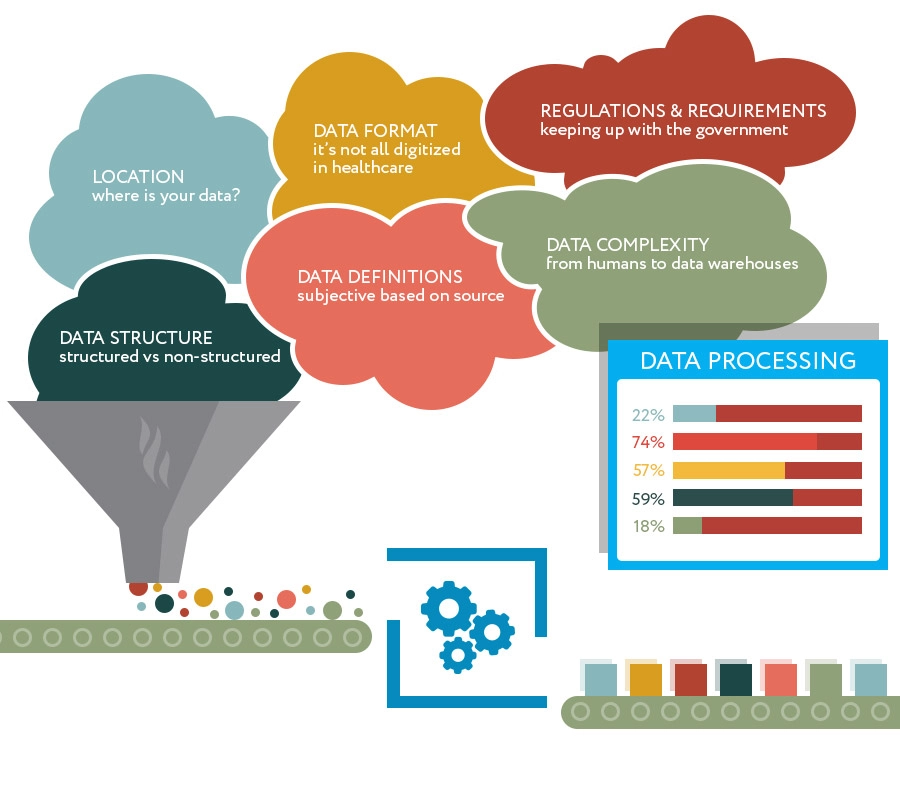
Blockchain — being, in essence, a distributed ledger with data replication across a network of node computers — is a natural solution to this massive roadblock of siloed data in health care.
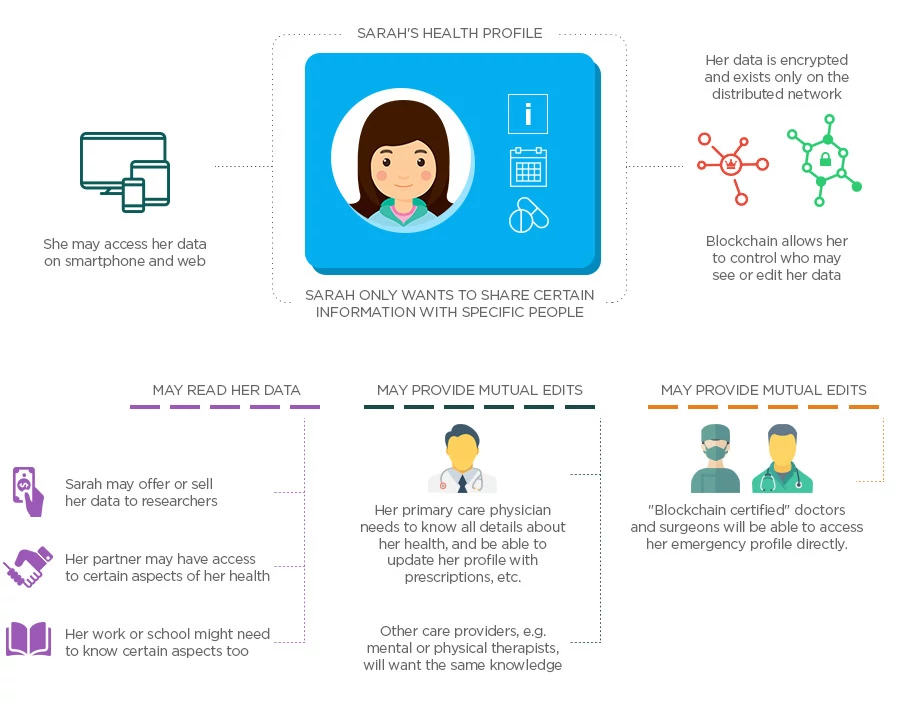
This technology can provide a new model for health information exchanges (HIE) by placing the patient at the center of the healthcare ecosystem.
Blockchain removes the need for an HIE operator as an intermediary. All care providers participating in a blockchain will be able to share health records in a decentralized manner. Plus patient’s data that gets onto the blockchain becomes immutable. This reduces data transaction costs and enables near real-time updates across the network to all parties.
Examples:


Source: Datastructr
Pain Point #2: Clinical Trial Management and Medical Research
Clinical trial management generates loads of data, which implies keeping accurate records by the administration to meet the regulatory requirements.
Blockchain tools, together with electronic data capture, can allow automatic aggregation, replication, and distribution of clinical data among researchers and practitioners.
“There are more than 8,000 healthcare publications each day. Nobody can keep up. We need a system to translate all the data into key insights that can be applied to a patient…”
— Kyu Rhee, Chief Health Officer at IBM
Benefits of blockchain in clinical trials:
- Provide an immutable record of trial history
- Eliminate data manipulation
- Smart contracts can act as trusted administrators
- Cryptographic validation of data by the network
Here’s a great TED talk by Sile Lane on why clinical trials are such a huge issue right now:
Likewise, healthcare blockchain solutions can push medical innovations forwards by providing access to medical research data for all interested parties.
Pharmaceuticals invest a lot into finding patients that are willing to undergo a clinical study. At the same time, patients might be desperately searching for a new drug to no avail. Patients have minimal or no traceability of the types of research that could play a positive role in their health improvement.
Blockchain implementation can streamline this matching process between drug manufacturers and patients. It may also incentivize researchers and drug manufacturers to make research results available to the public.

Source: ClinicalTrials.gov
Example:
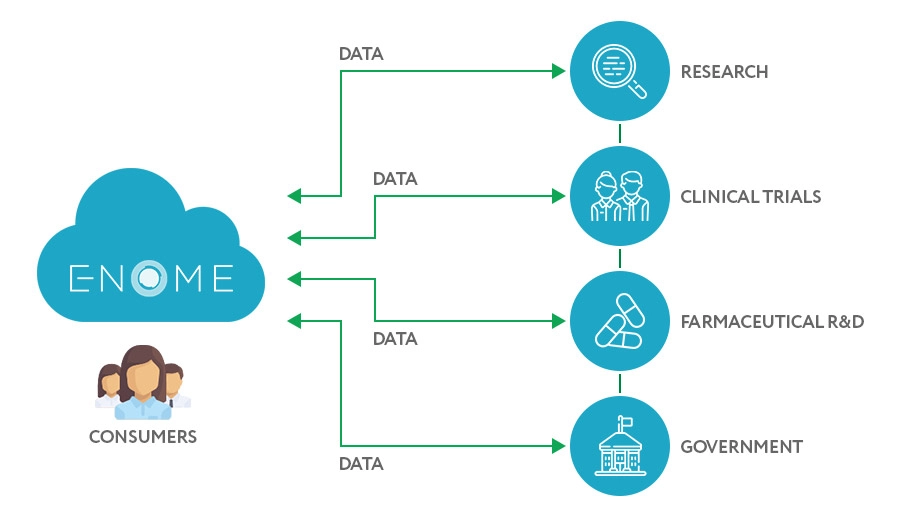
E-Nome is an Australian company that has developed a patent-pending system based on blockchain technology that allows patients to control their med history on smartphones.
Patients can also anonymously share their data to participate and assist in medical research. E-Nome and The Garvan Institute of Medical Research signed a memorandum to enable the collection and management of research data across Garvan’s six research divisions.
Pain Point #3. Pharmacy Supply Chain
Blockchain technology may prove indispensable for tracking drugs on their way from a pharmaceutical company to patients. Drugs become traceable as they move across the supply chain.
This could help reduce the counterfeit drug implications that currently cost pharmaceutical companies up to 431 billion in losses annually.
“While difficult to quantify, studies that have attempted to measure this large illegal market estimate that total global sales are between $200 billion and $431 billion annually.”
— Fraud in Your Pill Bottle: The Unacceptable Cost of Counterfeit Medicines
Industry experts single out 4 major use cases for implementing blockchain solutions into pharmacy supply chain infrastructure. Shahram Ebadollahi, Сhief Science Officer at IBM Watson Health, mentions the following use cases:
– Drug Quality and Security Act compliance and track-and-trace
All prescription drugs distributed in the United States should be trackable as required by the Drug Supply Chain Security Act.
– Controlled substance monitoring
The federal government is closely monitoring drug manufacturers for the occurrences of the illegal and out-of-pattern ordering of opioids and other Schedule II drugs.
– Cold Chain monitoring
According to the FDA, USP-NF, EU GDP, and WHO guidelines supply chain should accommodate to specific temperature ranges throughout the delivery process. You can find more details about cold chain solutions development in our case study section.
– Active pharmaceutical ingredients
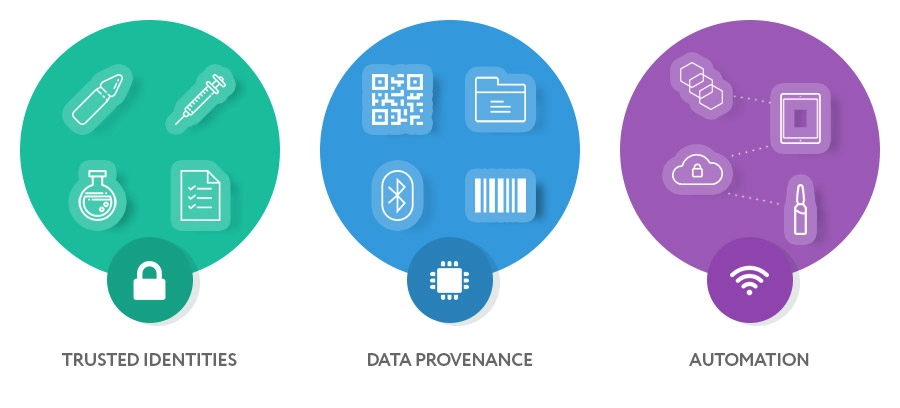
Blockchain will become crucial to controlling the source and provenance of pharmaceutical components from raw materials to actual drug manufacturing.
Examples:
Challenges for Blockchain eHealth Implementation
Blockchain technology is not a panacea. There are still many challenges that the healthcare industry needs to overcome to come up with a reliable blockchain-based all-encompassing solution.
Data Types
Blockchains cannot directly store abstract data types, e.g. X-ray or MRI images. This type of data would require a separate location for storage linked to a blockchain solution.
Besides, keeping these large chunks of data on the distributed network can significantly slow down transaction processing.
The data size and type constraints lead to the following issues that need to be tackled:
- Data is not visible by default to all stakeholders; requires access to each medical organization’s system for each patient’s record.
- Requires off-chain microservices implementation and additional integration layers.
- Information on blockchain becomes prone to decay.
Security
While blockchain is a secure way to track changes in data as it replicates across the peer-to-peer network, the same fact of data replication raises security concerns.
“More than 29M Patient Records Breached in 2020”
The HIPAA Journal shared the Healthcare Data Breach Report that revealed a 25% increase in breaches in 2020. The graph below indicates that hacking and other IT incidents dominated the healthcare breach reports with a total of 429 data breaches in 2020 (66.8% of all 2020 breaches).
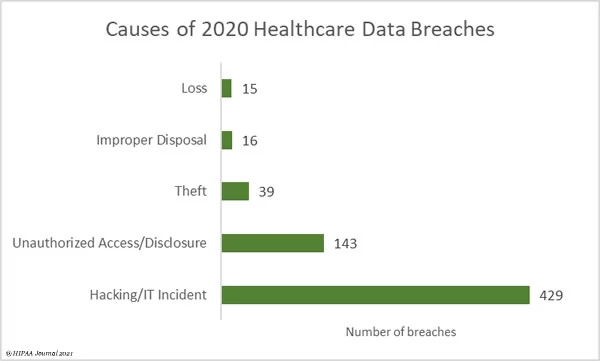
Companies seeking to deploy a blockchain-based eHealth solution should carefully consider what patient’s data will be stored on the blockchain.
It goes without saying that non-patient identifiable information must be stored on all sides of the blockchain solution, while protected health information or personally identifiable information should be kept as a separate layer protected by the public/private key encryption scheme.
Drawing a Line
Blockchain in healthcare is rapidly progressing from the hype stage to proof-of-concepts and products. It takes both regulators’ and technology enablers’ efforts to achieve the standard of blockchain-based eHealth solutions that satisfy all participating parties.
Let us know if you have an idea for developing a blockchain-powered eHealth product. Velvetech will be happy to assist you with its expertise in the development of blockchain solutions for health care.
About the author

Reach Out to Us