Imagine a big nuclear power plant where multiple reactors operate under extremely high pressure and temperature. Suddenly, one of the reactors fails, resulting in serious leaks. If these disruptions go unnoticed, they may not only cause downtime but also environmental damage because of the radioactive leaks. Clearly, not a desirable scenario.
Not to end up there, it’s crucial to monitor variables like temperature fluctuations, flow rate, coolant chemistry, and radiation levels, preferably in real time. This will ensure identifying any potential issues early on, thus minimizing the risk of serious consequences.
All of this could hardly be achievable without data analytics in place. Understanding this, organizations are actively employing this innovation into their energy software, thus streamlining and safeguarding their entire energy systems operations.
With this in mind, we’ve prepared an article covering all the crucial points you should know about the role of data analytics in energy management. Let’s jump straight into it.
Key Highlights
- With SCADA systems in place, you may establish a robust data collection across the entire industrial and infrastructure processes, transmit variables directly into your system, and analyze them.
- You may create a digital twin of your reactor (or any other system), simulate changes you want to make, and analyze their impact before making real changes.
- If a factory relies on legacy systems, it will likely face conflicts with new technologies, making it nearly impossible to leverage advanced tools for robust data analytics.
- To get the most out of data analytics in the energy sector, simply employing innovation isn’t enough. For maximum impact, you need skilled data analysts with strong knowledge of the energy industry.
Core Technologies Behind the Insights: Tools Driving Energy Analytics
To collect the necessary variables for robust data analytics, you first need to leverage the right tools. To achieve this, the energy sector typically relies on two technologies — sensors and smart sensors.
Well, you may say that sensors are a thing of the past. However, in some factories, they are still in use. But you probably understand that in the age of innovation, it’s nearly impossible to get things done without smart sensors. Let’s give a short overview why:
Compared to sensors that merely output a signal like temperature, pressure, vibration, or motion, smart sensors come with a built-in microcontroller and a modem (e.g.,3G/4G, NB-IoT, or LoRaWAN). This allows them to collect critical data and instantly transmit it to the external system.
But the capabilities of smart sensors don’t end there. They can be a real treasure trove to monitor the performance of equipment in remote areas. As soon as you turn sensors on, they send JSON data to the SCADA system or the cloud right away. Besides, they may process data, quickly detect potential threats, and react immediately, without waiting for a server response. Thus, preventing serious issues.
If you want your business to thrive, then you definitely need to see the forest for the trees. And data analytics is the tool that provides a solid overview of your operations. Specifically, this innovation helps:
- Identify areas of waste
- Detect potential breakdowns
- Predict future outcomes
- Optimize resource allocation
Now, let’s have a look at the core technologies that assist in data collection from smart sensors:
Mobile Networks
These networks can ensure smooth and continuous data transmission to your system in real time. Thus, empowering you to promptly detect any potential threats.
Internet of Things

This is not the only capability of IoT. Besides collecting and transmitting data, it can promptly detect anomalies and take proactive steps like sending alerts or shutting down equipment to prevent further disruption.
Read more about the Use of IoT in Energy
SCADA Systems
Besides, SCADA comes with visualization capabilities, simplifying the representation of complex datasets. But the cherry on top is probably that SCADA systems, like IoT, can send real-time alerts in case of any issues and even take proactive steps to avoid serious disruption.
Discover more on how you can Visualize Data with Low-Code / No-Code
Drones

Plus, drones take high-resolution photos, thus giving a solid picture of weather conditions, cloud movement, gas leaks, and other critical factors needed for robust analytics and timely interventions.
From Production Optimization to Digital Twins: Why Does Data Analytics Make Sense in Energy?
Data analytics in the energy sector is like a safety belt. You may rely on it for a variety of purposes. Minimizing downtime, cutting waste, and predicting possible issues are just a name of few examples. But instead of sharing the large list of data analytics use cases in energy, let’s highlight the ones that may be of the most interest to you.
Predictive Maintenance
Losing time and resources on repairs won’t be your only headache. You’ll likely face potentially heavy fines due to safety violations.
This incident will not only make you pay through the nose but can also seriously damage your business reputation. Meanwhile, you may prevent this from happening with predictive analytics in place.
Specifically, by integrating SCADA systems, you’ll be able to track critical variables like vibrations, wind speed, temperature, and weather conditions to ensure your turbines operate safely and efficiently.
Another wise move to support your environmental goals is integrating machine learning. In particular, ML algorithms learn from historical data and provide predictions about possible turbine breakdowns or forecast storms that could damage your equipment
You see, data analytics in renewable energy, combined with ML, can work wonders for your sustainable efforts.
Learn more on how to Elevate Your Sustainability Efforts
Digital Twins
Actually, today, with the help of digital twins, you can do just that. For example, you may design a digital twin of your reactor and try some changes on it before going live. Then, employ data analytics to get insight into virtual reactor performance. This will help you adjust your project to make it as secure and efficient as possible.
Plus, it will assist in creating a relevant incident management plan, which, ideally, you should have to smoothly navigate any potential breakdown.
Energy Theft Detection

But you can hit the spot by leveraging ML algorithms. With historical data at the forefront, ML analyzes consumption patterns in real time and can promptly find out any unusual behavior.
Production Optimization
This not only saves time but also cuts unnecessary costs and helps prevent possible ecological damage.
Check out how we helped our client to Streamline Oil Production
Resource Allocation
For example, by analyzing energy usage data, you may find that one of your solar panel warehouses uses more electricity for climate control compared to others. As such, you can allocate resources more effectively by prioritizing upgrades or maintenance in that warehouse and reduce energy consumption.
Check out our case study on how we developed a powerful Inventory Management Software
There is a pretty large list of data analytics use cases like energy consumption monitoring, theft detection, predictive maintenance, etc. And all of them apply to all kinds of businesses, whether small, medium, or large. That is to say, even if you run a small business in this sector, this innovation can be a valuable asset to elevate your energy efforts.
The Innovation Shift: How AI Powers Energy Analytics?
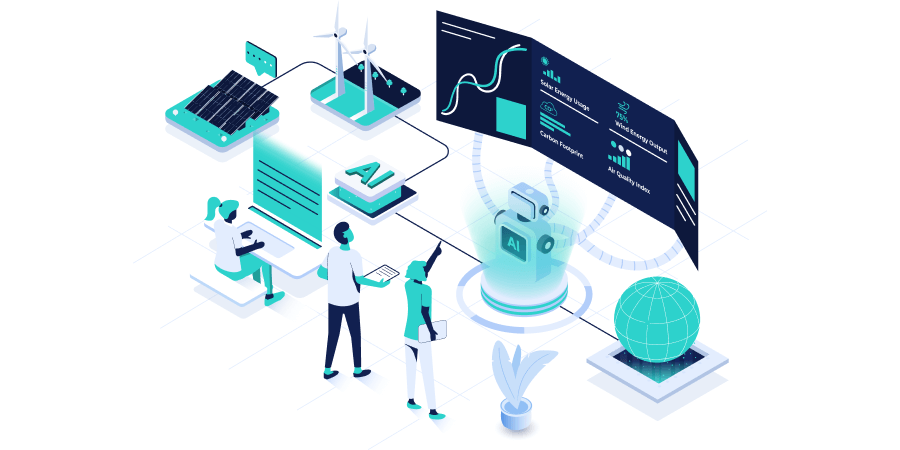
According to Grand View Research, the AI in the energy market is projected to reach $54.83 billion by 2030, with a 30.2% CAGR from 2025 to 2030. Today, this innovation is being used for plenty of reasons in the energy sector, from business process automation to in-depth data analytics. Let’s skim through the top opportunities artificial intelligence offers for analytics:
- More secure systems: Employing AI in your analytics system will keep sensitive and private data more secure. Specifically, that’s because AI algorithms can promptly identify unusual patterns and send real-time notifications or take action to prevent breaches.
- 3D model of the system: AI helps build 3D models of grids, turbines, or pipelines to conduct tests and analyze insights, leading to better outcomes.
- Chatbots: Using AI algorithms, chatbots provide accurate answers to queries. Plus, if trained appropriately, they can assist and educate engineering staff.
- Drone and satellite analytics: AI powers these innovations with computer vision and thermal imaging, thus helping promptly identify any potential serious issues like fire, leaks, or equipment damage.
To effectively analyze energy data, it’s essential to leverage AI-driven technologies such as machine learning, generative AI, and natural language processing. These tools help ensure secure, efficient, and high-performing operations. Yet, the foundation of any analytics effort — collecting and processing variables — relies on technologies like mobile networks, IoT devices, drones, and SCADA systems.
Energy Data Analytics Is Not Always Perfect: Pitfalls to Keep in Mind
Though we’d love to say that you can simply employ data analytics for your energy operations, it’s not that simple. The process of ensuring secure, smooth, and efficient data management is a challenging path. Here are the core pitfalls to keep in mind:
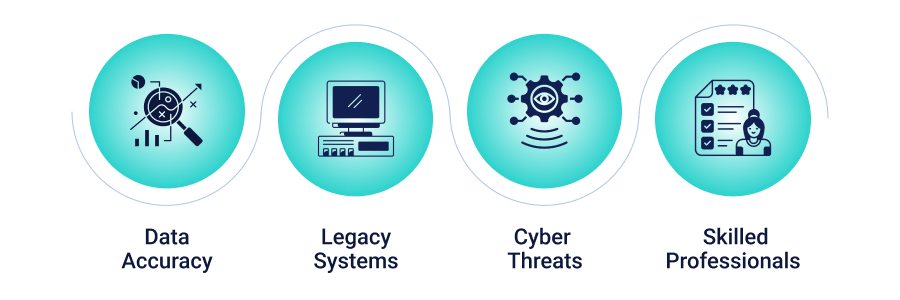
1. Data Accuracy
When collecting data from various sources, you often have to deal with unstructured data. This means you need to transform variables to process them effectively. But that’s not the only consideration. You see, sensors may fail, either transforming data with disruptions or stopping transmission altogether. Neither option is good for robust analytics.
Read our guide to discover how to Prepare Your Data for Powerful Analytics
2. Legacy Systems
Oftentimes, old factories rely on outdated systems, which rarely support new technologies and tools. As such, employing innovations to collect crucial insights becomes almost impossible.
Understanding that their legacy system conflicts with new technologies, not all companies may feel inclined to invest in switching to modern enterprise software. As a result, they can’t gain a clear view of their entire business processes to optimize and improve them.
Discover core signs that it’s Time to Move from Legacy Systems
3. Cyber Threats
You collect plenty of sensitive, and in some cases confidential, data in your system. Just imagine what could happen if hackers managed to breach your power plant or oil pipeline systems. This could lead to serious consequences, and even to economic collapse.
You probably remember the hack of the largest oil pipeline in the U.S. in 2021. Pipelines were shut down for several days, which became a reason for long lines at gas stations due to fuel shortages and a jump in gas prices.
Given that, you need to ensure a secure environment for your data, which is not that simple. To get there, you should implement crucial security protocols like MFA, authentication, data encryption, access control, and intrusion detection systems. Some of them may not be cheap pleasures, but when it comes to data protection, there is no alternative.
4. Skilled Professionals
Aiming to achieve robust data analytics, you definitely need skilled professionals on board. The energy industry is highly specific, so having only data analysts is not enough. Ideally, you require a team with deep engineering knowledge as well.
Hiring such experts may be pretty costly. Plus, it may not always be easy to find someone with deep knowledge in both engineering and data analytics.
Harness the Full Potential of Data Analytics for Your Energy Business
Managing an energy business is far from straightforward. It’s like playing chess — you need to think a few steps ahead. Only this way can you ensure secure operations, optimize your business processes, and allocate resources wisely.
To get there, data analytics can serve best. You probably understand that achieving strong data analytics necessitates investments and a professional staff. If you are currently looking for a trustworthy vendor, then Velvetech will be happy to bring its years of proven expertise in your robust energy software development. Don’t hesitate to reach out to us.
About the author