Currently, it’s hard to find a person who has never heard of terms such as blockchain and tokenization. However, not many can boast of a clear understanding of how these technologies actually work or the impact they have on the way we handle assets and value.
In general, tokenization of assets has significantly altered the way people buy, sell, and invest in properties. By converting real-world or digital assets into blockchain-based tokens, it enables fractional ownership, seamless transfers, and crystal-clear transparency. No longer do high-value investments remain exclusive to wealthy individuals or large institutions; now, anyone, including mere mortals, with access to digital wallets, can participate.
So, the most reasonable way is to perceive tokenization in blockchain as a bridge connecting the traditional and digital economy. How exactly does the process go, and how does it work?In this article, we’ll provide real-world and easy-to-grasp examples of how tokenization functions within blockchain technology and consider its different types and their distinctions.
Key Highlights
- Tokenization allows ordinary investors to own a part of expensive assets, from real estate to art.
- Tokenized assets can be tangible, digital, or a combination of both, with governance and profit-sharing possibilities.
- Blockchain ensures fast, verifiable transactions, reducing the need for middlemen.
- Regulatory uncertainty, tech infrastructure, user literacy, and security risks remain key considerations.
Not Simple Digital Records. What’s Blockchain Tokenization?
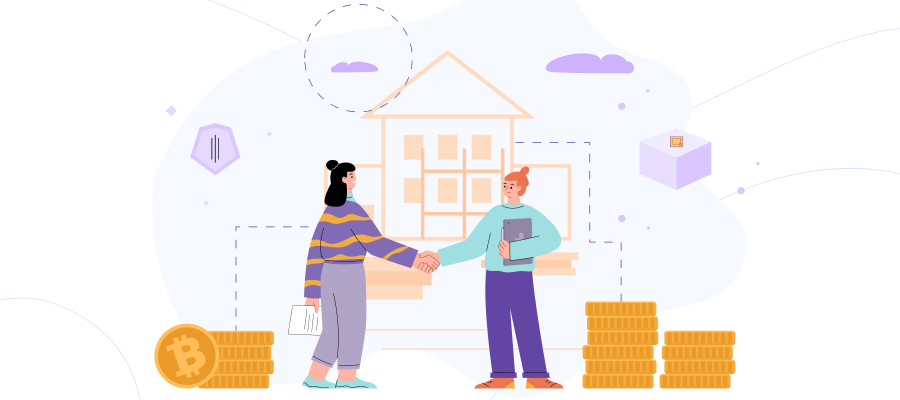
To better understand how tokenization actually works and why it’s more than just “digital numbers on a screen,” let’s start with a simple analogy.
Imagine a Rembrandt painting valued at over $1,000,000. Traditionally, only a millionaire or an art investment fund would even think about buying it. But what if owning a parcel of that masterpiece became possible for an ordinary person with just a digital wallet and a few hundred dollars to spare?
That’s exactly what tokenization makes possible. The owner of the painting can split it into 1,000 tokens, each representing a small share of the artwork. These tokens can then be sold to different buyers.
By purchasing one of them, you don’t get to hang the Rembrandt in your living room, of course, but you become a legitimate co-owner of the asset. And if the painting is later resold at a higher price or generates income through exhibitions, every token holder receives a proportional share of the profit.
Now, let’s switch the canvas to something closer to everyday life. Say, you own an apartment but aren’t ready to sell it in its entirety. Through tokenization, you can “slice” the apartment into digital tokens. Instead of one buyer taking full ownership, multiple people can purchase tokens that represent shares of the property.
This way, you raise funds while still retaining part of your asset. Token holders, in turn, might benefit from rent income or eventual appreciation when the property’s value grows.
As you may have guessed, it doesn’t stop with art or real estate. Cars, music royalties, stocks, even future revenue streams from a small business — all these can be broken down into blockchain-based tokens. Each token acts as a secure, verifiable proof of ownership or claim, stored on the blockchain.
What makes this powerful is that tokens are not just static records. Unlike traditional contracts that sit in filing cabinets or centralized databases, blockchain tokens are programmable.
They can carry rules, like automatically distributing profits to shareholders, enforcing voting rights, or unlocking digital content. This transforms them from “symbols of ownership” into dynamic tools that change the way value is managed and monetized.
Discover how we delivered a Tokenized Investment Platform for Real-World Assets
Tokenization Types and How They Vary
The examples we provided in the previous paragraph refer to the most evident type of tokenization — tokenization of physical assets. However, other kinds also exist; let’s take a look at them in this paragraph.
Financial Tokens

Sounds a bit confusing, so let’s review an example. You own a company producing different electronic appliances, and instead of securities, you issue tokens intended for sale. When an investor purchases one, they gain dividends automatically, and if the token’s price begins to fluctuate, it can be sold hassle-free to another investor. The entire process flows within the blockchain platform, bypassing all complex and protracted bank procedures.
Another variation of tokens is DeFi ones, where DeFi is the entire ecosystem that users utilize for various purposes. They can borrow, stake, or sell tokens on their own, without resorting to the intermediaries’ services. As a result, token keepers are empowered to gain passive income from its usage by other participants.
Check out how we created a Compliant DeFi Platform for Smart Investment Management
Here’s how it works in practice. Suppose you hold a lending token. Instead of just keeping it idle, you can put it to work by supplying liquidity to a DeFi lending pool. Other users can then borrow from that pool, and every time a loan is issued or repaid, you earn a portion of the interest automatically.
This means that there are no bank clerks, paperwork, or approval delays involved, which makes the process fast and more attractive. The flow runs smoothly through smart contracts, which execute transactions and distribute rewards according to the preset rules.
What makes DeFi tokens especially powerful is automation. Everything happens transparently and instantly, right on the blockchain, giving users both control and earning opportunities that traditional finance could never offer.
Read about the Top 6 Ways Blockchain in Banking Is Revolutionizing the Industry
Virtual Tokens
If you’ve ever spent time in an online game, you already know that most of them have their own in-game currency or digital assets, such as weapons, skins, artifacts, or land plots. With tokenization, these virtual items can take on real-world value. Players can buy, sell, or trade them outside the game, turning hours of gameplay into genuine financial gain.
So, how do these digital items turn into real money? Imagine you’re playing a popular strategy game and happen to own a rare sword that other players want. By tokenizing this item, you create a verified digital token representing its ownership. Another player can then purchase this token, transferring real funds to you, while gaining the right to use the sword in the game.
Another fascinating category of tokens is NFTs, or Non-Fungible Tokens. Unlike cryptocurrencies, where every token is identical, NFTs are one-of-a-kind digital assets that represent ownership of something unique. They can stand for almost anything that holds value in the virtual space: from digital artworks and music tracks to avatars or virtual real estate.
Find out How to Create Your Own Crypto
What makes NFTs especially powerful is their proof of authenticity and rarity. Each NFT carries metadata stored on the blockchain that confirms who owns it and ensures it can’t be replicated or counterfeited. That’s why they’ve become the go-to format for digital collectibles and luxury items in the virtual world.
Now, imagine you want to buy a plot of land in the metaverse, a virtual world where people build, socialize, and trade much like in real life. By purchasing an NFT tied to that digital land, you become its verified owner. You can then develop your property, rent it out, or sell it later at a higher price without intermediaries or related paperwork.
Explore how we delivered a Decentralized Exchange Platform for an NFT Marketplace
Combined Tokenization

Take, for example, tokenized assets, such as real estate (here, we speak about the physical building, of course). By purchasing tokens tied to a property, investors don’t just earn a share of rental income; they also have an opportunity to decide how the property is managed. Through a decentralized voting mechanism, token holders can collectively make decisions on matters like maintenance schedules, renovation priorities, or lease terms.
This model turns traditional asset ownership into a community-driven ecosystem, where every participant can influence decision-making while still benefiting financially. In other words, tokenization transforms passive investors into active stakeholders, which blurs the line between ownership and participation.
The right token standard depends on what you’re bringing on-chain.
• For real-world or financial assets, ERC-20, ERC-1400, or ERC-3643 enable secure, compliant, and fractional ownership.
• For digital assets and NFTs, ERC-721 or ERC-1155 make each item unique and tradable.
• And for hybrid projects, combining standards like ERC-1155 and ERC-3643 unlocks both physical and digital ownership with built-in governance.
Want to get maximum benefit from blockchain technology?
Needed More Than You Think. Why Tokenization Is No Longer a “Nice-to-Have”
Just in the recent past, tokenization was perceived as something of the realm of fantasy or at least experimental. Like one more fashionable thing from the blockchain world, vigorously discussed by enthusiasts on specific forums. But there it was, now everything has dramatically changed, and from a nice-to-try option, tokenization turned into a real tool, helping ordinary people and businesses handle their day-to-day tasks.
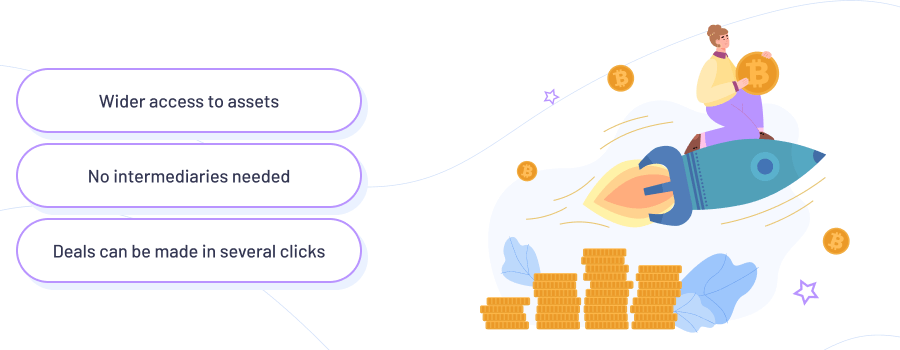
First, tokenization provides access to assets previously available to a very limited number of people. Now, having millions in your bank account is not needed for investment into real estate, pieces of art, or luxury cars. Instead, you can purchase just a fraction of an asset and earn a profit proportional to your share.
Of course, owning a small portion of a painting or property isn’t quite the same as having it all to yourself, and that might sound a bit less glamorous. But here’s the thing: tokenization makes these high-value assets finally work for you. It turns exclusivity into accessibility, allowing ordinary investors to step into markets that were once out of reach.
Second, with tokenization, you might forget about intermediaries, making any financial operations more complex and longer. Without banks and brokers, you can make deals directly, with transparent terms, and this process will be completed in minutes, not in days or even weeks.
But that’s not even the most important part. Thanks to tokens, value can move as fast as information on the Internet. If selling a share in a business or leasing out part of a warehouse used to be a slow and complex process, today it can be done in just a few clicks. Assets become “alive”: they move, exchange, and actively work for their owner.
And finally, tokenization brings a new level of transparency and trust. Every transaction is recorded on the blockchain, where data can’t be falsified or “lost.” That means there’s no longer any need to “take someone’s word for it” — everything can be verified.
Liquidity works differently depending on what you tokenize. For real-world assets, it often flows through regulated marketplaces where investors can trade fractional shares of property or art. In DeFi and digital assets, liquidity comes alive through decentralized exchanges, pools, and automated market makers. Hybrid models blend both worlds, bringing instant on-chain trading while staying anchored to real-world asset value and compliance.
Trust Issues and Beyond. Blockchain Tokenization Restrictions and Concerns
As always, there’s no good without the bad. Although tokenization has a lot of advantages, it still has its limitations and drawbacks, as any other technology. If you are planning to use it in your business, it’s better to keep them in mind.
First and foremost comes the issue of trust. It’s a bit ironic: a technology designed to bring more transparency and security into financial processes still struggles to earn people’s confidence. For many, blockchain remains something distant, overly technical, and hard to grasp.
Ordinary users feel safer with traditional mechanisms, such as paper contracts, banks, notaries, and lawyers, because these are familiar and, at least in appearance, reliable. The idea that a piece of code could take over those roles, doing the same work ten times faster and without bias, still sounds too futuristic for many.
Another limitation is related to regulations. Many countries still haven’t decided if tokens can be equated with securities or digital assets, which imposes particular restrictions on businesses. From the absence of a unified position, it follows that businesses have to act under uncertainty and risk.
Taxation complexities or even an outright ban are just a small fraction of the challenges arising along the way. Therefore, even though the technology is ready for mass adoption, the legal system is not always eager to keep up with the progress.
Think that the list has ended here? Not really, such things as technical barriers also exist. Tokenization requires well-elaborated infrastructure: blockchains, smart contracts, and wallets, which means that you can’t do without a decent level of digital literacy for its creation and further usage.
Explore Key Things About Smart Contract Development
For companies, this also means additional expenses for development, security audit, and maintenance. Are you ready to invest in the technology if you are still not sure that the idea will definitely pay off? The answer is quite obvious.
And last but not least, you should keep in mind security-related risks. Although blockchain is considered to be a super-secure and almost impossible to hack technology, errors in smart contracts, vulnerabilities in the code, or simple user negligence can lead to loss of funds. And unlike a bank, there’s no one to complain to — if something goes wrong, there’s no way to roll the transaction back.
Regulations often decide who can actually hold or trade certain kinds of tokens. For real-world and financial assets, compliance rules like KYC, AML, and securities laws may limit participation to verified or accredited investors. Meanwhile, utility and virtual tokens are typically more open, but hybrid and security-focused models must follow stricter frameworks to stay transparent and legally compliant.
Conclusion
In simple terms, tokenization makes the world of assets fairer and faster. You no longer need millions or endless paperwork to invest, just a wallet and a good idea. Sure thing, there are still bumps along the road, from regulations to tech hurdles. But like every big innovation before it, tokenization isn’t waiting for perfect conditions; it’s already changing how we think about ownership.
If you’re ready to explore how blockchain technology can transform your business but aren’t sure where to begin, partnering with an experienced development team is the smartest move. Reach out to us, and we’ll help you turn your blockchain vision into reality.
About the author