A natural byproduct of the highly digital world that businesses operate in today is the increasing risk of cyberattacks. Unsurprisingly, the medical sector is one of the primary targets for online criminals given the sensitive nature of health records.
Hence, if an organization employs various kinds of medical software, it is imperative for it to approach healthcare data security with utmost vigilance. How can that be done? Well, keep on reading to find out as in this article we will cover the following:
- Importance of data security in healthcare
- Top threats to medical IT safety
- Main ways to ensure digital healthcare security
Let’s get right into it.
Why Is Data Security Crucial in Healthcare
Of course, data security is imperative across industries, but why should healthcare companies be particularly concerned about ensuring their IT system safety? Everything comes down to the nature of the business.
Outdated Legacy Systems
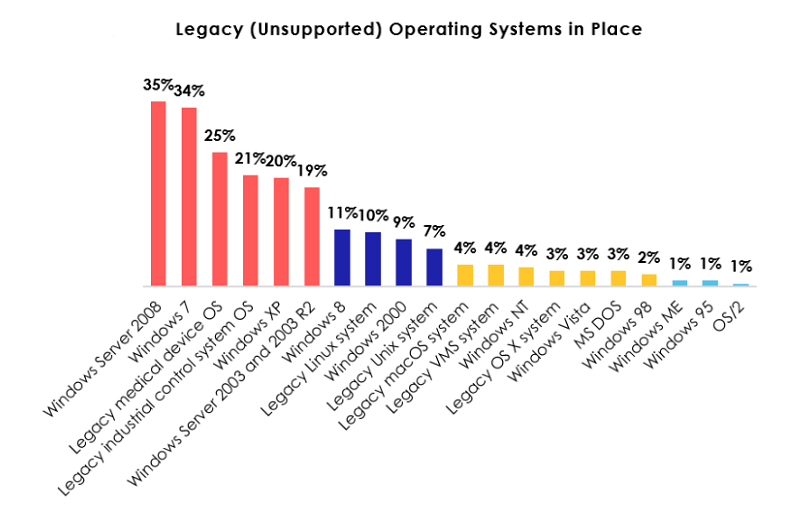
According to HIMSS, legacy technology is the third biggest challenge for healthcare cybersecurity initiatives, preceded only by budget and compliance.
With many healthcare organizations still reliant on legacy devices, applications, and operating systems that may no longer be supported by manufacturers, keeping data safe becomes a real difficulty. However, this is also precisely why it needs to be a top priority for business leaders.
Sensitive Medical Information
Secondly, healthcare organizations work with highly sensitive medical information which companies in different spheres rarely have to deal with. Naturally, if patients entrust you with such delicate data, it is your responsibility to take excellent care of it. Not only from a moral perspective but also because any issues will put an enormous stain on your reputation and can cost a pretty penny.
Strict Regulatory Standards
As digital healthcare solutions revolutionized the industry, regulations like GDPR, CCPA, and the even more prominent Healthcare Insurance Portability and Accountability Act (HIPAA) quickly emerged.
Designed to specify how personal information processed by insurance and medical companies should be protected, HIPAA is extremely thorough in ensuring patient rights are well safeguarded. With fines going as high as $50,000 per violation, it’s easy to see why adherence to these kinds of rules is important for healthcare providers.
Highly Lucrative Target
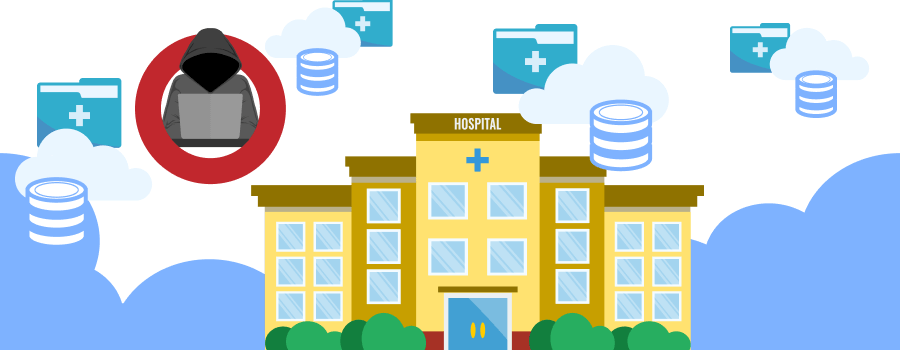
Lastly, given the sensitive nature of digital information in the healthcare sphere and the reliance on legacy software, medical companies are lucrative targets for cyber criminals. In fact, in 2022, US healthcare firms fell victim to an average of 1,410 weekly cyberattacks per company. This is up 86% when compared to 2021.
You see, private patient data can be worth a lot of money and medical facilities handle ample amounts of it. So, it is more crucial than ever for industry players to prioritize security projects in the coming years.
Common Threats to Healthcare Data Security
Now that we’ve established why data security is so important in the healthcare sector, let’s dive a little deeper and find out which threats are most common for medical organizations.
Phishing
The most common form of cyberattacks in healthcare is definitely phishing. In fact, it made up 45% of incidents in healthcare organizations in the US in 2021. Phishing is carried out by sending emails or other messages from a seemingly reliable sender to get the user to download malware or reveal personal credentials that could be used to get access to a healthcare provider’s system.
For example, you might receive an email that looks like an update from the World Health Organization asking you to download a file or login via your organization’s details. In reality, it is an attempt to acquire access to your internal medical platform.
Ransomware Attacks
Ransomware attacks are the second most frequently reported cybersecurity incident in healthcare. Typically, these threats are actually a result of a phishing attack as malware gets injected into the medical organization’s network to encrypt sensitive information until a ransom is paid.
These attacks are popular among hackers because it is clear that encrypting patient records and other data can result in major operational disturbances. Thus, medical providers are more likely to give in and pay the ransom just to avoid further issues and regulatory consequences.
DDoS Attacks
A Distributed-Denial-of-Service (DDoS) attack is also something organizations should be aware of, especially if they employ IoT devices. In essence, a DDoS attack involves sending a high volume of traffic to force a server offline.
To do this, multiple endpoints and connected devices are infected to participate in this coordinated threat. When successful, a DDoS attack often also leads to ransom being requested.
Data Breaches
Data breaches are also frequent among healthcare companies and don’t always involve cyber criminals from the get-go. Sometimes, digital information might be accidentally or purposefully exposed by an employee that saves data to a portable drive, shares it over an email, or doesn’t dispose of it effectively.
These kinds of incidents could constitute a breach, especially when cyberattackers gain access to patient health information as a result of this negligence.
7 Ways to Ensure Healthcare Data Security
Now that we have warned you about the frequent data security challenges in healthcare, it’s time to share how threats can be minimized. Below, we focus on seven top strategies that can help you do that.
1. Develop Compliant Software

For instance, if we stick with HIPAA as an example, building a compliant app would require authorization, emergency access, and encryption features at the minimum. An IT partner that has built HIPAA-compliant apps would easily be able to incorporate this functionality and advise you on other elements that would ensure patient data security.
Discover how we developed a HIPAA-compliant Remote Patient Monitoring Tool
2. Implement Data Controls
- Implement two-factor or multi-factor authentication
- Add biometrics requirements like facial recognition or fingerprints
- Incorporate the principle of least privilege to allow access only to the details required for the completion of a concrete task
- Maintain access logs
- Require complex passwords when users are setting up accounts
- Monitor for risky behaviors like attempts to export data
Learn how user roles helped restrict access to a Mobile Medical Surveillance App
3. Encrypt Healthcare Data
By protecting medical records in this way, you can lower the risks of data breaches whenever information is simply stored or even in transit among users. After all, even if attackers gain access to it, they won’t be able to decipher the data without a decryption key.
4. Secure Networks and Endpoints
You see, the more devices you rely on, the more risk there is that any one of them could be used to access the medical network and carry out an attack. So, what can you do? For starters, make sure to:
- Implement endpoint protection platforms
- Require the use of strong passwords and/or multi-factor authentication
- Enable the option to remotely wipe or lock a device
- Educate users on the safety protocols when working with devices
- Limit the types of apps that can be installed on any device to reduce the likelihood of malware downloads
- Keep all operating systems up to date
- Have a separate network for IoT devices and monitor its activity for unusual changes
5. Conduct Security Assessments
Besides assessing your internal systems, make sure to also look at your partners and software suppliers. After all, issues in communications and data exchange with them can also compromise your security.
6. Deploy Modern Technologies
Things like artificial intelligence, machine learning, and the like have a lot to offer when it comes to real-time data analysis and can truly help spot threats before it’s too late. So, don’t underestimate their powers.
Plus, definitely consider the implementation of blockchain-based systems as their decentralization and encryption capabilities can take your security efforts to an even higher level.
Uncover how Velvetech built a Blockchain-Based Intrusion Detection Tool
7. Educate Medical Staff
That is the only way to truly minimize the likelihood of security breaches due to human negligence.
Secure Your Medical Data
It may seem like there is a lot to worry about when it comes to healthcare data security and in a way, there certainly is. However, as we have discussed, there are actionable measures you can take to reduce risks and safeguard medical information from cyber criminals.
At Velvetech, we understand the importance of data safety in this sector as we have delivered numerous healthcare software projects with top-notch security features. So, if you need a consultation or help on your next initiative — don’t hesitate to reach out.
About the author