Businesses have been talking about mHealth solutions since 2009 when the wide adoption of smartphones, tablets, and wearables reached a critical mass.
The term mHealth was coined in 2006 by Robert Istepanian to describe “emerging mobile communications and network technologies for healthcare.” Almost two decades later, the mobile healthcare industry is undergoing a wave of big changes. There are all kinds of signs of that:
- Apple and Samsung have introduced a wide array of innovative mHealth features
- AI and Big Data technologies advance
- Quantified self-movement and an abundance of wellness mobile apps
Moreover, the global mHealth market size is projected to reach $246.82 billion by 2025. What might be driving this growth? Well, a variety of factors.
Rising concern for personal health and an increase in chronic diseases like diabetes, cardiovascular disorders, and obesity are all contributing factors to the mHealth app market expansion.
With such growing popularity, business leaders have also become intrigued and excited about the benefits of mobile health solutions. So, let’s take a closer look at this technology and uncover why it might be so appealing to end users and medical organizations alike.
The Concept of mHealth in Digital Healthcare
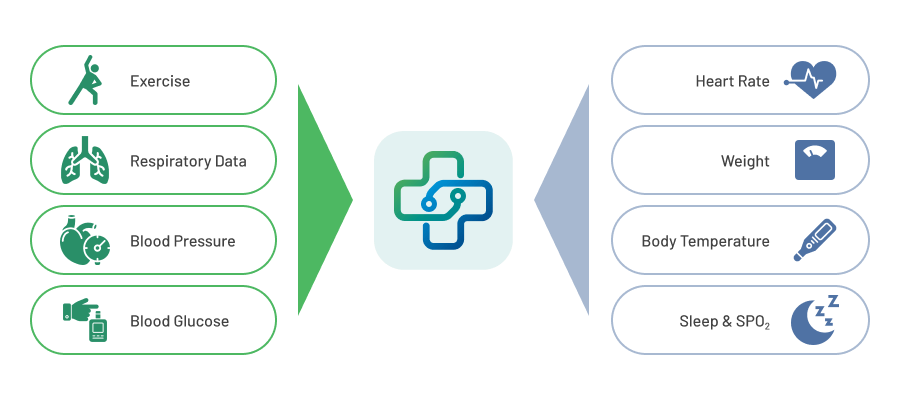
So, let’s establish, what is mHealth? In short, the term translates to “mobile health” and refers to applications and other connected devices used to monitor and detect biological changes and promote preventive medicine.
Alternatively, such apps improve communication between patients and healthcare professionals as well as help medical providers ensure care continuity and effectively manage patient records.
Often, mHealth apps are simply used by consumers in their everyday lives to keep track of exercises, heart rate, steps taken, and the like. However, they can also be used by patient-centric organizations for remote patient monitoring to improve preventative measures and even diagnostics.
Discover how we built a Remote Patient Monitoring Solution for Urology
There are also mHealth solutions designed specifically for healthcare providers to enhance the education and training of their workers and streamline administrative activities like appointment management or tracking time spent on shifts.
By and large, mHealth innovations require a solid app-powered framework. No wonder even such tech luminaries as Apple and Samsung rely on their own mHealth apps. These mobile applications work as hubs for health-related data.
In fact, the data accumulated by mobile health apps is the cornerstone for modern consumer-focused mHealth solutions. Current big data technologies allow for comprehensive analysis of massive amounts of health information with the aid of artificial intelligence and machine learning algorithms.
Learn more about AI in Healthcare
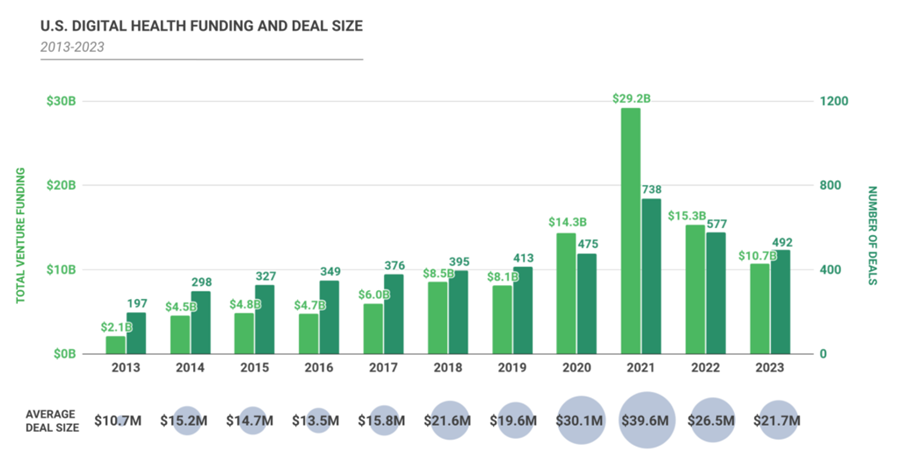
According to findings by Rock Health, a venture fund and research firm dedicated to digital health, 2023 was quite impressive for this field, with funding approaching $10.7B.
It means that we’ll likely see businesses continue to invest in mobile health technology. With the success of the consumer-focused mHealth apps market, it’s important to remember that medical organizations can also benefit from the data these solutions gather and process.
After all, if you can improve the quality of services you deliver to patients through remote medical surveillance and analytics, you’d be remiss not to take that opportunity.
Read about the Development of a Mobile Medical Surveillance App
Current Trends in Mobile Solutions for Healthcare
Now, let’s have a look at the trends of mHealth apps that impact the solutions and the way we use them. In general, the adoption of advanced technologies in recent years has been ubiquitous across many industries, healthcare included. Thus, it’s no surprise that their influence in this sector encompasses mobile development as well.
Internet of Medical Things
The world of connected devices keeps invading our lives, and the healthcare field is no exception as there’s even a special term and technologies designed for it. Internet of Medical Things solutions are meant to improve patient care, enhance operational efficiency, and advance medical research.
This network of interconnected medical devices, wearables, sensors, and software systems, including mobile apps, collects and analyzes health-related data to provide plenty of benefits for both patients and practitioners.
The first group is already so used to living with wearables like health watches or blood pressure monitors that it’s hard to imagine the future without them. And it means that mobile technology to pair IoMT will be in demand.
As for healthcare professionals, they leverage IoMT to collect and monitor patient data to further apply it to making decisions. Mobile plays a crucial role here, providing the opportunity to access a trove of data.
Read more about IoT in Healthcare
Artificial Intelligence for Diagnostics
The next moment we see today within the mHealth app trends is using AI for diagnostics. mHealth integrated with AI helps analyze medical data, interpret images, and assist healthcare practitioners in making accurate and timely clinical decisions. They become increasingly popular in medical imaging, for example.
Such health apps assist radiologists and other professionals in identifying anomalies, tumors, or abnormalities with higher accuracy and efficiency. Equipped with the right solutions, medical staff can access diagnostic insights on the go, improving the speed of diagnosis and treatment planning.
On top of that, AI-based mHealth apps interpret clinical data, analyze laboratory results, and predict potential health risks. They leverage machine learning algorithms to recognize patterns within vast datasets, aiding this way in the early detection of diseases and offering personalized treatment plans.
AR & VR for Medical Mobile Apps
Being just a dream for a while, AR and VR have entered practical use in the medical field and become an essential element for education, training, patient care, and therapeutic interventions. AR overlays digital components onto the real-world environment, while VR immerses us in a completely simulated reality. And this is what medicine will majorly leverage in the following years.
When integrated into medical mobile apps, AR and VR offer unique and valuable opportunities. From aiding in surgical navigation to medical training sessions, these technologies can transport medical students and practitioners to realistic environments for hands-on learning experiences.
In the context of therapy and rehabilitation, AR and VR medical mobile apps can be used to enhance treatment effectiveness. For instance, VR environments provide immersive therapy sessions for mental health conditions, such as anxiety or PTSD. In addition, AR apps can overlay digital information onto the physical world to guide patients through rehabilitation exercises or assist those with mobility challenges.
Healthcare Data Intelligence
The last point we’ll cover for now relates to massive amounts of data collected in the healthcare sector. This data is nothing without insights that you can actually get from it. Thus, you need some help to transform it into something valuable. And here a plethora of data technologies come to the rescue.
Specifically, we want to highlight the integration of mobile tech with business intelligence and data analytics solutions. They offer a comprehensive approach to data-driven decision-making as they allow healthcare professionals to access and interact with data intelligence tools on the go.
For example, physicians can review patient analytics, administrators can monitor hospital performance, and researchers can analyze trends within their respective domains — all through mobile interfaces. It’s also important to note that Big Data analytics makes sense nowadays. Since there’s more and more generated data we can expect, advanced algorithms can help with its processing.

BI for Business
So, the use of such technologies as IoT, AI, AR, and VR has already made it possible to change the entire approach to how we receive and deliver medical care services. We can particularly witness the rise of:
- Healthcare consumerization
- Wearables adoption
- Telemedicine
- RPM approach
- Health awareness
- Smartphone use among older adults
As far as it seems, we can be sure that these areas won’t cease to bring new opportunities and reinforce mHealth solutions during the next few years.
Types of Most-Wanted mHealth Solutions
Next, let’s take a look at the types of mobile solutions designed to promote health. First, all applications can be divided into two categories from the user perspective. It’s easy to tell that these groups are patients or non-professional users and healthcare and pharmaceutical organizations.
However, if we consider the functionality and areas of use, then we’ll get another picture. Below, we outline several trending types of applications that both non-healthcare organizations and medical providers are eager to invest in. Many of us are well-familiar with all of them, except for the last one.
mHealth for Virtual Care

Telehealth apps confidently secure a spot in the investment initiatives of many companies. They allow healthcare professionals to interact with patients through video and phone calls or secure messaging. They are often used for virtual doctor visits, follow-up appointments, and consultations for non-emergency medical issues. All of that is something we’re not ready to give up on soon.
Then, we also have remote patient monitoring solutions, where mobile and IoT solutions blend to help both healthcare providers and patients monitor health. With RPM apps, doctors can monitor vital physical parameters, analyze them, and communicate with patients online to consult on further treatment.
As a consequence, medical professionals have more tools to monitor and even prevent some health conditions and diseases and ensure a better patient experience. You can be sure that this type of app will be long in demand.
Wellness Apps

Designed to help track daily physical activity, wearables like fitness bands and smartwatches help us support a healthy lifestyle and take better care of our bodies. However, that’s not all that wellness apps can do.
Read more about Wearables in Healthcare
Today, mental well-being has become as important as physical. People often rank mental health higher than cancer when talking about their top health concerns. So, it’s no wonder mobile apps that help treat mental-related issues have gained more popularity.
They help users track their mood and reduce the level of stress or anxiety. These applications can also send alerts if any disturbing signs appear and there’s a need to see a doctor.
On top of that, wellness apps include mobile solutions for diet monitoring and management. They provide personalized weight loss or gain plans, meal and exercise options, food logging, and even community support.
Medical Reference Applications

On top of that, users can access information on medications for early symptoms, pharmacies’ locations, and drug availability there, and even get the delivery of over-the-counter medications.
Read how we helped with the Development of a Medical Reference App
On the flip side, reference apps built for healthcare professionals and students provide them with quick access to medical knowledge, clinical guidelines, drug information, continuing medical education, and other aspects of healthcare. In essence, they serve as handy references in daily practice and can enhance the efficiency of accessing critical data.
Mobile Patient Portals

Usually, these portals are part of larger electronic health record systems and are designed to enhance patient-provider communication. Most likely, you’ve tried patient portals yourself to check lab test results, view prescriptions, schedule appointments, manage billing statements, and review insurance information.
Discover how Velvetech has built an Appointment Scheduling Platform
Mobile Apps for Healthcare Administration

They can include solutions that help with the following activities:
- Electronic health records management
- Medical enterprise resource planning
- Practice management
- Medical billing
- Care coordination
- Inventory management
Generally, these apps for healthcare management complement web platforms and add a touch of mobility to the lives of medical and administrative staff. And as those lives are no different than others, it’s only natural that this category of mobile solutions will be on the rise.
mHealth Solutions: Trend-Setting Apps
Recent years introduced us to a whole new class of mHealth applications that put the user front and center of this health data equation by giving them more control over their data. This, however, is not the most progressive feature of these apps.
“The new thing is paying or rewarding users to get them to use your mHealth app and feed the app with their healthcare-related data.”
It’s not like these mHealth solutions will make users rich, not even in their lifetime, but it definitely looks like these incentivizing, health-oriented apps get phenomenal interest from the crowd. Let’s take a closer look at some of these mHealth solutions.
Sweatcoin

“The team at Sweatcoin have experienced phenomenal growth since launch… and have created a new, powerful ‘Movement Economy’ that rewards people…”
— Reshma Sohoni, Co-Founder of Seedcamp
Sweatcoin is currently working on expanding its geography and has recently added a blockchain solution that allows users to convert sweatcoins into a cryptocurrency called SWEAT.
Find out How to Make Your Own Crypto
Evidation

Apparently, achievers can get paid for such activities as yoga, meditation, and healthy sleep in addition to the number of steps they make. The service currently boasts almost 5 million active members and seems to be steadily gaining popularity.
Additionally, the company helps individuals and the world’s most advanced healthcare companies understand and influence everyday behaviors by performing health-related research.
In fact, Evidation’s customers may receive bonus offers for participating in the studies and research by Evidation Studies. Currently, the company conducts research on Heart Health, Migraines, and Diabetes, to name just a few.
STEPN

However, there is a caveat. Users have to first spend money on STEPN’s NFT sneaker before they can begin earning the platform’s native tokens as a reward.
Backed by well-known giants like Sequoia Capital and Binance, the “move-to-earn” startup raised $5 million in 2022. Today, the app remains popular, having more than 30,000 monthly active users.
Time to Map Out Your mHealth Strategy
Source: RopckHealth
Looking back at 2023 results in digital health funding, this year can be ripe with healthcare innovations as well. Chances are, a large chunk of these innovations will come from mHealth development.
So, no matter if you’d like to build your own consumer-focused mHealth app that revolutionizes the market or are interested in acquiring a tool for enterprise use — reach out to us for a free consultation. Velvetech will gladly assist you with mHealth solutions development and share expertise in advanced technologies and mobile apps.