
Did you know that cloud cost optimization and spending management is the number one priority for companies in 2024? That is no wonder since businesses spend between $1.2 million and $24 million on the public cloud annually.
While organizations keep embracing cloud computing and the number of cloud providers continues to grow, it becomes tricky to control spending. Companies leverage various approaches like a multi-cloud or hybrid strategy to manage their IT environments, which often adds even more challenges to planning cloud costs and requires more optimization effort.
Top priorities for companies in 2024

Source: Flexera
Main Categories of Cloud Costs
Before looking into the challenges with cloud optimization and how to address them, let’s find out what we mean by cloud spending. Indeed, what do companies pay for?
Computational Resources
This part includes costs associated with virtual machines, container services, serverless computing, and dedicated instances. Typically, these are billed based on the type, size, and duration of the compute instance usage.
Storage
As the name implies, with this type, you allocate a budget for data storage services like block storage, object storage, and file storage. The costs usually depend on the amount of data stored, the storage class, and additional features like replication and encryption.
Data Transfer
When data is moved within or out of the cloud provider’s network, you may see data transfer costs occur. For example, this includes data egress to the internet, data transfer between different regions, or data transfer between various services within the same region.
Miscellaneous
Finally, there are other expenses that fall under the miscellaneous category. Sometimes, you may require third-party integrations or use managed IT services. Or, you may need to upgrade to a premium support plan. Software licensing fees will also contribute to this group of costs, covering those for using proprietary software or obtaining enterprise licenses for essential applications.
Why Management and Optimization of Cloud Cost Is a Challenge
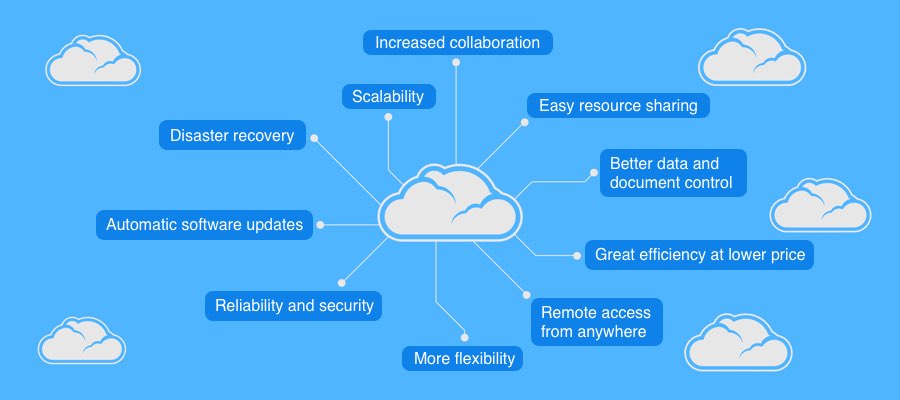
Cloud technology is a highly available solution that provides plenty of benefits for companies, including easy on-demand sharing and scalability of resources to meet business requirements.
Case Study: Plant production legacy system migration to the cloud
As a part of your hybrid cloud strategy, public clouds allow you to:
- Facilitate work among distributed teams
- Improve security
- Provide a powerful recovery plan
- Increase flexibility
- Reduce costs
So, how does it come that the last above-mentioned advantage — cloud cost reduction — turns into a pain point? Spiraling out of control prices for cloud services can be the first explanation that comes to mind. It is not the topmost, though.
Mismanaged cloud resources, uncontrolled waste, and weak governance can drive up costs—issues that effective managed IT services and solutions are designed to eliminate.
So next, let’s take a look at the best practices that help reconsider your spending on cloud resources and provide effective tools that you can use for cost optimization.
Ten Cloud Cost Optimization Strategies
Regardless of whether your choice is a multi-cloud strategy or hybrid cloud environment, fixed or dynamic pricing model, there are several valuable practices to help you ensure cost-efficiency and leverage cloud computing infrastructure.
1. Use Cloud Cost Analytics
A good beginning is halfway to success. First of all, it is important to understand where costs within your organization occur and pay attention to spending trends. Of course, it is essential to know how much you pay for cloud services and in support of which infrastructure systems.
Full-spectrum visibility of costs makes it easier to control cloud-related spending. This can be facilitated by the usage of cloud cost management software provided by your cloud service provider (CSP) or an IT technology partner.
Quite often, this software goes with a cloud management platform (CMP) and helps you:
- Track cloud resource usage
- Monitor computing demands
- Observe spending related to infrastructure usage
- Manage costs by associating them with specific items of your infrastructure
Generally, CMPs provide cost modeling and metrics that help you make informed decisions. You can compare your existing workloads in public and private clouds and evaluate spending related to each of them.
With the use of analytics dashboards and practical recommendations, companies can optimize cloud costs. Furthermore, they can enhance performance efficiency and automatically scale usage to optimal rates.
2. Apply Power Scheduling
When it comes to our homes, most of us try to be careful about power consumption by turning on the lights only when we need them. That is because we pay exactly for what we use. So, why should it be different with cloud computing where charges, in most cases, are similar to utility bills based on usage?
One of the benefits the cloud can support you with is the possibility to spin up resources when you need them and vice versa. Powering down the instances when they are not in use is an effective way to save costs while deploying the public cloud.

In order to implement this strategy, it is essential to identify idle resources first and pinpoint those that can be shut down during off-hours. For example, development systems can be safely turned off during the weekends and overnight when no one is using the resources you pay for.
While you can manage this process manually, there is a better option to shut down and restart instances. Your CSPs bring down to your table such tools as:
- AWS Instance Scheduler
- Google Cloud Scheduler
- Azure Automation
These tools let you manage the entire process and configure a schedule to establish start and stop times.
Leveraging automation is especially valuable when you have teams working in different time zones. For instance, once the East Coast hits work, power schedulers restart the development environment, and after the West Coast leaves, the system powers it down. Thus, it helps gain more control over resources and leads to cloud cost optimization.
3. Leverage Heat Maps
Another cloud cost optimization strategy that provides efficient help is the tool called heat maps. Most cloud service providers offer it today. This visual instrument is similar to the previously mentioned technique and allows you to define peaks and valleys in terms of computing demand.
It also enables troubleshooting performance issues and efficient resource allocation. For example, it can help you determine if you need additional capacity at certain times of the day, or if you can safely shut down some servers during the weekends.
4. Consider Instances
Reserved Instances
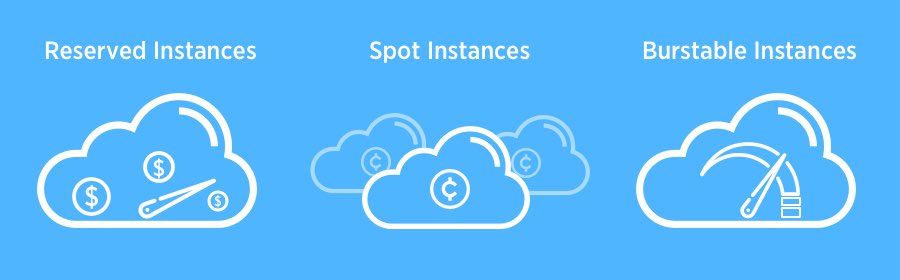
Another valuable practice to optimize cloud costs is turning to capacity reservation or simply Reserved Instances (RIs). This is a concept of billing discount that provides you with significant savings on cloud costs in comparison with the on-demand pricing model.
Depending on the provider, the terms and conditions under which RIs are offered can vary. Generally, you get the discount based on the length of commitment – one or three years – and the amount of advance payment, if this option is applicable. In this case, you receive bills for the capacity you have reserved instead of the capacity you have consumed.
At first sight, it may sound simple and very tempting because CSPs could offer you discounts of more than 70%. But haste makes waste. Without proper planning of the RIs lifecycle and analysis of your current cloud use, you risk facing sunk costs rather than achieving the highest savings.
Looking for a partner to support you with cloud optimization?
Services of cloud providers and optimization tools of third parties will help estimate RIs purchases and reduce the possible impact of unused resources.
Consider the following steps to take full advantage of reserved capacity:
- Apply reserved capacity only for instances that run continuously
- For applications with stable usage patterns running not all the time, obtain a minimum number of RIs according to average sustained usage
- For other applications, choose on-demand pricing, smaller instance sizes, and power scheduling
- Consolidate RIs purchases in a centralized account allowing one team to use resources when the other does not use them
Spot Instances
Spot Instances are available for less than the on-demand price and represent the spare compute capacity of your cloud provider. CSPs constantly auction their excess capacity for your immediate use. This approach can be tricky and includes some hidden obstacles.
Since spot instances must be able to be shut down from time to time, they are better suited for batch workloads, like stateless microservices, where saving cost is crucial, but availability is not.
It is absolutely not the best choice for mission-critical tasks and tasks that cannot be terminated quickly. Yet, with the right strategy, companies can purchase this cost-saving option and successfully use it without risking downtime.
Burstable Instances
Burstable instances can be efficiently applied to optimize cloud costs as CSPs offer them at a reduced price. They are meant to provide a minimum level of CPU performance but can burst to a maximum level when requested by workloads. Burstable instances use CPU credits.
Generally, when the instance is active and CPU performance is above the baseline, credits are burned down and vice versa. These instances are a perfect fit for a wide range of general-purpose apps with low CPU usage. Examples include small and medium databases, low-usage web servers, or development environments.
5. Rightsize Your Cloud
The aim of rightsizing is to minimize costs and maximize performance by eliminating over and under-utilized assets and ensuring that the workload of your infrastructure is supported by the right amount of resources.
This could be achieved in three steps:
- Conduct performance analysis of virtual machines, instances, and volumes
- Determine what activities you should execute to enhance their efficiency
- Adapt your infrastructure by allocating resources
In most scenarios, companies are not aware of how much capacity they actually need. Thus, they are overpaying for resources they never use.
Proper monitoring of memory, CPU, and network in tandem with a CMP would be a robust practice. It can help determine peak resource consumption and define thresholds for your infrastructure.
The process of rightsizing should be ongoing and involve continuous control of your cloud environment. Identifying assets that you can terminate, downsize, or upgrade directly entails cloud cost optimization and improves general performance. Furthermore, it enables your cloud to adjust to the real needs of the business.
6. Identify Shadow IT
With ongoing information technology consumerization, staff members independently install and use software, leaving the IT department uninvolved. This situation is referred to as shadow IT, and cloud services have become a large part of it.
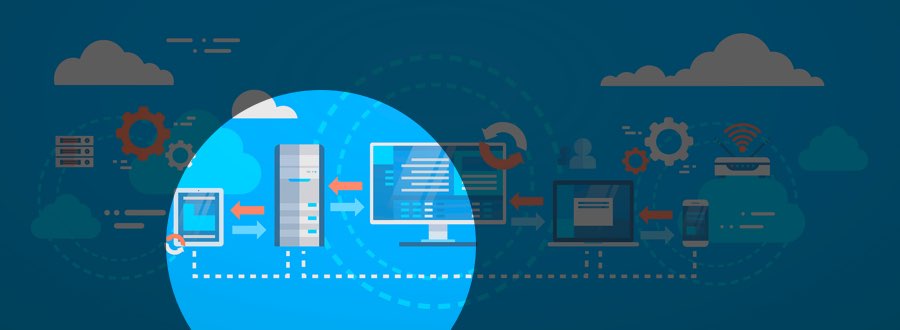
According to various industry reports and surveys, shadow IT can account for 30% to 50% of total IT funding in organizations. That makes it a considerable piece of hard-to-track spending. As a result, you can face additional obstacles for cloud cost optimization.
Apart from the increasing costs, shadow IT can compromise cloud security and lead to sensitive data leakage. Thereby, it can affect the reputation of the company.
CSPs or cloud access security broker vendors can offer solutions that help overcome shadow IT. You can also implement such measures as controlling app access, listing the types of available cloud services, and facilitating the process of software order and approval.
Other recommendations include:
- Streamlining corporate IT governance structure
- Controlling data leakage
- Allowing only sanctioned apps to run in the cloud environment
- Conducting an audit to track spending on the cloud
- Providing corporate training on shadow IT risks
7. Use Cost Allocation Tags
Another strategy for cloud cost management and optimization is to use tags or metadata labels assigned to your cloud resources. This is an effective way to organize and track costs. So, basically, what you do is break down and categorize expenses based on, for example, department, project, environment, or application.
You can use your cloud provider’s management console to create the necessary tags and assign them to the relevant resources. After that, it becomes possible to filter and analyze costs based on the tags to see the allocation.
8. Compare Multi-Cloud vs. Single Cloud
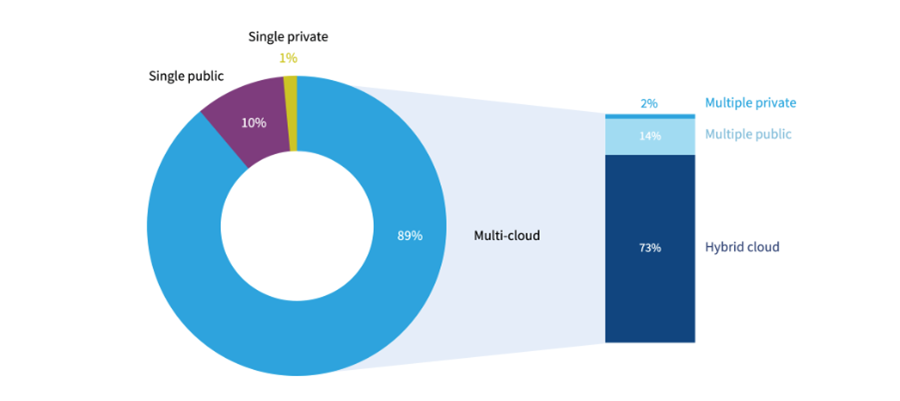
Source: Flexera
The number of cloud service providers is growing, with each of them offering various terms and pricing options. It’s no wonder that it’s getting hard to define whether you need to stick to a single cloud or combine several to gain maximum benefits.
While the multi-cloud approach can drive efficient resource optimization and help avoid one vendor lock-in, it can also lead to the missing opportunities of getting decent discounts from partnering with a single vendor. Anyway, even a multi-cloud strategy implies choosing several vendors to opt for.
We understand that knowing which approach is better for your business needs might seem tricky, and thus our team can come to the rescue and assist you with it. We spent years setting up cloud environments for our clients and helping them to leverage cloud cost optimization services.
9. Automate Cloud Management
We’ve already mentioned that today, cloud providers offer various solutions to monitor and manage cloud resources conveniently and thus optimize spending. For example, these can be AWS CloudWatch, Azure Monitor, and Google Cloud Monitoring. However, to fully balance the costs, you need to leverage other automation tools.
You see, automation is an effective technique for cloud cost optimization that involves instruments to control cloud expenses without manual intervention. To achieve it, your team first defines policies for cost optimization. This includes creating automated rules for shutting down idle resources, resizing over-provisioned instances, and moving infrequently accessed data to cheaper storage tiers.
Next, configure alerts for unusual spending patterns or budget thresholds, so you can take immediate action if costs spike unexpectedly. Infrastructure-as-a-service tools like Terraform or AWS CloudFormation come in handy, too, ensuring consistent and repeatable provisioning. It helps in applying cost-saving measures automatically.
10. Consider Software License Cost
Since software licensing is an essential part of cloud costs, it’s important to carefully consider the options and manage what you pay for. Sometimes, it’s easy to overlook unused licenses and keep spending on the software that you no longer rely on.
As you can see, there are many tools and options that provide great capabilities for the optimization of your cloud cost. In fact, combining several of the above-mentioned strategies can help you maximize your efforts.
Closing Thoughts
Companies turn to public cloud infrastructure to achieve cost-efficiency, business continuity, and scalability. While cloud setups hold great potential and help reach these aims, they can also reveal some challenges.
Case Study: Cloud application as a scalable and efficient solution for an energy company
It is essential to find the right balance between performance and cost and iteratively track your infrastructure and bills. That is when cloud cost optimization tools prove to be useful. Leverage the solutions that CSPs offer and enforce them with technologies provided by third-parties.
When those third-party technologies include custom cloud applications or automation, many teams engage cloud application development services to build efficient, cost-aware solutions.
We hope our best practices will guide you in managing resources and choosing the right configuration in accordance with your business goals.
Contact Velvetech to see how the cloud solutions can add value to your business environment. Our team of dedicated professionals will be happy to provide you with consulting on cloud cost optimization and assist you with infrastructure settings.