
How can we get ahead of our competitors? What do our customers truly desire? Is there a way to optimize our operations and boost productivity? Some of these questions often plague the minds of business leaders across all kinds of industries.
As a result, many are embracing data-driven strategies. A tool that facilitates this is an enterprise data warehouse. In short, it helps centralize and store company-wide digital information to allow for enhanced analytics.
While that definition may seem pretty straightforward, there’s still a lot to understand about enterprise data warehousing, especially if you haven’t yet implemented one in your organization. So, in today’s post, we’ll dive into all the key details about this technology.
We’ll help you determine whether you need to implement a data warehouse, discuss the types of solutions that are out there, and finish up with the key trends that are affecting the future of these systems.
Understanding Enterprise Data Warehouses
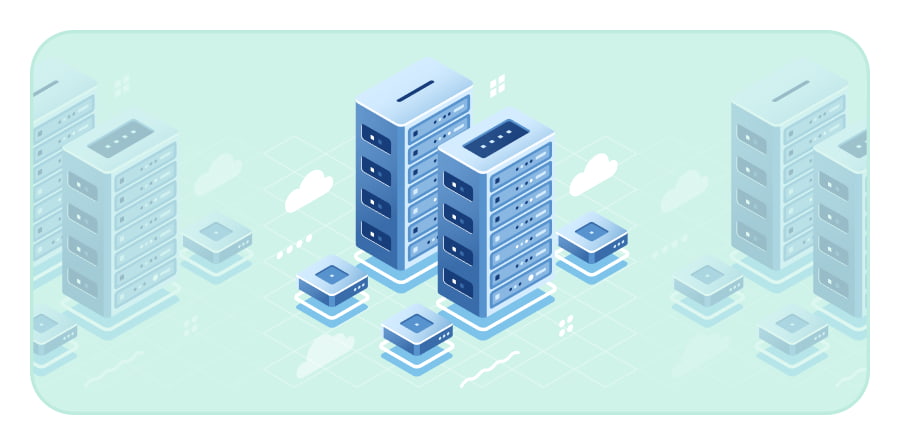
As we’ve briefly mentioned, an enterprise data warehouse (EDW) centralizes digital information from various enterprise software. Data from CRM platforms, web-based tools, contact centers, and even mobile applications is structured and stored in this central repository. All for the purpose of running various types of data analysis and enhancing business intelligence.
Read up on the Different Types of Data Analysis
You may be asking yourself, how is an enterprise data warehouse different from a regular one? Well, the truth is, there is probably only a single differentiating factor and it lies within the complexity of the platform’s architecture.
You see, an EDW typically covers the data storage and analytical needs of the entire organization. Often, serving tens if not hundreds of users, spanning a multitude of departments. Thus, the architecture of an enterprise data warehouse provides more functionality and capabilities than a regular one that may only cater to the needs of two or three business areas.
Learn more about Data Warehouse Architecture
BI for Business
4 Signs You Need an Enterprise Data Warehouse
Hopefully, you now have a better understanding of what constitutes an EDW. So, let’s quickly go over a couple of factors that serve as a clear indication that your organization might benefit from data warehouse implementation.
Disparate Data Sources

For instance, to build a complete customer profile, do you need to merge digital information from your CRM, mobile app usage data, and insights from IoT devices? If yes, incorporating an enterprise data warehouse might be the best course of action for you.
You see, EDWs consolidate information from disparate sources into a central repository through extract, transform, and load (ETL) processes. Thus, allowing you to get a comprehensive overview of a particular business area or even forecasts about the future.
High Volume of Data

Large amounts of digital information are certainly hard to manage, but with an EDW you’ll be able to centralize and transform it all to significantly optimize operations. Since data warehouses also help automate data processing as a whole, you’ll refine the use of your resources.
Take a look at how Velvetech Automated Data Processing for a Recruitment Agency
Slow Report Generation

So, if you’ve been noticing that it takes your team a lot of time to process data and produce necessary reports, it could be a sign to pursue data warehouse development.
Difficulty Ensuring Regulatory Compliance

Read up on the nuances of HIPAA Compliant App Development
If your business is struggling to adhere to certain data-focused regulations or spends too much time and money on ensuring compliance, an enterprise data warehouse can help. By serving as a single source of truth regarding all of your digital information, EDWs provide a thorough record of your data practices while also helping improve security.
Enterprise Data Warehouse Types
Now, let’s move on to the different types of enterprise data warehouses that modern companies usually choose from. Here, we focus on the categorization based on deployment options as it’s definitely something you’ll need to discuss with your IT team.
The kind of implementation you choose will affect your costs, opportunity to scale, and level of control. So, take your time to consider what suits your organization best.
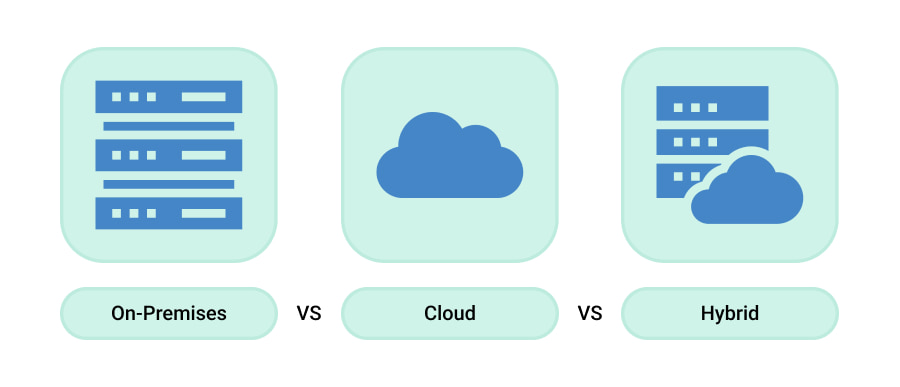
On-Premises
On-premises is a traditional enterprise data warehouse deployment model. Here, the company has to purchase all the software and hardware tools required for successful EDW implementation. Additionally, it is up to the organization itself to ensure the system is maintained and continues working properly.
Pros
- Control. An on-premise data warehouse lets you retain complete control over your data and the functioning of the system.
- Security. Since only people who are connected to your company’s network can access the digital information within the platform, data security is stronger.
- Efficiency. By having your EDW on-premises, you will have little to no network latency and will be able to ensure efficient operations.
Cons
- Costs. The initial costs of on-premises deployment are quite high as you will need to buy and set up all the necessary software and hardware. Not to mention, you’ll likely need in-house specialists to maintain the system. Plus, more hardware may need to be purchased as the volume of data you work with increases.
- Scalability. Scaling resources in either direction isn’t easy with this approach as you’re limited by the hardware you already have.
Cloud
Cloud-based enterprise data warehousing has been increasingly gaining traction in recent years with companies looking for more flexibility. This approach allows the organization to bypass setting up its own hardware and instead pay for a DWaaS solution.
There are several cloud-based enterprise data warehouse examples. Some of the most popular ones include Amazon Redshift, Google BigQuery, Microsoft Azure SQL, Snowflake, and Firebolt.
Pros
- Scalability. Cloud EDWs let you seamlessly scale data processing needs and storage resources, practically with a click of a button.
- Maintenance. With a DWaaS solution, you won’t need to spend much time on the maintenance of the warehousing system. Service providers take charge of all that on their end.
- Costs. Compared to on-premises deployment, cloud EDWs can be more cost-effective as you usually pay a subscription price that suits your needs best.
Cons
- Security. Cloud-based EDWs provide access to data via the Internet. Thus, the risk of confidential data being leaked is higher than with on-premises deployment.
- Latency. Depending on where the servers are located, you might have more network latency with cloud solutions.
Learn about Cloud Cost Optimization Best Practices
Hybrid
Hybrid EDW implementation is becoming a go-to for those eager to leverage the benefits of both — on-premises and cloud deployment. In this case, the data governance and efficiency of on-premises EDWs is merged with the scalability offered by the cloud.
A hybrid enterprise data warehouse design offers extra flexibility as it makes it easier to scale capabilities depending on ever-changing needs. Overall, it allows you to retain the benefits of both storage options we’ve discussed above.
However, the main disadvantage of hybrid deployment is that it is often more expensive than sticking to one. After all, you’d have to pay for the setup and maintenance of on-premises systems while also covering the cost of cloud services.
Trends Affecting the Future of Data Warehousing
You’re now up to speed on some of the basic enterprise data warehouse concepts that are out there. However, before you call in an IT team and jump into implementation, let’s take a quick look over some of the latest trends that are affecting the future of data warehousing. After all, it’s best to be informed about the innovations that might affect your solution.
Data Lakehouses
Discover the Difference Between Data Warehouses and Data Lakes
The two concepts have been around for some time, but an emerging trend that is grasping the attention of businesses is the implementation of data lakehouses. As the name suggests, they combine elements of both warehouses and lakes. Specifically, these platforms employ the structure of data warehouses and combine it with the cost-effective storage capabilities of data lakes.
“Data lakehouses enable structure and schema like those used in a data warehouse to be applied to the unstructured data of the type that would typically be stored in a data lake.”
— Forbes
If you’re only starting on your data journey, lakehouses may not be for you. Typically, they are of interest to those who are ready to implement enterprise-scale artificial intelligence and machine learning. However, definitely keep this technology in mind as you go ahead with improving your data management strategy.
Multi-Cloud Data Warehousing

Despite the rising interest, it’s important to remember that this approach adds a level of complexity and cybersecurity risks. However, some find that the pros outweigh the cons. So, consider discussing this with your IT team to determine if multi-cloud data warehousing is the right fit for you.
Read up on how we performed a successful Cloud-to-Cloud Infrastructure Migration
Data Fabric

In short, it is an architecture that helps you streamline practices across all of your platforms, whether they be on the cloud, on-premises, or at the edge. Once again, this trend may be too advanced for some who have barely started their data-driven journey. Nonetheless, it’s still good to know what is out there for the future.
Embrace Enterprise Data Warehousing
As you have seen from this post, there is ample potential in embracing enterprise data warehouses for your organization. They connect disparate data sources, help you manage myriads of digital information, and speed up your report-making capabilities, all while ensuring regulatory compliance.
So, if you’re looking to capitalize on all these benefits — don’t hesitate to reach our team. Velvetech offers extensive data warehousing services to clients from all kinds of industries and with various needs. We’ll be happy to help you on your development journey.