
The Internet of Things and mobile app development complement each other, shaping a perfect union. These technologies coexist harmoniously to ensure smooth interaction between machines and humans while elevating business efficiency and user experience.
The global IoT market is rapidly increasing and is projected to grow from $714.48 billion in 2024 to 4,062.34 billion by 2032. This growth undeniably provides opportunities for mobile apps to expand their presence in the IoT.
Let’s find out what changes the Internet of Things brings and what to consider before jumping to the implementation of mobile IoT apps.
1. Mobile IoT: New Market Opportunities
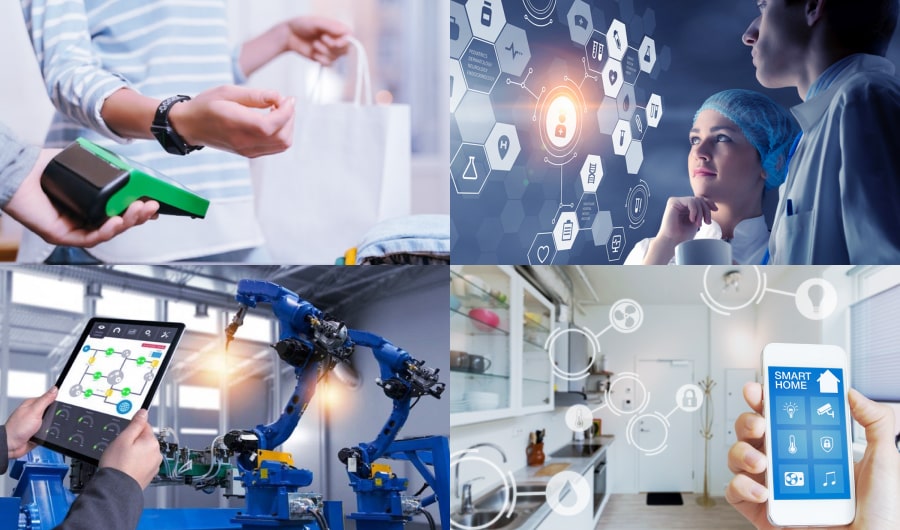
With various industries stepping onto the path of digital transformation, the demand for smart connected devices paired with apps keeps rising. Going hand in hand, IoT helps the mobile app sector explore new niches to thrive and pushes it to a whole new level.
Industrial Sector
Elevating the performance and production capacities of enterprises, IoT created a huge market demand for mobile app development services supporting industrial IoT solutions. Most of the time, connected machines require proprietary software to function seamlessly.
Mobile IoT-based apps enhance predictive maintenance, streamline asset tracking, and improve inventory management and supply chain monitoring. Providing a safe working environment and machinery control, mobile IoT technologies drive the growth of construction, mining, manufacturing, and energy companies.
Discover the top use cases of IoT in the Manufacturing Industry
Healthcare
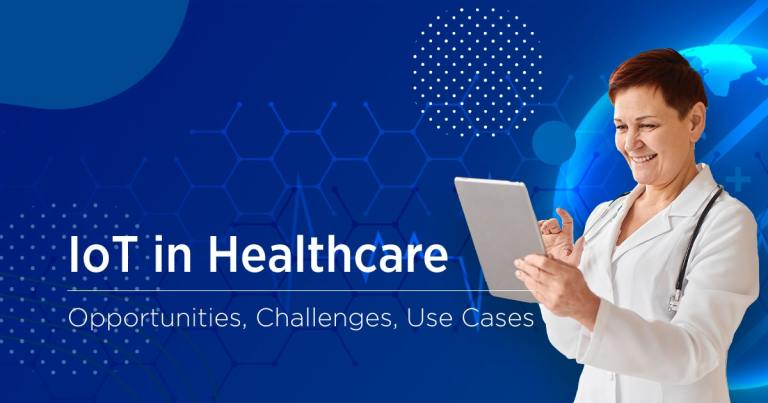
Healthcare is a lucrative niche for mobile app development in general. Now, when we see an increase in the adoption of IoMT technologies, healthcare professionals and patients ubiquitously turn to mobile apps. The key reason is that they help to enhance treatment outcomes, patient experience, and overall healthcare efficiency.
Read more about The IoT in Healthcare
It’s a good moment to seize the day and leverage the use of mobile technologies for biosensors and medical wearable devices. Whether it’s an improvement of an existing IoT solution or an ideation of a new concept — the development of IoMT apps will evolve to reconfigure the sector.
Agriculture
With the planet’s population growing increasingly, it’s now as important as ever to help meet the challenges the agriculture sector faces. IoT sensors and pairing agriculture apps help monitor field crops, manage greenhouses, and generally improve cultivating plants and livestock.
Hopefully, we’ll see more organizations adopt such smart solutions, and countries will have more opportunities to cope with famine, optimize resource allocation, and address environmental issues.
Retail
With the use of sensors, beacons, and cameras, IoT has changed the retail industry. It keeps opening vast opportunities for mobile app development that, if combined with the right retail tech solutions, can drive a better shopping experience and increase revenue.
Mobile IoT solutions help reduce checkout lines, analyze and forecast customer data in real time, and track items on the shelves.
Transportation & Logistics
Another sector that greatly benefits from leveraging the union of IoT and mobile technologies is transportation and logistics. From smart route planning to vehicle monitoring, there’s no shortage of use cases in this field.
Companies can track the delivery of goods, manage their fleet, and control conditions during transportation. For example, it’s possible to monitor temperature, humidity, and other parameters to ensure the safe delivery of products, especially perishable ones.
Read about the development of a Cold Chain Monitoring Solution
Automotive Industry
Similar to logistics, the automotive industry is also taking advantage of these two technologies. Here, IoT-based apps are majorly used to collect data and control air quality within cars, tire pressure and temperature, or tread wear. The solutions also provide data on road conditions, traffic, and driving behavior, which makes them a part of navigation and telematics systems.
Find out how we built an Application for IoT-based Smart Tires
Consumer IoT
From various IoT wearables for everyday use to smart home devices, the Internet of Things redevelops the way we live. The growing number of connected products for consumer needs requires user-friendly and intuitive apps.
Emerging sectors, like outdoor and landscape appliances, will provide plenty of options for mobile app development to evolve.
2. Streamlined Connectivity
The role of mobile apps in the entire IoT infrastructure is vital. Principally, they allow end-users to interact with smart sensors — send commands, transfer and analyze data, and configure the connected devices. Thus, it’s essential to ensure seamless communication, which, in the case of IoT systems, often relies on some specific tech.
Commonly, mobile app connectivity involves Wi-Fi, 4G/5G, NFC, and Bluetooth technologies. When it comes to the Internet of Things solutions, developers usually should go the extra mile to integrate apps with IoT gateways or standalone devices and incorporate inherent communication protocols and standards.
3. Focus on Security
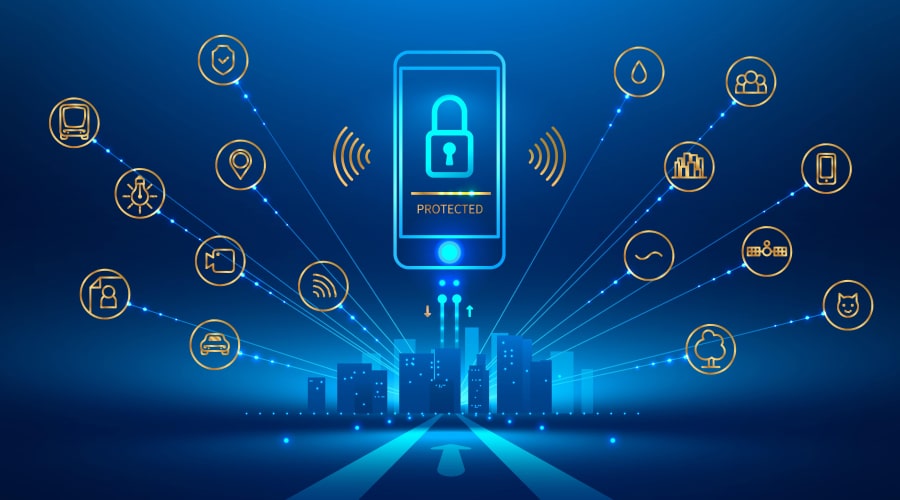
With the exponentially growing number of connected devices that are forecasted to reach almost 40 billion by 2033, a huge amount of data is generated, processed, and transmitted every day. Accordingly, there’s a rise in the need for enhanced security measures to protect this sensitive data. Therefore, mobile IoT apps have to comply with these requirements.
To eliminate fraud and theft possibilities and avoid data breaches, your IoT development team should apply advanced encryption technologies and authentication procedures. On top of that, the use of AI, ML, and Big Data can help thwart data infractions and mitigate the risks of cyberattacks.
Find out more about IoT Security Challenges and Ways to Tackle Them
4. Shift in Data Storage
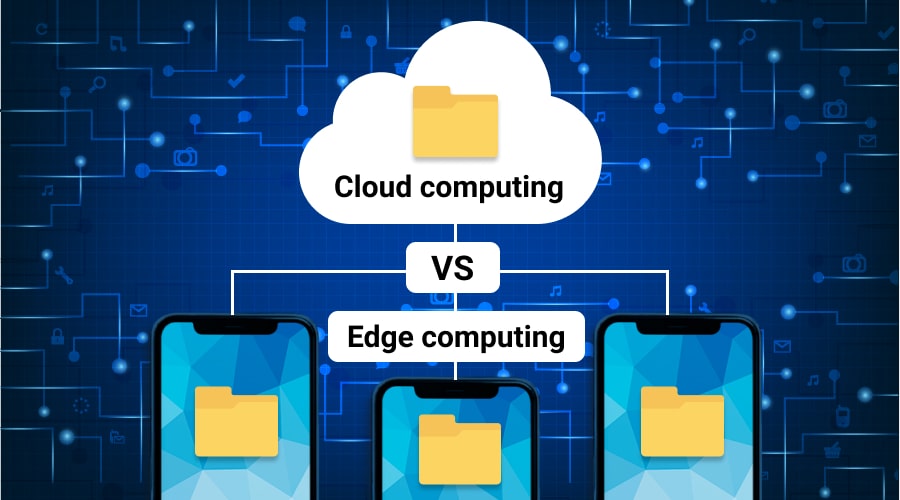
Data storage is another moment to focus on when working on your mobile IoT application. Since IoT devices generate a lot of data and its amount keeps constantly growing, it’s essential then for applications to be scalable and capable of handling the load.
On the other hand, IoT solutions have recently started to count on edge computing to process data that has been majorly stored in the cloud before. It means that you no longer need large cloud capacities since the data is processed locally on the device or at the edge of the network.
This model allows apps to reduce dependence on the cloud, perform faster, and decrease latency time. On the whole, it provides mobile app developers with more options to improve overall efficiency and security.
5. Priorities in UX/UI Design
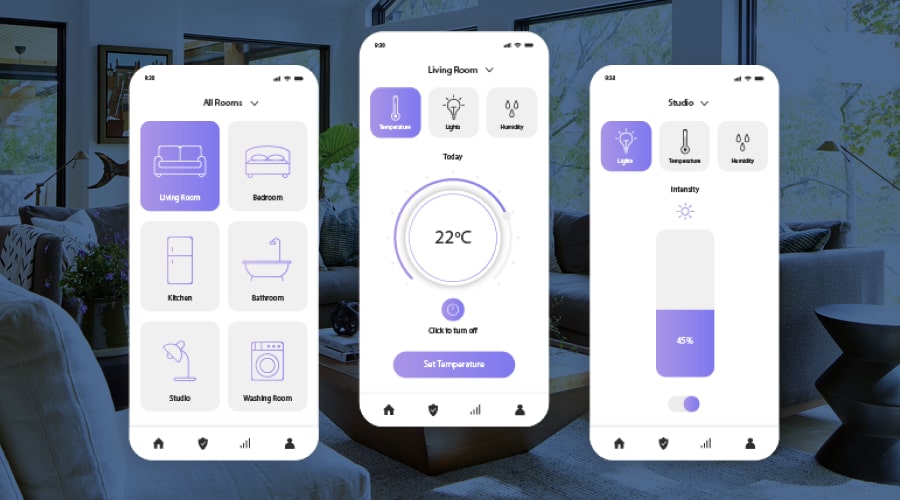
Due to the complex nature of IoT technologies and varied components of the system, the UI/UX design of a mobile IoT app significantly differs from a traditional one. IoT includes multiple devices with various interfaces created to interact with each other and with end-users.
Taking this into account, the design for IoT apps requires a coherent approach to provide a seamless experience not only with the app but across the entire IoT ecosystem.
Additionally, UI/UX design should be very intuitive and help users feel comfortable while interacting with smart devices, even if they’re doing it for the first time.
The Future of Mobile IoT
When talking about the united power of the Internet of Things and mobile app development, it’s only natural to wonder about the future of this alliance. Even if we scrutinized to some degree various facets of IoT-based mobile apps, which can give you a hint of what to expect, let’s take a closer look at five prominent areas.
Extensive 5G Integration
As you can guess, such connectivity will enable real-time communication between IoT devices, facilitating advanced applications such as autonomous vehicles, smart cities, and industrial automation. The increased bandwidth and reliability of 5G networks will also support the deployment of more sophisticated IoT devices and services.
A Keen Eye on Energy Efficiency

With the broad adoption of energy-efficient communication protocols and power management techniques, energy consumption will decrease, making IoT deployments more sustainable. Essentially, these advancements will be important for IoT mobile applications in remote or inaccessible areas, where replacing or recharging batteries is challenging.
Sustainability Initiatives Gain Traction

Read about how IIoT Helps with Sustainability Goals
If you wonder how mobile IoT can support sustainability initiatives, let’s dive in further. For example, IoT sensors can monitor air and water quality, track wildlife, and detect environmental hazards. All the data is available at your fingertips.
Smart energy management systems, on the other hand, can optimize energy usage in buildings and, thus, reduce consumption and emissions. On top of that, mobile IoT solutions can also support renewable energy integration, grid management, and resource optimization.
A Promise of AR/VR Technology

VR, in turn, can simulate complex environments for training purposes and allow workers to practice and refine their skills in a safe and controlled setting. If we take a look at customer engagement, AR and VR here can provide interactive and personalized experiences. And this greatly changes product demonstrations and support.
All of the examples show that AR, VR, and IoT will open new avenues for innovation and mobile technology will be part of it, bringing new experiences to the user’s hands.
AI & ML Adoption Goes Full Tilt

For instance, AI algorithms can analyze data from sensors in real time to predict equipment failures before they occur. Machine learning models can also optimize energy consumption in smart buildings or enhance the accuracy of health monitoring devices. As AI continues to evolve, its synergy with IoT will unlock new possibilities and drive significant advancements in various industries.
Ready to Launch Your Mobile IoT App?
The IoT market is evolving at the pace of a sprint. With the growing number of smart devices, there’s a plethora of opportunities for mobile app development to expand its reach and enter new niches. Supporting IoT solutions, mobile applications should accommodate the complexity of requirements and keep up with the rapidly changing IoT environment.

Choosing a Winning App Development Strategy
While the Internet of Things helps mobile apps unleash greater potential, it introduces some fresh nuances into the development process. When initiating an IoT project, it’s good to make sure your team understands the fine distinctions in connectivity, storage, security, and design of mobile IoT products.
Read more on How to Launch a Successful IoT Project
Experienced in providing both IoT and mobile app development services, we leverage our industry knowledge to help companies meet their goals. Velvetech’s team builds scalable and reliable IoT solutions that facilitate business processes and elevate performance. Entrust us with your idea, and we’ll support you with its implementation.