The primary goal of most businesses is to deliver high-quality and unique products or services to differentiate themselves in the market and maintain a competitive edge. Nowadays, it often requires digital transformation and a robust approach to software development and IT operations. This is exactly where DevOps kicks in.
If you want to leverage DevOps solutions, then it is worth knowing the essence of the DevOps process, its challenges, and the ways to overcome them. We have created a comprehensive guide to help you sort out things.
Particularly, we will cover the following topics:
- Common Principles of DevOps
- Five Important Strategies
- Understanding the DevOps Process
- Key Steps of DevOps Lifecycle
- Tips to Implement an Effective DevOps Strategy
Key Principles of DevOps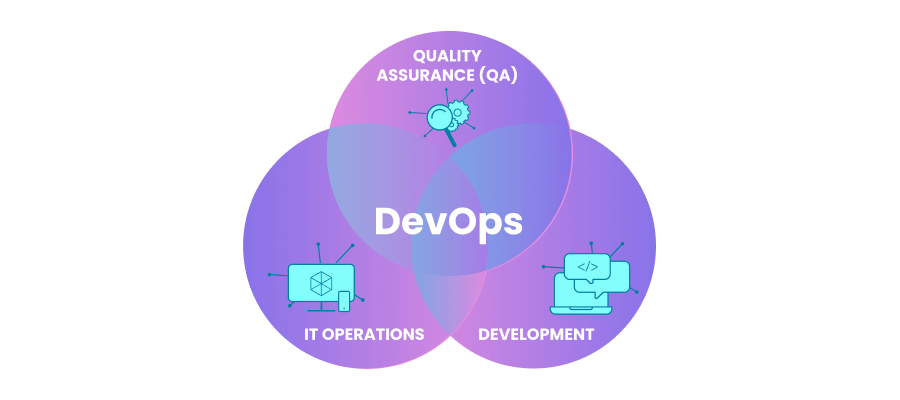
Let’s admit: it’s much easier to create a high-quality product when your entire team is on the same page. Here is where DevOps serves as a helping hand. In short, it’s a collaborative approach that brings together software development (Dev) and IT operations (Ops) to achieve common goals like continuous improvement or faster delivery.
DevOps is crucial due to its role in fostering teamwork, enabling rapid and frequent releases, and improving scalability and reliability of solutions. Additionally, it reduces deployment failures and facilitates faster recovery in case of issues. By implementing DevOps, you can address challenges promptly and develop a more robust software product.
Learn more how to go From Product Idea to a Successful Market Entry
To harness the full potential of DevOps, you should know its core principles. Below, we will focus on the most common four.
Automation of Processes

Measurement of KPIs

Continuous Improvement

Collaboration and Communication

Five Fundamental DevOps Strategies to Consider
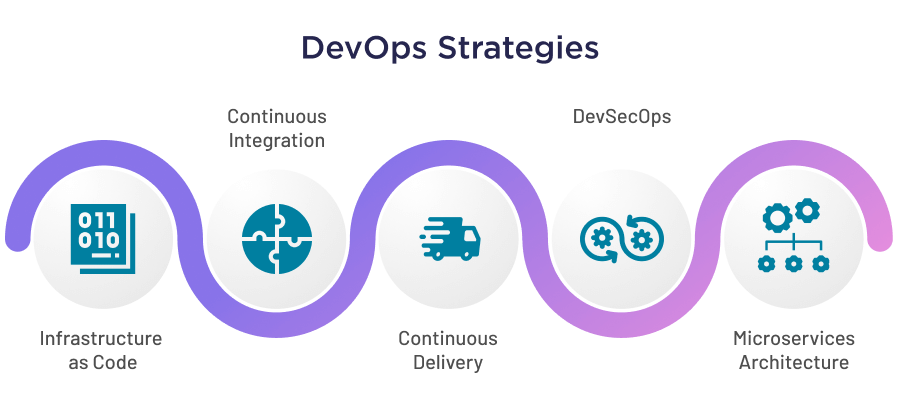
Having covered the core principles of the approach, we can now move on and discuss five fundamental strategies that you can follow to leverage DevOps.
#1 Infrastructure as Code
Infrastructure as Code (IaC) is an impactful method that enables the automation of your IT system. The main objective of adopting IaC is to ensure that the infrastructure remains in its intended state.
An effective IaC implementation helps in automating the management of any deviations that occur from the desired and established state of the infrastructure. Learn more about IaC by watching the video from IBM Technology.
#2 Continuous Integration
Continuous integration (CI) is an efficient method for optimizing the integration of code changes from multiple contributors into a single software project. The integrated code is automatically built, tested, and verified to ensure its compatibility with the existing codebase. CI essentially helps detect issues at an early stage, reduces conflicts, and enables quicker collaboration.
#3 Continuous Delivery
When it comes to adding new features, managing configuration, fixing bugs, and more, continuous delivery (CD) makes a difference. It allows for the rapid and reliable release of software updates within a short time.
Continuous delivery pipelines ensure that software releases adhere to your timeline with minimal manual intervention. As a result, you can not only reduce errors but also establish a smooth delivery cycle. On top of that, CD enhances the quality and reliability of software releases through automated testing and quality assurance practices.
#4 DevSecOps
DevSecOps emphasizes integrating security practices throughout the DevOps lifecycle. It involves considering security requirements from the beginning and integrating efficient testing and scanning tools. Additionally, it incorporates safety controls and compliance measures into the development and deployment processes.
By addressing security concerns proactively and continuously, DevSecOps ensures that software is secure, minimizes vulnerabilities, and reduces the risk of security breaches.
#5 Microservices Architecture
Microservices architecture is perfect for use along with DevOps. It breaks down the application into smaller services; each focuses on a specific business capability and can be developed, deployed, and scaled independently.
This strategy promotes agility and scalability while leading to faster feature releases and easier maintenance and updates.
Discover the Difference between Microservices and Web Services
Understanding the Importance of the DevOps Process
So, we’ve explored the core principles and strategies that DevOps is centered around. With all these moments being unveiled, we can now dive deeper into the nuances of the process itself. First, let’s answer the question what is the DevOps process?
The DevOps process refers to the set of practices, principles, and techniques that companies adopt to enable smooth and effective software delivery and facilitate collaboration between the teams. It encompasses various activities like continuous integration and development, automated testing, monitoring, and feedback loops.
Overall, a robust DevOps process flow helps streamline workflows, save resources, build competitive solutions, and even enhance the end-user experience. To explore more ways how it drives value for businesses, we’ll continue with its benefits.
Benefits of the DevOps Process
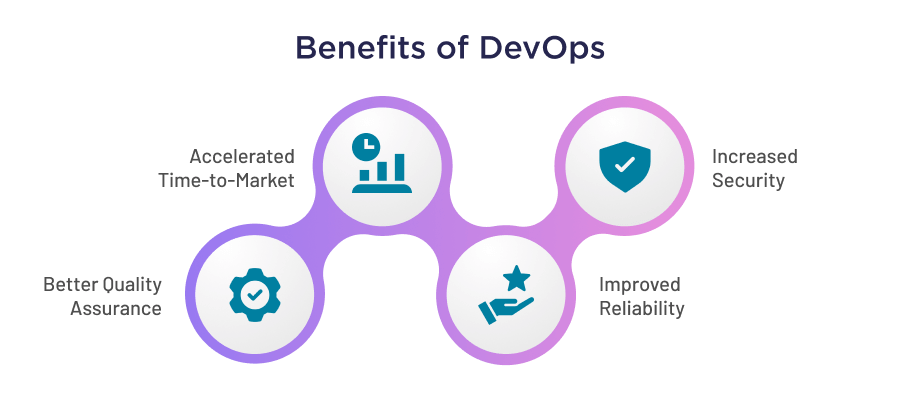
Businesses that implement DevOps principles can reap numerous advantages which positively impact their software development and operations. For instance, by incorporating modern DevOps tools into the process model, organizations can streamline collaboration, automate workflows, and accelerate software delivery.
Let’s now explore some of the most notable benefits of this approach.
Better Quality Assurance
The software development process requires quality assurance to find and fix issues and helps identify areas for improvement. DevOps, in its turn, leverages automation testing tools and practices that enable businesses not only to detect and resolve issues in time but also to meet initial project requirements.
Accelerated Time-to-Market
When you’re creating a product, your goal is to reach the market ahead of your competitors. DevOps helps achieve this by promoting the culture of collaboration and continuous improvement, thus enabling faster feedback cycles, quicker updates deployment, and troubleshooting.
In other words, DevOps streamlines the software development lifecycle and ensures that your products are delivered to market faster.
Increased Security
Security is of utmost importance for any business. DevOps considers security as an integral part of the development process, enabling rapid detection and response to security incidents.
By adopting DevSecOps practices, organizations can proactively address security concerns and reduce the likelihood of vulnerabilities or breaches. As a result, it creates a solid security foundation for your software, fostering user trust.
Improved Reliability
Reliability is another aspect that DevOps aims to improve. Emphasis on automation, IaC, and CI/CD leads to reducing errors, controlled releases, and better consistency. Proactive identification of issues, continuous learning, and future incidents prevention enhance software systems’ overall stability and availability.
Challenges in Implementing DevOps
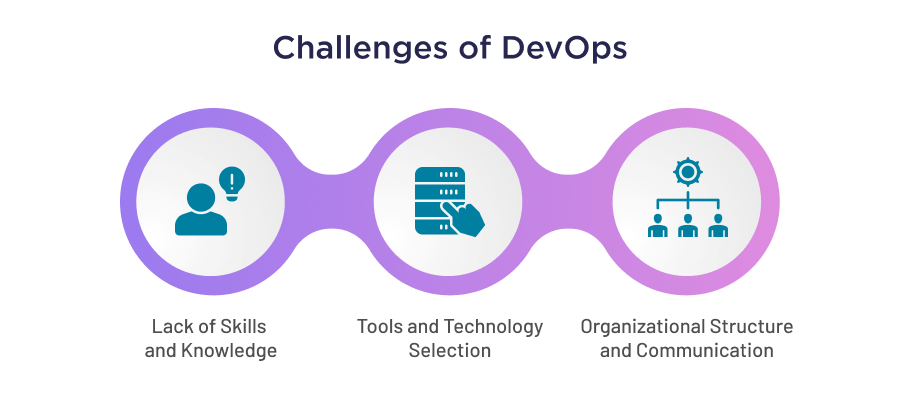
Like practically everything in life has its pros and cons, DevOps is not an exception. After we’ve gone over its benefits, let’s look at the considerations as well.
Lack of Skills and Knowledge
Adopting a DevOps model into your development process may require upskilling or reskilling your current team members. Basically, they should possess expertise in areas such as automation, infrastructure management, CI/CD, and more. So, when implementing a plan for DevOps, consider including skilled professionals in your team.

Lack of Developers
Tools and Technology Selection
Tool selection should be in line with your organization’s goals and technical requirements. For example, one of the popular tools is Jenkins. It is actively used for continuous integration, automating software projects build and testing.
For continuous deployment, you can use GitHub Actions or GitLab that ensure your application’s smooth release. And when it comes to container orchestrations, Docker and Kubernetes are the popular ones. Overall, there are a variety of tools to leverage, just make sure you select appropriate ones aligned with your needs.
Read more about How to Choose the Right Tech Stack
Organizational Structure and Communication
Organizations with hierarchical structures often face challenges due to the differentiation of development and IT operations teams. Though establishing excellent collaboration among various departments isn’t an easy feat, it’s the only way leading to DevOps adoption success.
Hence, you should encourage cross-functional collaboration, breaking down silos, as well as promoting knowledge-sharing culture.
Find out how to Integrate Teams on the Project
Key Steps of the DevOps Lifecycle
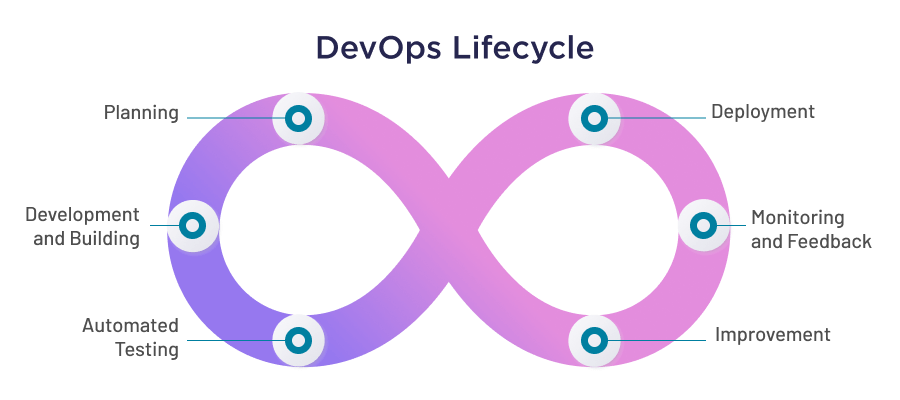
Now that we’ve delved into various aspects of the DevOps process, let’s explore another important facet of the field — the DevOps lifecycle. While these terms may appear quite similar, there is a thin line between them.
Contrary to the process, which includes practices we’ve highlighted in the previous section, the lifecycyle represents the end-to-end journey of product delivery within a DevOps context. It spans the entire software development lifecycle and extends it to include operations and feedback loops.
Like a guideline, the lifecycle encompasses a series of steps that you should follow when adopting DevOps practices. Let’s discuss these steps in more detail.
1. Planning
Effective DevOps planning is a cornerstone of every successful product. It aims to create a well-defined roadmap for defining the SoW, setting KPIs, aligning teams, and establishing a collaborative and efficient software delivery pipeline.
On top of that, efficient planning will help you optimize processes, utilize appropriate tools, and deliver high-quality software faster.
2. Continuous Development and Building
The next stage of DevOps lifecycle is continuous development followed by code building. The first one involves writing, reviewing, and testing code, whereas the latter includes compiling source code, running unit tests, and generating executable artifacts or packages.
3. Automated Testing
The days of testing where teams had to manually check for bugs and potential pitfalls have gone. With automated testing, businesses can quickly identify issues, measure their solution’s performance, as well as verify security aspects in a timely manner.
Eventually, this automation not only saves time but also enhances the overall quality of your products.
4. Continuous Deployment
This stage involves the release of code to production servers. And here CI/CD pipelines come to help. Once the code has passed all of the essential tests and checks, CI/CD pipelines automate the deployment process, ensuring that approved changes reach production servers on time.
Overall, DevOps deployment methodology, driven by CI/CD pipelines, empowers organizations to effortlessly release code changes to the production servers.
Uncover the powers of the Most Common Software Development Methodologies
5. Continuous Monitoring and Feedback
One of the last but not least important phases of the DevOps lifecycle is continuous feedback and monitoring. It enables teams to track application performance, user behavior, system health, and security.
In particular, this phase ensures that your software is continuously assessed, allowing for timely detection and resolution of any issues or anomalies.
Continuous monitoring involves the use of specific tools and techniques to collect data on various system metrics, such as response times, resource utilization, error rates, and security events. This data is analyzed to identify trends, patterns, and potential bottlenecks.
Additionally, gathering feedback from users and all project stakeholders helps in understanding their experiences, needs, and expectations, enabling teams to make informed decisions and prioritize enhancements or fixes.
6. Continuous Improvement
Based on the user feedback, system monitoring data, and technical requirements, teams iterate on the software application. Step by step, they revisit all previous stages of the lifecycle to implement updates, enhancements, and new features.
Such an iterative DevOps process ensures that the software evolves and aligns with changing business needs.
Tips for an Effective DevOps Implementation Strategy
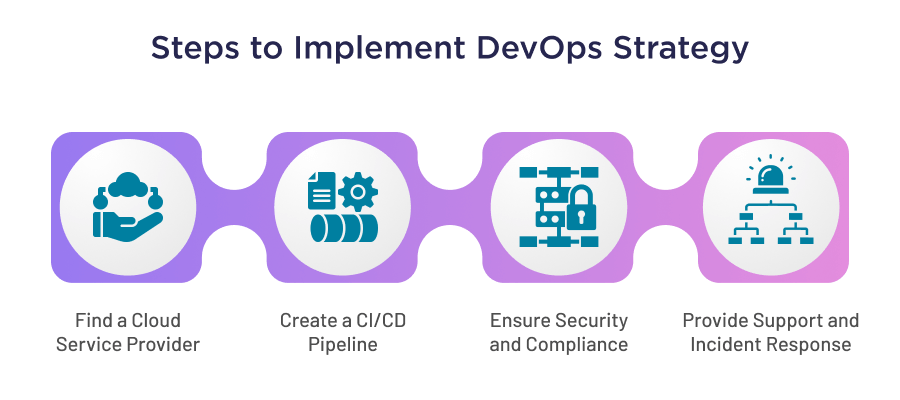
As the final part of our article, let’s discuss what your DevOps implementation plan can look like and what steps you should include to develop a robust product.
1. Find a Cloud Service Provider
First of all, you need to choose a cloud service provider for your infrastructure, application, or storage services. Leading providers such as AWS, Microsoft Azure, and Google Cloud Platform offer resilient and scalable infrastructure, ensuring your applications’ high availability and reliability.
Learn more how to Optimize Your Costs on Cloud Services
2. Create a CI/CD Pipeline
It’s an important step to automate your development, deployment, and testing process. We have previously discussed that pipelines support the agile and iterative nature of modern software development. Thus, enabling you to deliver software more efficiently, with higher quality, and with reduced risks.
Discover how Velvetech helps an insurance company Automate Deployment with Robust CI/CD Pipelines
3. Ensure Security and Compliance
No matter the industry you are developing a product for, you should keep it secure. Yet, some certain industries, such as finance or healthcare, have specific regulations that you need to pay attention to.
When developing a product for these industries, it becomes crucial to prioritize regulatory compliance and enhance security within your DevOps development process.
Learn how to Develop a Health App Compliant with Industry Regulations
4. Provide Support and Incident Response
One of the main goals for most businesses is to deliver reliable products and services. With that aim, your DevOps implementation plan should consider support and incident response. For example, you can offer documentation, user guides, or some support channels for users to report problems.
Besides that, you should be adaptable for incident response. It is crucial to promptly address and resolve any disruptions or issues that may occur.
Leverage the Full Potential of DevOps
We’ve covered a lot of ground today, and now you hopefully know the essence of the DevOps approach. It brings positive changes to how software is built, deployed, and operated. Furthermore, it has the power to facilitate all these processes, making them efficient and quick. That is precisely why businesses are pursuing DevOps implementation.
If you are determined to adopt this approach and leverage it to address your IT initiatives, we are here to provide you with our DevOps services and solutions. With years of expertise in the field, we can assist you in automating your software development processes, optimizing IT infrastructures, and achieving better outcomes throughout the entire product lifecycle. Contact us today.
About the author