
2022 is almost in the rearview mirror, and we are all prepared to welcome in the New Year. Our team has already looked over what the last twelve months has brought us and made wishes for what we hope the next twelve will bring.
Now, we’d like to send 2022 off with a roundup of Velvetech’s most useful articles that have been shared on this blog throughout the year. So, if you were too busy to consistently check in on the software development insights we share, here is a quick summary of the top 10 must-reads.
1. Key Steps of Building a Custom CRM
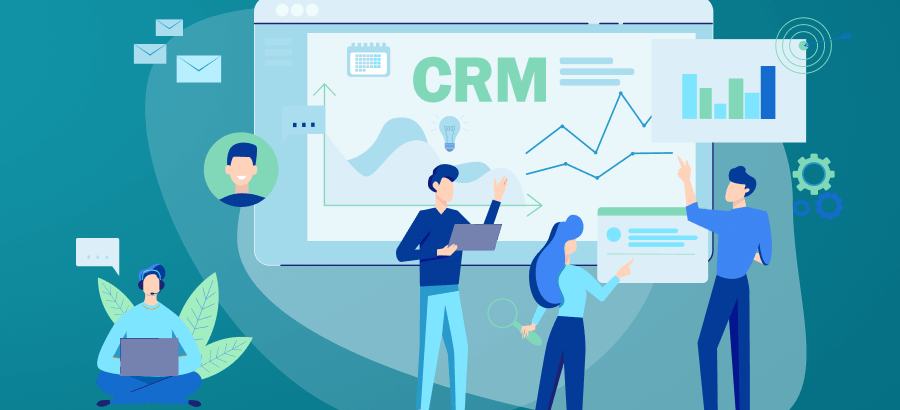
Business leaders from a wide range of industries often approach us seeking smooth CRM software development. As such, our experts are highly skilled in carrying out CRM implementation or customization projects and frequently share their insights on the blog.
So, in one of this year’s CRM-focused pieces, we deciphered the key steps of building this kind of system. Of course, these solutions range from ready-made but customized to entirely tailor-built ones. In the case of the latter, the development process usually encompasses the following:
- Determine if a custom CRM is what you’re after
- Define your end goals
- Identify the suitable CRM type
- Outline must-have features
- Choose a development partner
- Implement the tool
- Maintain and support the final solution
If you’ve been thinking about developing your own CRM, definitely be sure to check out the full article below. It’ll help you know what to expect and ensure the team isn’t forgetting any crucial steps.
Discover the full article on Building a Custom CRM
2. How to Create an Impactful Data Management Strategy

Top-notch data management practices have been crucial for organizations looking to implement innovative technologies, optimize operations, and ensure information security. However, it can be difficult to know how to achieve all of these goals.
Everything begins with a well-thought-out enterprise data management strategy. In this context, it’s important to begin by considering how you’ll approach data integration, governance, and quality. Only after thinking about these elements can you proceed to outlining your strategy, which will include:
- Assessing the current situation
- Defining needs and objectives
- Pinpointing the required tools
- Implementing data management solutions
- Establishing data governance policies
- Training your team
A successful strategy will empower your team with data-driven insights and facilitate rapid and more accurate decision-making. So, do not rush this process and take some time to carefully consider each step.
Dive deeper into the Process of Creating a Data Management Strategy
3. Top Cross-Industry Data Science Uses
Once a solid strategy is in place, it’s time to implement technologies that can help you deal with all the digital information the business works with. This is where data science comes in. Regardless of sector, data science tools can deliver extensive predictions, recommendations, detect anomalies, and so much more.
In healthcare, there is so much frequently changing information to deal with that managing data becomes not only beneficial but also life-saving. With the help of artificial intelligence and machine learning, anomalies within test results can be swiftly spotted. Thus, allowing doctors to diagnose cancer, diabetes, and other medical conditions in a timely manner so that preventative measures can be taken.
On the other hand, in the insurance industry, data science can significantly improve the underwriting process. Concretely, thanks to predictive analytics, evaluating the risk of a particular customer can take minutes instead of hours.
Keep reading to learn about Data Science Use Cases Across Industries
4. Rundown on Main Frontend vs. Backend Differences
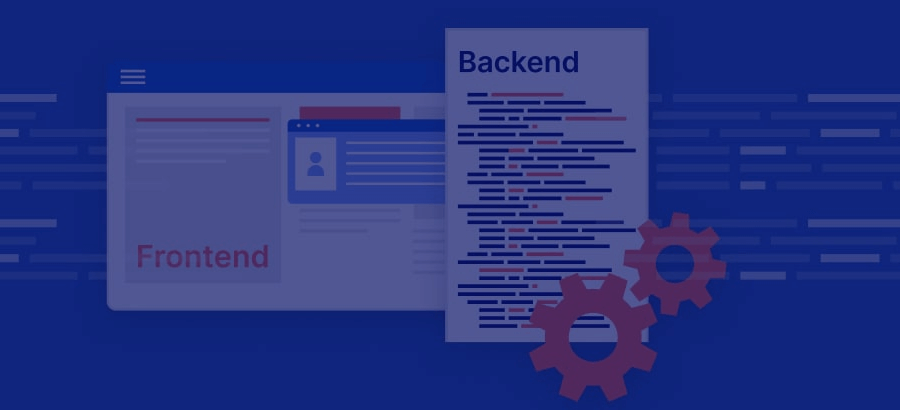
No matter the type of software you’re acquiring, frontend and backend development are the two terms that will likely be mentioned during discussions with the IT team. However, unless you have a lot of knowledge on software engineering, you may be unsure about the differences between the two.
In short, the frontend is all about the user-facing side of software. It is the part of an IT tool that users can see and directly interact with. Typically, it includes text, buttons, images, color schemes, and navigation that all work together to bring designs to life.
Conversely, the backend is focused on the server-side of an application. It stores and manages data, processes business logic, and generally provides access to databases. Without it, the client-facing side of the solution wouldn’t be able to work well.
Both aspects are highly interconnected and are equally crucial for the well-functioning of software tools. So, it’s good to make sure you have both — frontend and backend specialists on your next project.
Dive into the Differences Between Frontend and Backend
User-Driven Approach
5. How Telematics Improves Insurance Operations
As you may know, Velvetech focuses on the delivery of successful software development services to companies from a variety of sectors, but insurance is definitely one of our top specializations.
We’ve worked on AI-powered call analytics projects, performed cloud-to-cloud infrastructure migration for an auto insurer, modernized legacy systems, automated document processing, and more. As such, with years of experience in the field, we’ve realized that an emerging focus within the industry is shifting towards the implementation of telematics.
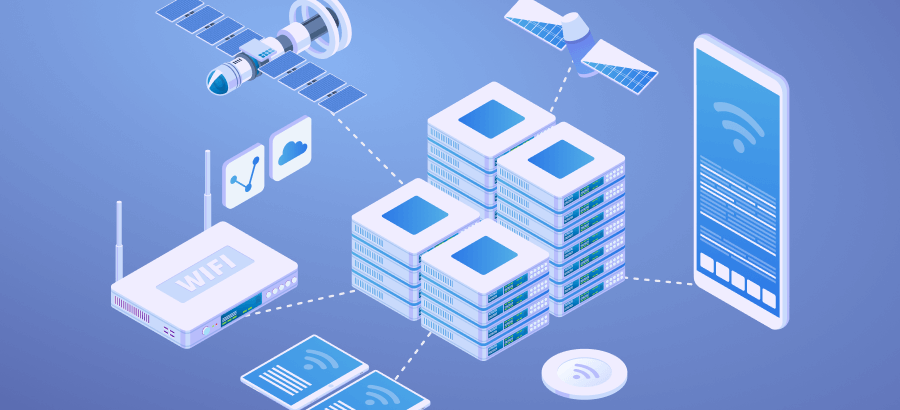
This means that smart devices are being used more often to transfer, store, and obtain information about remote, insured objects. This way, telematics empowers insurance firms with the ability to better assess the degree of risk associated with each potential customer. Thus, allowing for the delivery of truly personalized insurance services.
Read up on the Top Use Cases of Telematics in Insurance
6. The Power of Wearables in Healthcare

Besides insurance companies, healthcare organizations also frequently turn to our team for help with software initiatives. So, it is no surprise that we often cover the innovations within this sector.
Of course, wearables aren’t a brand new occurrence, but their widespread adoption definitely warrants some attention. In short, the term refers to solutions powered by the Internet of Things (IoT) which allows electronic devices to collect information on a patient’s wellbeing and transfer it for further analysis.
Typically, wearables can track heart rate, blood pressure, body temperature, and the like. As such, they can add a lot of value to medical organizations by promoting proactive care, boosting patient engagement, etc.
However, they don’t come without some challenges. So, take a look at the full piece we composed a few months ago to familiarize yourself with this technology and determine if your company can benefit from implementing it.
Uncover the Power of Wearables in Healthcare
7. Key Ways of Applying Business Intelligence in Manufacturing
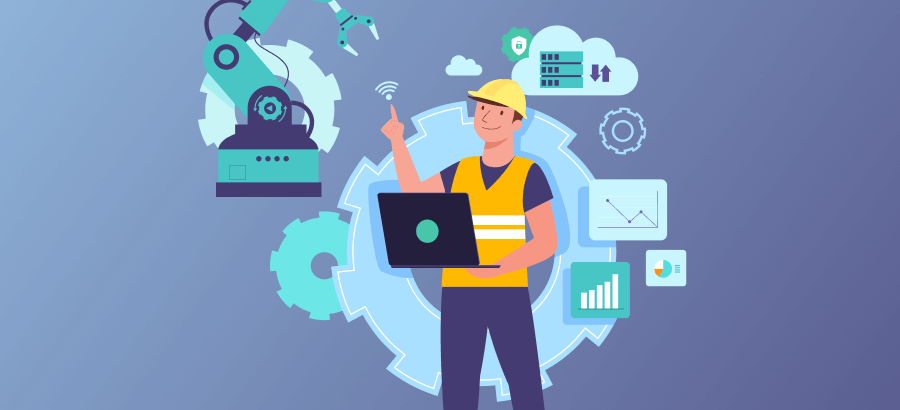
This year, manufacturers have been doubling down on digital transformation initiatives to drive lasting business growth and profitability. Specifically, due to the data-intensive nature of the manufacturing sphere, companies have been focused on implementing business intelligence (BI) tools.
Typically, these solutions come with a multitude of useful features like:
- Interactive dashboards for speedy visualization of trends
- Self-service data editing
- Advanced analytics that empower predictive modeling
- Secure user administration with role-based access permissions
As you can imagine, these capabilities can do wonders for better decision-making, smooth production management, inventory control, supply chain monitoring, and the like.
Take a closer look at Business Intelligence in Manufacturing
8. Is Edge Computing the Future of IIoT?
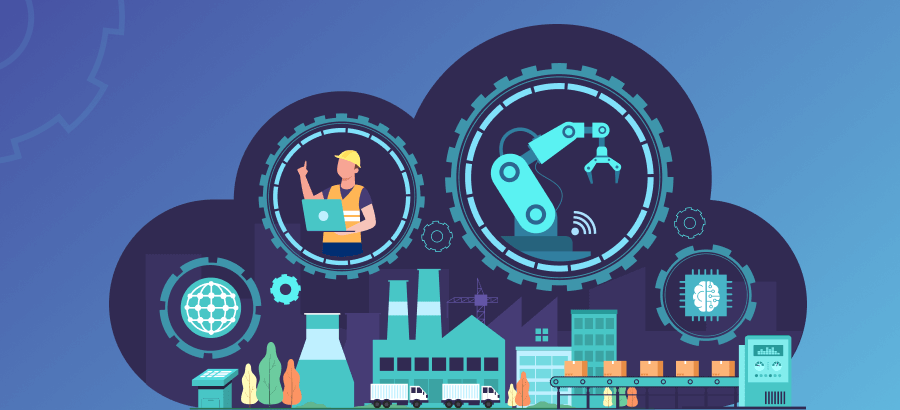
Recently, key players in the industrial sector have been steadily pursuing the implementation of IIoT software. However, a more recent development in this context has been the peaked interest in edge computing.
Why? In short, because it allows for some of the data storage and processing to occur closer to the sources of data themselves. Thus, reducing latency and boosting performance. Given that swift access to information is crucial in the industrial sphere where any issue can cost millions, it’s no surprise that business leaders are curious about edge computing.
So, if faster data processing is something you’re after as well — consider implementing edge computing in your next IoT project. In the industrial sector, it can help with:
- Production monitoring
- Operational automation
- Energy management
- Predictive maintenance
- Condition optimization
Don’t fall behind and learn more about the powers of edge computing today.
Keep reading about IIoT Edge Computing Capabilities
9. The Importance of Having a UX Strategy

The user should always stay top of mind whenever you set out to develop a new application. To make this easier, it’s a good idea to create a coherent UX strategy for any new IT tool you’re planning to build.
As the name suggests, a UX strategy is an outline for how you plan to deliver the best user experience. It combines organizational and end-user needs with technical abilities so that the team knows how to best design a solution.
Without a strong UX strategy, you risk misunderstanding user needs, wasting resources, and eventually even project failure. So, take some time to focus on user-centricity and think about the entire customer journey. How can you make it the best it can be? Once you feel that all the key UX elements have been addressed, you can move on to the next step of the development process.
Discover more about Why a UX Strategy is Crucial
10. 101 on Web 3.0 and Blockchain
Lastly, we couldn’t finish the roundup of our top blog posts without reminding you about the importance of Web 3.0 and blockchain technologies. We are sure that you have heard the two terms frequently throughout this year, but it’s certainly worth taking a moment to think how your business may capitalize on these innovations.
Web 3.0 is not here yet, but it is forecasted to work as an intelligent version of the internet that will rely on blockchain, big data, and AI to boost the security levels of personal information. As such, end users may not even notice the transition from Web 2.0 to Web 3.0.
For the businesses, the key implications of Web 3.0 are:
- Rise of cryptocurrencies
- Upsurge in DeFi
- DApp development
- NFT creation
We know that this may still sound far-fetched. However, it’s best to be prepared for any innovations that spring up in the coming years.
Prepare your business for Web 3.0 and Widespread Blockchain Adoption
Now, you’re all caught up on the key software development insights our team has shared throughout the year. However, don’t forget to check in on our blog in 2023 as we will continue discussing all things related to the world of IT.
Whether you’re interested in AI and ML or blockchain and IoT, you’ll always find articles relevant for your business amongst the topics we cover. So, make sure you don’t miss out!