
Despite the tech industry being one of the most unpredictable ones out there, business leaders always try to look ahead and foresee what new developments will emerge in the coming year. Thus, helping them determine which innovations are worth the attention.
Key Highlights
- Low-code/no-code platforms can significantly cut development costs and speed up time to market.
- If you seek advanced asset visualization, real-world scenario testing, and deeper product insights, IIoT and digital twins are your go-to.
- Besides merely responding to queries, Agentic AI can autonomously make decisions, act automatically, and deliver tangible outcomes.
- BCI acts as a bridge between the brain and a computer; you think, and BCI helps the computer take action based on your thoughts.
As 2026 is quickly approaching, we thought it’d be a good idea to go over the tech trends in business that will be most prevalent next year. Of course, some will remain unchanged from previous seasons, but it’s still worth being aware of them so that you can focus on the right software development projects in the next months.
GenAI for Business
1. Siloed Data Integration
In the modern data-driven world, making decisions based on accurate information is pretty much non-negotiable for business leaders. After all, staying competitive is often rooted in relying on numbers and their ability to tell what is performing well and what isn’t.
In the last few years, organizations have come to embrace data analytics and started leveraging digital insights to stay informed on what’s going on within their core operations. However, data comes in various shapes and sizes. It may contain duplicate entries, outdated details, human errors, or, at times, be hard to access because of data silos.
Discover the Role of Data Analytics in Healthcare
In 2026, accessing information across the company’s multiple data silos will only get more difficult because of the increased volumes and sources of data. So, many organizations will choose to prioritize the integration of siloed data in order to bring distributed digital information together.
Moreover, modern developments like data fabric will come into the spotlight. If you’re unfamiliar with the term, data fabric is basically a data management architecture that optimizes distributed data and makes it available wherever it’s needed.
2. Hyperautomation
Another latest tech trend in business is all about automating as many areas of an organization as possible at a rapid pace.
Companies that haven’t yet streamlined all of their processes will double down on hyperautomation, which basically uses artificial intelligence, machine learning, robotic process automation, low-code tools, and other technologies to minimize human involvement in various tasks.
Learn more about AI in Business
You may be wondering if there is any difference between automation and hyperautomation. Well, there actually is. While automation typically occurs on a smaller scale and focuses on streamlining individual tasks, hyperautomation refers to the reliance on a multitude of tools and technologies to help facilitate the intelligent modernization of processes across a firm.
So, if you’re looking to improve efficithencies and elevate customer experiences while reducing costs, consider adding hyperautomation to your IT to-do list for 2026.
Read more about the Hyperautomation Trend
The main difference between automation and hyperautomation is their focus and scale. Automation aims to reduce manual effort and streamline individual tasks. Typically, it occurs on a smaller scale. Meanwhile, hyperautomation goes beyond solely automating tasks. It employs plenty of tools and technologies to automate as many processes within an organization as possible.
3. Low-Code/No-Code App Development

The app development process used to be one of the most challenging and expensive tasks. So, businesses found an alternative and cost-effective option to get things done. Specifically, they began actively utilizing low-code/no-code (LCNC) platforms.
They include pre-built components and drag-and-drop interfaces, which eliminate the need for extensive coding. Less time and resources spent on development means lower expenses, and it accelerates time to market.
Discover when Low-Code/No-Code Is a Good Alternative to Traditional Development
Grand View Research expects the low-code app development market to reach $107 billion by 2030, up from $30.1 billion in 2024. Perhaps this huge jump speaks for itself: LCNC technologies will remain in high demand in 2026.
Want to employ low-code tools for your software development
4. Unique Customer Experience

Customer experience has always played a crucial role in the success of any organization. So, it’s only natural that in 2026, companies will continue to focus on delivering unique customer experiences and trying to differentiate through them.
For instance, in healthcare, patient engagement software will be gaining traction as more and more medical institutions look to improve service quality and create a collaborative patient-doctor environment.
Uncover why Patient Engagement Software Is a Must in Modern Healthcare
On the other hand, in areas like retail, experience-based technologies, such as augmented and virtual reality, will be used to make shopping more immersive and thus unique.
From engaging online interactions to experiential retail, where customers are offered entertainment and services beyond those of a traditional store, there’ll be no shortage of creative ideas for delivering a memorable experience.
5. Smart Contracts Commonization
Organizations across all kinds of industries are often faced with having to deal with intermediaries. Naturally, these middlemen charge a commission and often take time to carry out their work. Thus, such a flow slows down operations and increases costs.
In 2026, companies will seek to avoid these hindrances and will start pursuing blockchain development services more diligently. Specifically, they will turn to smart contracts to eliminate middlemen and automate the execution of specific arrangements.
Find out the Key Things to Know About Smart Contracts
As a result, organizations across the world will begin to expect more transparency in business transactions, higher security, and reduced costs of operations. Hence, the inability to offer that may become a disadvantage even to the most successful firms.
6. Rise of Digital Twins
From logistics to automotive, the Internet of Things has already proliferated in a multitude of industries.
In 2026, however, the focus is likely to increase on Industrial IoT solutions as construction, manufacturing, and engineering companies look to enhance operations and boost efficiencies. Specifically, we suspect a rise in the use of the latest technological advancement: digital twins.
Digital twins are virtual models that reflect, with utmost accuracy, a specific physical object. Connected sensors on the physical item collect data on how it is functioning and transfer the information onto the digital copy. Thus, helping monitor performance, run simulations, and discover areas of improvement.
So, in the coming year, companies that are looking for immaculate physical asset visualization from afar, real-world scenario testing, and deeper insights into product performance will all be turning to IIoT and digital twins.
Find out how Velvetech Built an IIoT Solution for Anchor Installation
7. Mobile App Development
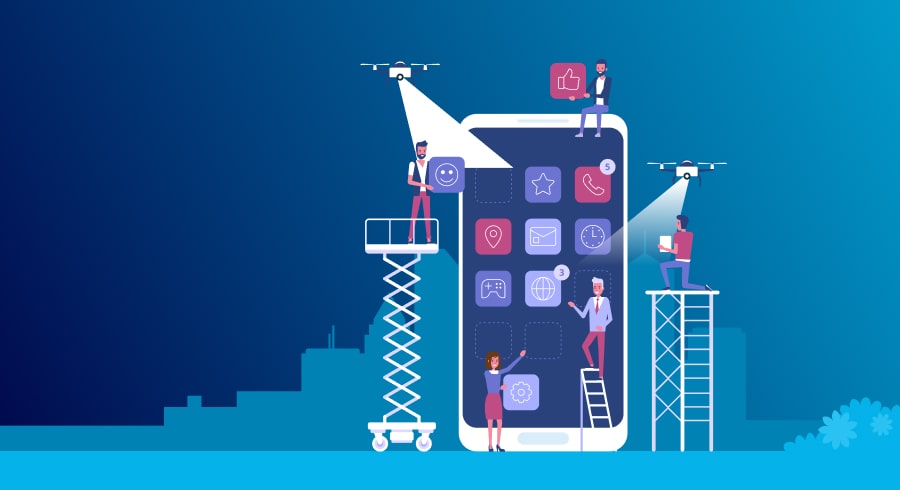
We won’t spend too much time on this 2026 technology trend, as it has topped the lists of priorities for several years now. With the growing number of mobile devices in the world and new applications hitting the market daily, it’s little surprise that companies will continue focusing on mobile app development in the coming year.
Whether consumer-facing or enterprise, businesses will keep improving their existing applications or start developing new ones to boost organizational growth. The key difference from previous years, though, may lie in the use of innovative technologies to upgrade solutions.
For instance, some may turn to artificial intelligence to make the app more competitive and unique. So, if that sounds appealing to you, consider investing in mobile app development this year.
Uncover how Velvetech Built a Medical Reference App for a Clinic
8. AI-Powered Cybersecurity Activation

As emerging technologies become more widespread and enormous volumes of data continue to be generated, cyberattacks will likely keep growing in volume and complexity. So, it’ll be more important than ever for security specialists to be a step ahead of potential threats.
To do so, AI cybersecurity solutions will have to become more prevalent in business. Thanks to their intelligent machine learning algorithms, malicious activity can be detected in advance and prevented before there is any real threat to an organization’s data.
So, if you believe that your company could benefit from improved levels of security, don’t hesitate to reach out to experts and get a personal consultation. After all, a good cybersecurity solution could end up saving you a lot of time and money in the long run.
9. Agentic AI

Though decades ago, we could hardly imagine technology providing 24/7 smooth assistance, AI has made it possible. However, today, merely having an AI assistant does not seem enough for businesses looking to elevate their services and improve operations. They need more advanced solutions that can deliver tangible outcomes and work more independently.
Agentic AI has emerged to fill this gap. In general, you can set a specific business goal, then design agentic AI to meet it. And let’s emphasize once more that this innovation works with minimal human intervention.
So, who doesn’t want to have an autonomous agent that can act independently and make accurate decisions to achieve desired results? With that being said, this new advanced technology holds a promising future in 2026.
Check out the core Types of Agentic AI
10. Augmented Analytics
Another recent advanced technology that will stay top for many organizations is augmented analytics. It changes the way business leaders make decisions and brings business intelligence fueled by informed insights closer than ever before.
While traditional data analysis often requires specialized skills and a deep understanding of statistics, augmented analytics leverages AI and ML technologies to automate various aspects of the data analysis process. That includes data preparation, modeling, and interpretation.
With predictive and prescriptive analytics components in place, companies can easily respond to changing market conditions, customer preferences, and internal operational needs. That being so, augmented analytics will remain a cornerstone of a data-driven culture that will fuel companies’ growth.
11. Web 3.0 and Metaverse
Although the terms Web 3.0 and Metaverse have been around for a while, they are both considered the latest tech trends in the software industry. Even if these two can be described independently, we’ve decided to cover them together, as they have common elements and interconnections.
Web 3.0 is defined by blockchain technology, which enables smart contracts and decentralized app development. Thanks to these innovations, companies can rely on greater security, transparency, and trust in online transactions, which, as we said before, reduces the need for intermediaries.
Web 3.0 also empowers users to participate in peer-to-peer networks, engage in decentralized finance (DeFi), and contribute to the growth of the open-source, collaborative internet.
Learn more about the Role and Key Features of Web 3.0
Then we have the Metaverse, also impacted by blockchain technology, which appears to be a business innovation. Combining augmented and virtual reality, AI, and blockchain, it has the potential to bring in new opportunities for advertising and marketing, enhanced customer engagement, collaborative workspaces, increased brand presence, global accessibility, and more.
Web 3.0 is considered the next generation internet, which is decentralized and focuses on user empowerment. At the core of Web 3.0 lies blockchain technology, ensuring transparent, secure, and decentralized data storage and management.
Metaverse refers to a 3D virtual space where people interact using avatars. To create such a digital environment, Metavers highly rely on technologies like AR/VR and AI. This significantly elevates customers’ engagement with a product.
12. Brain-Computer Interfaces

Decades ago, finding a way of human-machine integration may have seemed like some piece from a science fiction film. However, technology has evolved, making it a reality today.
Specifically, a brain-computer interface (BCI) acts as a bridge between the brain and a computer or device. BCIs are capable of interpreting signals from the brain and translating them for the device to take desired actions.
This technology can be extremely useful across many industries. Take gaming applications, for example. The player doesn’t have to take any physical action. They simply think about it, and the BCI does the rest.
Another example of this technology is in healthcare. Brain-computer interfaces can change the way people control prosthetic limbs. Again, all they need to do is think about the action. Yes, as you see, technology is now capable of “reading minds.”
13. SuperApps
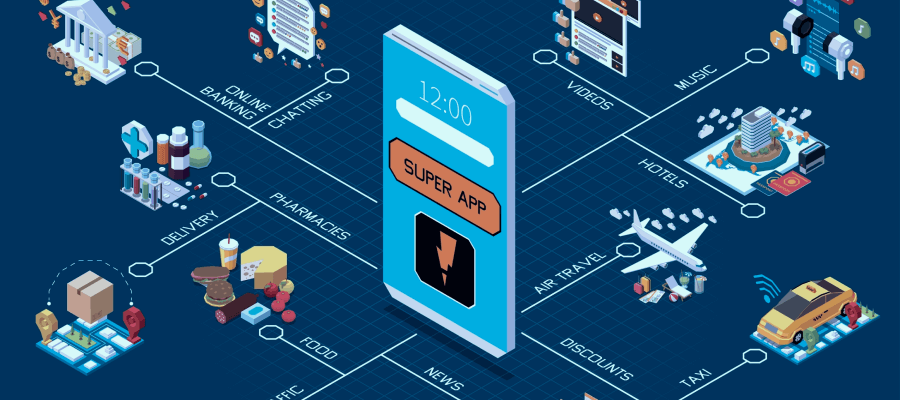
Talking about emerging business tech trends of 2026, we couldn’t let superapps slip away unnoticed. This technology innovation refers to a type of mobile application that offers a wide range of services and functions within a single platform. Superapps are designed to reduce the need to switch between multiple solutions while addressing daily user needs.
In the context of business, this IT trend is opening new doors for winning more users and gaining a market share in a new niche. Companies that decide to capitalize on superapps have great chances to stay ahead of the competition and gain profit. Like WeChat, Grab, and Revolut did.
14. Quantum Computing
While being one of the recent technological innovations and still finding its way through the nascency, quantum computing is already gaining traction. This groundbreaking trend is anticipated to disrupt industries by solving complex problems way faster than classical computers.
In particular, quantum computing can really advance and optimize operations and enhance efficiency in the supply chain, logistics, insurance, and finance fields. And in healthcare, pharmaceuticals, materials science, and energy, it has the potential to accelerate research and development processes.
15. Big Data Simulation
As we’ve already noted a few times, the data that companies handle will keep growing exponentially in the next few years. No wonder that many of the future trends that we cover today are linked to technology that can facilitate data collection, processing, and especially getting insights.
That’s where big data simulation comes into play, with its capacity to experiment with data in a controlled environment and analyze large-scale systems that would be impractical or even impossible to study in the real world. It is achieved thanks to the duo of vast datasets and advanced computational techniques.
Businesses that turn to this trend acquire tools to uncover insights, validate hypotheses, and understand the consequences of various decisions. For example, in healthcare, these simulations can help optimize patient care workflows, predict disease outbreaks, and evaluate the impact of various treatments.
16. Headless eCommerce
Customer experience plays a pivotal role in the eCommerce sector, and you can’t ignore the fact that expectations from services continue to become higher. To meet them, companies need to implement advanced solutions for greater flexibility and customization in delivering digital shopping experiences.
While headless eCommerce is among the new trends that we see both in the technology field and in business, it has a prosperous future. To make clear how it can help retail organizations, let’s explain how it works.
Headless technologies decouple the frontend part, or the user interface, from the backend with its underlying systems and data and connect them using APIs instead. As a result, it enables rapid development and deployment of eCommerce solutions across a wide range of devices and touchpoints, such as websites, mobile apps, voice assistants, and IoT devices.
Explore the Steps to Create a Successful Website
17. Sustainable Tech Solutions
Another technological trend that we’d like to focus on today is sustainable tech solutions that keep affecting business. As the world is paying more and more attention to global warming and trying to reduce environmental footprints and conserve resources, clean energy technology will be a top priority for many companies.
Enterprises will embrace “green investments” into products and processes that contribute to environmental friendliness. Hopefully, in the near future, we’ll see a major shift in technology use toward sustainability since corporate giants like Tesla, Apple, Google, and Amazon have already taken action in that direction.
Read about How Industrial IoT Helps with Sustainability
18. Bioengineering
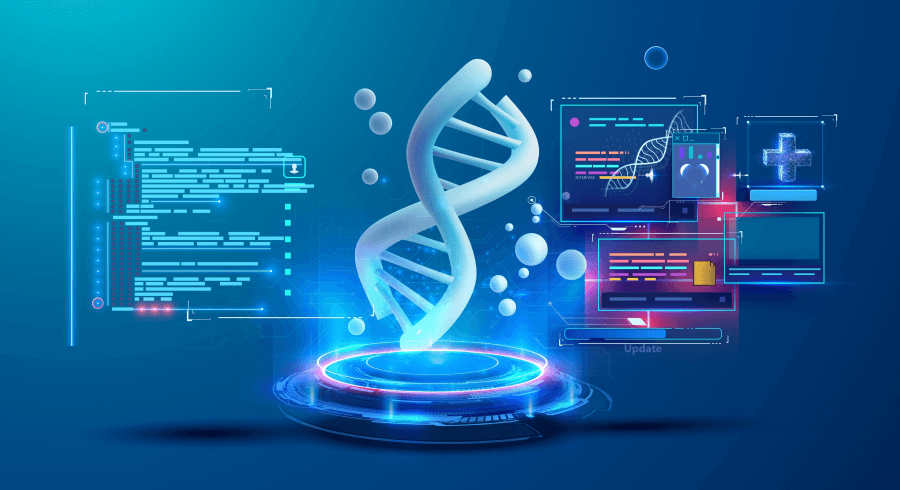
Bioengineering is expected to make remarkable strides in 2026, with advanced applications spanning healthcare, agriculture, and environmental sustainability, which we talked about above. This is definitely one of the most striking new technology trends that we’ll see gaining traction in the future.
For example, innovations in gene editing, cellular engineering, and synthetic biology are already paving the way for personalized healthcare. It’s especially valuable in areas like cancer treatment, regenerative medicine, and genetic disorders.
On the other hand, in agriculture, bioengineered crops are becoming more resilient and nutrient-rich, supporting food security amidst climate change. Moreover, with smart agtech in use, we can now hope to see a healthier planet with solutions that use modified organisms to help break down pollutants or capture carbon. Sounds like fiction? Well, that’s actually so real today.
19. Wide Cloud Adoption
Although cloud computing isn’t a new wave in technology, it is one of the current trends, which continues to expand its influence across all sectors. In 2026, more organizations will adopt hybrid and multi-cloud strategies, benefitting from their scalability, flexibility, and cost-efficiency.
Cloud solutions and services enable businesses to manage data and applications with unprecedented ease. On top of that, cloud providers offer industry-focused tools tailored for sectors such as finance, healthcare, and manufacturing. All of that boosts the adoption of the cloud.
Find out the nuances of Cloud Computing in Healthcare
While the technology is already mature enough, it continues to evolve, integrating advancements like AI-driven automation and edge computing. They will further enhance the capacities to meet the evolving needs of global enterprises.
Want to tap into cloud solutions?
20. Eco-Friendly Transportation Tech

You might think that we’ve been repetitive, as we’ve already talked about sustainability tech. However, transportation technology deserves special attention as it advances rapidly to address environmental challenges and meet global carbon reduction goals.
In 2026, electric vehicles and hydrogen-powered transportation will become more accessible, with governments and companies ramping up infrastructure investments to support this shift. You’ve probably noticed that there are already more autonomous, energy-efficient public transportation options available. Electric buses and ride-sharing platforms are anticipated to reduce urban congestion and pollution.
When it comes to new technology we’ll see the rise of in the near future, air mobility is the one to mention. It’s set to become a significant part of eco-friendly transportation with advancements in electric vertical take-off and landing aircraft. We believe that urban air mobility will be a great option for short-distance travel, alleviating ground traffic congestion and reducing emissions.
21. Digital Ethics

Finally, we can’t skip mentioning the importance of digital ethics, which is expected to be a prominent trend in 2026. You see, as technology becomes more deeply integrated into our lives, the demand for ethical standards around its use is becoming crucial. It will especially focus on responsible AI, data privacy, and fairness in digital systems.
That’s no wonder, of course. With AI algorithms influencing everything from hiring to healthcare, there is a growing need for transparency and accountability in how these technologies operate and impact society. That’s why privacy-enhancing technologies will be widely adopted, giving individuals greater control over their personal data.
Digital ethics aims to maintain trust in AI by highlighting how it uses private data and makes decisions. Specifically, it ensures that AI algorithm decisions are based on relevant insights and are fair. Additionally, digital ethics requires businesses to adhere to privacy regulations to safely collect and store people’s personal data. Most importantly, it aims to give individuals more control over their data. As such, people can manage what information the algorithm collects and be aware of how it will be used.
Ready to Embrace New Trends in Technology?
As you can see, 2026 is promising to be an exciting year for IT and anyone choosing to embrace innovative technologies for improving their business results. From hyperautomation to superapps and quantum computing, there’s no deficiency in the latest technology trends and areas for business leaders to consider investing in.
At Velvetech, we understand that a one-size-fits-all approach isn’t the right one for many organizations. Hence, we offer an extensive array of custom software development services in order to cater to the unique needs of every company.
So, if you’re looking to identify which IT areas should be your focus in the near future and are likely to bring the highest rewards, reach out to our team. We’ll be happy to discuss a potential collaboration.