In the modern world of business, Software as a Service (SaaS) has become a common occurrence and a rather popular delivery model for digital products. More and more companies opt to offer their software solutions over the internet. Thus, empowering users with more flexibility and scalability options.
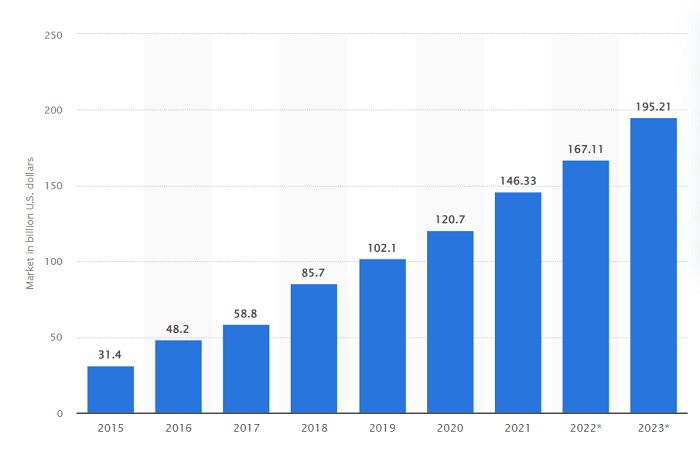
In fact, according to Statista, the SaaS market is set to reach $195 billion in 2023, a very appealing number for any business leader who is thinking about building this kind of an application.
Yet, it can be hard to determine where to start. After all, not everyone immediately knows how to build a SaaS product. The reality is, the process does require a lot of planning, strategizing, and actual development. Don’t worry though, we’ve assembled this blog post precisely to help you through it all.
Whether you’re a startup founder, a product manager, or an entrepreneur, this guide, based on our team’s vast expertise in SaaS app development, will give you a better understanding of what to expect on your journey. Concretely, you’ll learn:
- What is a SaaS product
- SaaS application types
- SaaS development process
- Costs you may expect
Now, let’s get started.
How are SaaS Products Different
First, it’s worth getting the definitions out of the way. In case you aren’t sure what SaaS applications are, the term simply refers to software that allows end-users to access it over the internet.
With this delivery model, vendors host and maintain the solution on their own servers which users gain access to through a web browser or a specific app. So, SaaS tools eliminate the need for customers to install, update, or maintain the platforms themselves. As you can imagine, this is rather convenient.
As we said, SaaS products have been gaining popularity in recent years and with good reason. App creators opt for this kind of business model because it typically involves a subscription-based fee. Meaning that customers make recurring payments to access the system, instead of a one-time price of a license. Thus, providing the creators of the SaaS product with a predictable stream of income.
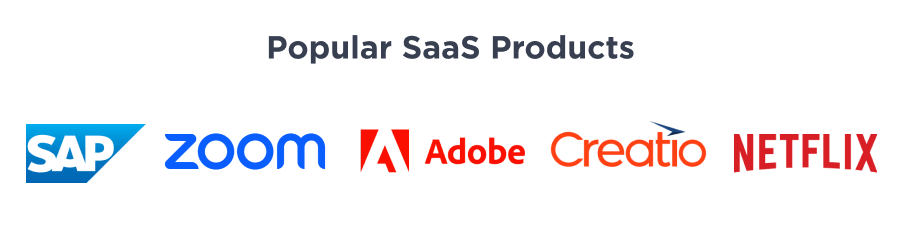
Well-known examples of SaaS products include SAP, Zoom, Adobe, Creatio CRM, Netflix, and the like. So, chances are high that you’ve come into contact with some kind of a SaaS tool recently.
Benefits of Building SaaS Applications
There are a multitude of advantages to relying on a SaaS solution for end-users. However, you’re probably more interested in the benefits that you, as the business owner, might observe.
Well, there are several:
- Predictable revenue: with a SaaS model, it’s easier to manage your company finances since customers pay a recurring fee.
- Lower customer acquisition costs: if you offer a trial, end-users are more likely to give your product a go.
- Better retention: with SaaS, you can offer your customers the option to upgrade or downgrade depending on their needs. Thus, increasing the likelihood of them staying with you over the long-term.
- Data-based insights: when customers are consistently using your product over the internet, you’ll be able to assemble vast business intelligence about their behavior and work on further enhancing your offering.
So, if you choose to pursue SaaS development, you’ll likely be able to create a sustainable and profitable product that continuously meets the needs of target users.
User-Driven Approach
Main Types of SaaS Applications
Before we dive into the development process, it’s worth pointing out that there are different kinds of SaaS products. Of course, you’ve probably already got an idea of what you’re setting out to build, but let’s cover the well-known categories that are out there.
B2B
In the business-to-business (B2B) sphere, SaaS products are very popular because of the vast advantages they offer to the purchasing organization. There is no need for an extensive setup process, you can scale up or down whenever necessary, payment model is quite flexible, and updates are offered seamlessly. What’s not to love?
As such, the following B2B solutions tend to fall under the SaaS category:
- CRM platforms
- ERP systems
- Project management tools
- Financial accounting software
- HR apps
- Communication and collaboration solutions
B2C
Yet, businesses aren’t the only ones that can benefit from cloud-based solutions. Consumers also often rely on SaaS products. At times, without even realizing it. Here are some common examples of business-to-consumer (B2C) SaaS tools:
- E-learning platforms
- Food delivery applications
- Streaming hubs
- Photo or video editing systems
- Social media software
- Dating apps
SaaS Product Development Lifecycle
Now that we’ve got the overview out of the way, let’s dive into more details. How can you actually design and create a viable SaaS product? Below, we outline the nine key steps you’ll likely have to follow.
1. Market Analysis
Learn more about AI in Business
So, at this stage, you’ll likely assess the following:
- Target market trends
- Needs and challenges of target users
- Competitor strengths and weaknesses
- Potential gaps in the market
- Business model options
This stage of SaaS product design will allow you to take a step towards clearly defining the requirements of the project and getting a more well-rounded perspective on the long-term vision. So, don’t rush through this step and truly take the time to explore the market and consider the opportunities that may be hidden within it.
Here, a seasoned Business Analyst can serve as a great helping hand. They will be able to guide you through the research process and help in aligning the product with end-user requirements and business goals.
Discover the Role of Business Analysis in Mobile App Development
2. Business Plan Creation
So, what monetization models are there for SaaS products? Of course there can be many but the following three are particularly popular:
- In-app advertising: offers product access for free but includes ads or commercial videos within the platform. This option is quite popular in the B2C space. Facebook is a great example.
- Freemium: provides an opportunity to download a solution for free, but only grants access to premium features for a fee. Ex: Dropbox offers a limited amount of storage space for free and charges for additional gigabytes.
- Subscription: comes with a free trial period but then asks users to pay monthly, quarterly, or annually for a subscription. Similarly, it could have varying payment options depending on usage needs (number of users, transactions, etc). Ex: Amazon Web Services.
Besides selecting a monetization model, you’ve got to outline how your product will be different from those already in the market, what value you’ll be delivering to the end-consumers, how you intend to reach the target audience, and your go-to-market strategy.
By solidifying all of these points into a coherent business plan that you can consistently refer to, you’ll ensure proper alignment within the team.
3. Requirements Definition
Similarly, it’s a good idea to carry out a risk assessment to forecast any potential challenges that may arise during SaaS development. That way, you’ll be able to create a rough mitigation plan with strategies for minimizing software project risks.
Take a look at the Common Software Development Project Challenges
Finally, this is also the point at which you might look at the costs that will come with your specific SaaS development project. After all, it’s imperative to have a budget in mind before you truly get started. We’ll talk about this topic in more detail below.
4. Team Assembly

However, if you have discovered that you’re missing some concrete skills within your current staff or are ready to outsource the project to an experienced software vendor, it’s definitely time to assemble a team.
Expanding a Team
So, assess potential partners and the engagement models they offer, ask for quote estimates, and so on. Whoever you choose to work with, the collaboration is likely to last some time and have a lot of impact on your work life. Hence, don’t rush the process and approach it with an open-mind.
Find out what a Mobile App Development Team Looks Like
5. Technology Stack Choice

Yet, to give you an idea of what to expect, here are the key things software engineers will be discussing at this stage:
- Frontend development: the majority of SaaS apps rely on HTML, CSS, Vue.js, React, and the like.
- Backend development: in this regard, the developers may consider C++, PHP, Python, and the associated frameworks.
- Databases: to store information on the backend, SaaS developers might turn to MySQL, MongoDB, or PostgreSQL databases.
- SaaS hosting: here, the choice will likely be among the popular cloud providers like AWS, Microsoft Azure, or Google Cloud.
Uncover the Differences Between Frontend and Backend
Of course, the nature of your project will dictate the choice of tech stack. So, don’t worry about it too much for now and if you’re hesitant or curious, make sure to ask your team why they prefer a particular technology.
6. MVP Development
If you encounter any issues or hidden opportunities at this point, there is still time to make changes and tweaks before rolling out the fully-fledged solution. Assess the feedback you collect carefully and implement it into your final product.
Find out How to Prioritize MVP Features
7. Final Product Release
Plus, this is when you might need to place more emphasis on your marketing efforts. Of course, you should have planned some campaigns in advance of the release, but there are probably a few that need real-time involvement and monitoring.
With well-planned and smartly executed marketing strategies, you’ll be able to attract a good amount of first users and hopefully start building a loyal community of early adopters.
8. Support and Maintenance
If you don’t account for the support and maintenance part of the process, you risk alienating the users you’ve acquired and putting a stain on the brand reputation. So, make sure your in-house or outsourced team is clear on the fact that they’ll need to be continuously carrying out updates, working on new functionality, and supporting the users.
9. Optimization and Retention
At the end of the day, the success of the business depends on how much the end-users love your product and are willing to stay loyal. So, run extensive data analytics to assess user behavior and uncover any patterns. Then, optimize your SaaS product in-line with those findings and your business needs.
Take a look at the Types of Data Analysis in Business
SaaS Development Costs
Before finishing up this article and letting you get to work on your project, let’s talk about money. Naturally, at this stage, you might be asking yourself, what is the cost of SaaS software development? While we’d love to give you a concrete answer, that wouldn’t be fair. These kinds of estimates depend largely on the unique scope of your project.
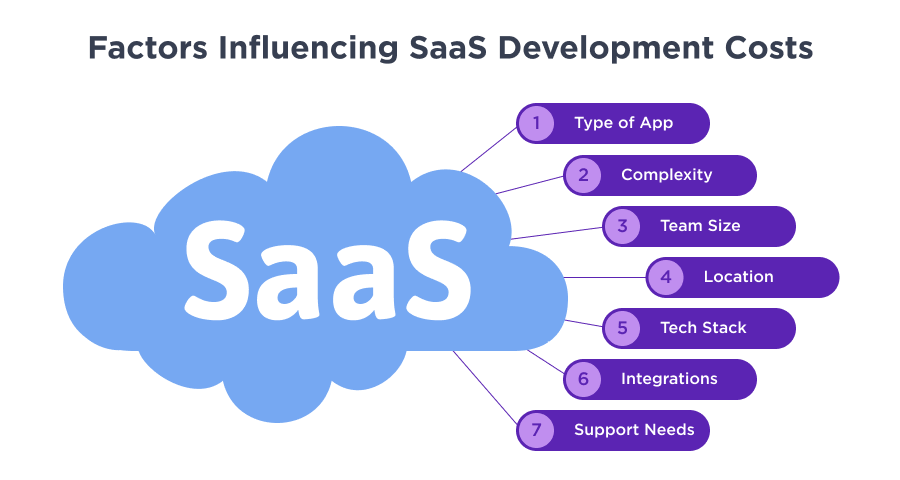
However, these are the main factors that will influence the fee you might see:
- App type
- Project complexity
- Required team size
- Location of specialists
- Chosen technology stack
- Integration types
- Support and maintenance needs
As you can imagine, the more complex the initiative, the higher the SaaS development costs will be. Yet, to get a precise estimate, it’s better to contact potential IT partners and request quotes for their services based on the specificities of your unique project. That way, you’ll be able to compare options and determine which vendor is most suitable.
Read our in-depth Guide to Custom Software Development Costs
Partner with Experts on Your Next Project
You now know precisely what it takes to build your next SaaS product and the hurdles that may arise along the way. Indeed, it’s not an easy undertaking, and business leaders should approach it with care and seek out support from experts.
This is what we are here for. Velvetech’s team consistently delivers successful SaaS development services to clients across industries and is always ready to take on a new opportunity. So, if you’d like some help with your SaaS project, don’t hesitate to reach out via the contact form below.
About the author