
Picture a world where managing chronic conditions is not a journey of trial and error but rather a collaborative effort guided by precision and care. This is a world where every individual, regardless of location or circumstance, has access to tailored support and resources that help them on their way to a healthy life. We are talking about chronic disease management.
CDM is a comprehensive and coordinated approach to managing long-term health conditions, often referred to as chronic diseases or non-communicable diseases. These conditions typically last for an extended period, sometimes a lifetime, and require ongoing medical attention, lifestyle modifications, and self-care efforts to control symptoms, prevent complications, and improve overall health and quality of life.
To facilitate this approach, healthcare software solutions come to the rescue. Today, we’ll be talking about their input to CDM and much more:
- Reasons to embrace technology for CDM
- Core features of CDM solutions
- Industry requirements
- Pros and cons of chronic care management software
- The future of CDM systems
The Role of Technology in Chronic Disease Management
Fundamentally, chronic disease management software (CDMS) refers to specialized digital tools and platforms designed to assist healthcare providers in managing the care of patients with long-term health conditions. These software solutions are tailored to the unique needs of this medical area, offering features that facilitate monitoring, treatment planning, patient engagement, and data analysis.
In particular, the technology aims to help combat such chronic diseases as:
- Diabetes
- Hypertension
- Cardiovascular diseases
- Chronic respiratory diseases
- Arthritis
- Cancer
- Obesity
- Chronic kidney disease
- Neurological disorders
- And more
While software tools continue to evolve with advancements in technology, data analytics, and patient-centered design, they offer a comprehensive approach to managing chronic diseases effectively and efficiently.
Recent statistics testify to that, implying that chronic disease management software became more essential as healthcare organizations focused on managing chronic conditions remotely. For example, a report by Grand View Research projected that the global chronic disease management market would reach $230.8 billion by 2028.
North America was also named the largest region in the chronic disease management market in 2023 with expectations of growth remaining strong in the face of an increasingly aging population.
Key Areas that CDMS Drives Forward
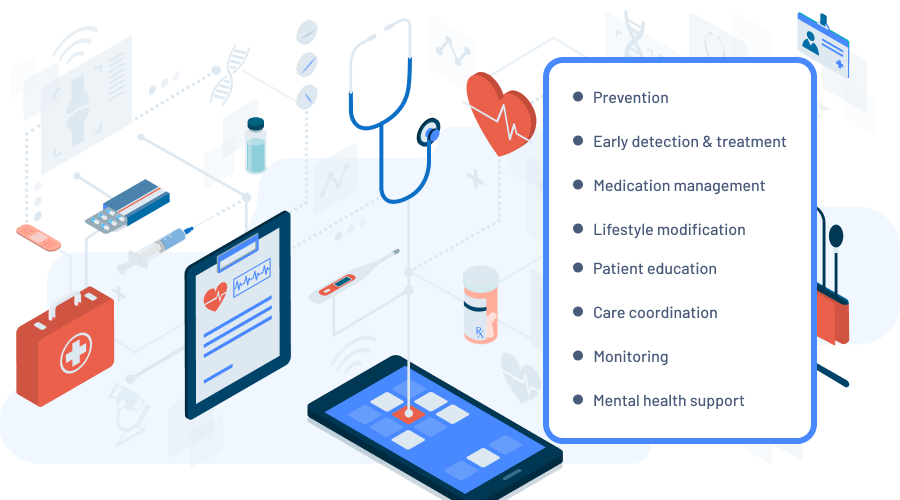
So, what are the core aspects of chronic wellness that CDMS is designed to address? Broadly speaking, it’s all about optimizing health outcomes, preventing complications, and enhancing the patient’s overall quality of life. However, if we want to be more specific, there are the following goals healthcare professionals can achieve with the right CDM solution.
Prevention and Risk Reduction
This point is about encouraging healthy lifestyle habits. They include regular exercise, balanced nutrition, maintaining a healthy weight, and avoiding tobacco and excessive alcohol.
Early Detection and Diagnosis
Next, there are routine screenings and health check-ups that aim to detect chronic diseases in their early stages when treatment is often more effective.
Treatment and Medication Management
Another essential part where CDM software helps is developing personalized treatment plans. They can be tailored to the specific needs and conditions of each patient, as well as prescribing medications to control symptoms, manage disease progression, and reduce complications.
Lifestyle Modifications and Self-Management
By providing guidance on healthy eating habits, meal planning, and exercise, chronic disease management apps help manage conditions like diabetes and hypertension. They teach self-monitoring techniques such as checking blood sugar and cholesterol levels, monitoring blood pressure, or tracking symptoms.
Patient Education and Empowerment
To help patients cope with the physical, emotional, and social aspects of chronic diseases, it’s important to offer resources, support groups, and educational materials. It will empower patients with the knowledge and skills to actively participate in their care, make informed decisions, and advocate for themselves.
Care Coordination and Team-Based Approach
Software with the right features can facilitate the coordination of care among healthcare providers, nurses, pharmacists, dietitians, physical therapists, and other professionals. It ensures a holistic and integrated approach >to patient care, streamlining shared decision-making with patients and involving them in the development of care plans.
Regular Monitoring and Follow-Up
Not less important is conducting regular check-ups, follow-up appointments, and assessments. And here CDM tools also come in handy, assisting with tracking disease progression and treatment efficacy. As we said above, they help monitor key health indicators and symptoms.
Psychosocial Support and Mental Health Care
Finally, chronic care management software supports addressing the emotional, psychological, and social impact of diseases on patients and their families. It provides counseling, support groups, and resources to help patients cope with stress, anxiety, depression, and other mental health challenges.
Examples of Chronic Disease Management Software
If you’re reading this article, chances are you consider adopting CCM technology to address one of the areas mentioned above or some unique scenario of your own. In any case, it is always a good idea to see what the market has to offer before getting on the path of custom software development.
So, let’s briefly overview the U.S. market of CDM solutions, each competing to redefine the boundaries of wellness access and patient care. For the robust functionality, we’ve picked the following:
- Epic’s Chronic Disease Management
- Athenahealth Chronic Care Management
- Medtronic Care Management Services
- Wellframe
- ChronicCareIQ
- CareCloud Chronic Care Management
While we hope you are inspired by these examples, it’s time to move on to one of the central pieces of our blog post and see what elements an effective CDMS should have.
Chronic Disease Management Software Components & Features
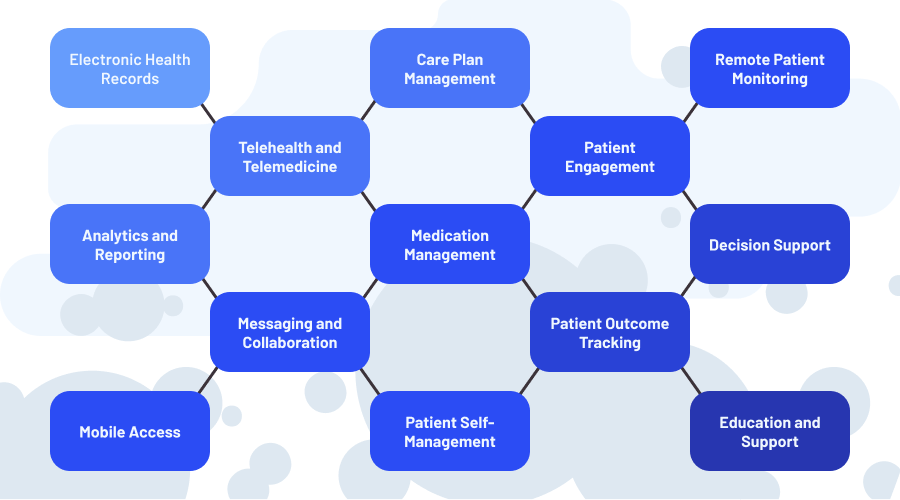
Regardless of whether you are thinking about a CRM-based or custom solution, an everyday health app or an application tailored to patients with special health needs, chronic disease management software retains a number of similar elements.
These components are designed to assist healthcare providers in efficiently managing the care of patients with long-term health conditions. Often, they are also integrated into a comprehensive health services strategy, such as a digital front door, that facilitates tasks like patient data management, care planning, remote monitoring, engagement analytics, and more.
Here are the key components and features common in chronic care management software.
Electronic Health Records
These comprise comprehensive digital records containing patient demographics, medical history, diagnoses, medications, allergies, and lab results. They serve as tools for healthcare providers to document patient encounters, assessments, treatments, and follow-up plans.
Care Plan Management
As customizable templates for creating individualized care plans, care plan management features help to provide treatment based on the patient’s specific condition, symptoms, risk factors, and preferences. Integration of clinical guidelines and protocols for chronic disease management into your applications ensures adherence to best practices.
Remote Patient Monitoring
Many providers make use of CDM technology’s capability to collect and track real-time data on vital signs such as blood pressure, glucose levels, heart rate, oxygen saturation, and weight. This is made possible by its compatibility with IoT solutions, such as wearables, home monitoring devices, and sensors for remote data collection.
Telehealth and Telemedicine
According to Rock Health, in 2022 telemedicine adoption among consumers in the US reached an 80% mark and is projected to grow further.
With more and more people preferring virtual consultations to in-person visits, the demand for secure video conferencing and messaging tools for remote consultations has gone up in recent years. This includes platforms that allow patients to connect with healthcare professionals for follow-up appointments, medication reviews, and check-ins.
We talk about the reasons Telemedicine Is a Win-Win for Both Providers and Patients
Patient Engagement
Cultivating patient awareness and engagement is a must in chronic disease management application development. It is noted that chronic care management apps have consistently failed to become mainstream due to patients and providers lacking the motivation to adopt them.
In fact, some software boosts patient engagement and helps overcome the lack of it. Examples include user-friendly patient portals that make it easy to access health records, lab results, care plans, and educational materials, or promotion campaigns and automated alerts and notifications to remind patients to consult the apps and attend appointments.
Read about the ways patient engagement is influenced by Healthcare Consumerization
Analytics and Reporting
Data analytics tools allow providers to identify trends, patterns, and risk factors among patient populations for better chronic disease management.
Monitoring and reporting on key performance indicators (KPIs), outcomes, patient satisfaction, and adherence to care plans drive continuous improvement in care delivery, protocols, and patient outcomes.
Uncover how Data-Driven Insights in Healthcare Fuel Business Growth
Medication Management
In chronic disease management software, this means electronic prescribing, that is, the capability to electronically send prescriptions to pharmacies, including dose, frequency, and refills. Additionally, medication reconciliation tools are used to update medication lists, including tracking changes and interactions.
Decision Support
Clinical Decision Support (CDS) presupposes the integration of evidence-based guidelines and protocols into the software to assist healthcare providers in making informed treatment decisions. It may also include automated alerts for potential medication interactions, missed appointments, abnormal lab results, and overdue screenings.
Messaging and Collaboration
Following the latest trends, encrypted messaging platforms for secure communication among healthcare providers, care teams, and patients promote consumer trust and adoption of CDM solutions.
And as an essential part of communication among health professionals, CDMS can integrate collaboration features for care teams to coordinate tasks, referrals, consultations, and follow-up care.
Patient Outcome Tracking
These are tools for patients to log and track symptoms, changes in health status, and responses to treatment. As a part of a modern UI, chronic care management software offers visualizations and summaries of patient progress, treatment adherence, and achievement of health goals, relying on analytical data.
Mobile Access and Patient Self-Management
Along with a main portal, it is customary to provide companion mobile apps for patients to access their health information, receive notifications, and engage in self-management tasks. They can also act as self-monitoring tools — features for conscious consumers to record and track lifestyle factors, diet, exercise, blood sugar levels, and other health metrics.
We list the Top Considerations for Mobile App Development in Healthcare
Education and Support
Education and support are vital to ensure the continuity and quality of health services provision for chronic disease management. They typically encompass provider training modules, user guides, and tools to onboard healthcare providers and staff, as well as patient education materials.
The latter can be split into interactive tools, videos, and guides to educate patients on their conditions, treatments, and self-care. It can also encompass other consumables like articles, videos, and podcasts on chronic disease management and lifestyle modifications.
In summary, CDM software integrates all these components into a unified system, offering healthcare providers a comprehensive toolset to deliver personalized, evidence-based care to patients with chronic conditions.
By leveraging technology, healthcare organizations can streamline workflows, improve patient engagement, enhance communication and collaboration among care professionals, and ultimately, achieve better outcomes for individuals managing long-term health challenges.
Top Industry Requirements for a Robust CDM Solution
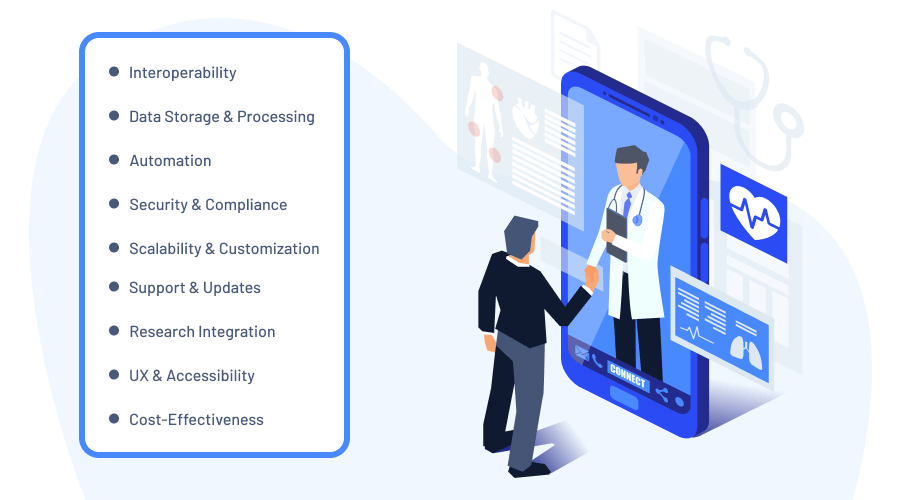
Just like any other purposeful tool, CDM applications face a number of industry demands to stay relevant. Through this list, we share the most common ones.
Interoperability
Seamless integration with Electronic Health Records and other healthcare systems stands as a pivotal element of any CDMS, facilitating smooth data exchange. The app should be designed to support standard healthcare data exchange protocols like HL7 and FHIR.
Additionally, it will need the capability to work with an array of remote monitoring devices such as blood pressure monitors, glucometers, and wearable fitness trackers. This promotes enhanced interoperability, enabling the exchange of data with various healthcare systems and providers, thereby ensuring well-coordinated care.
Data Storage and Processing Capabilities
A robust CDMS must offer comprehensive patient data storage, encompassing medical history, test results, treatment plans, medications, and vital signs. It should feature efficient and speedy patient portals, empowering patients to access their health information, communicate with providers, and schedule appointments conveniently.
Explore how we helped with the Dental Appointment Scheduling Integration
Furthermore, the software should provide the capability to create and maintain detailed patient profiles, comprising medical history, diagnoses, treatment plans, and information about their care team.
Automation
This includes automated workflows for quick referrals, specialist consultations, and coordination of services across diverse healthcare settings. Also, the software should offer automated patient engagement tools such as mobile apps, SMS reminders, and email notifications, empowering patients to actively participate in managing their health.
Integrated alerts and notifications are vital, providing automatic updates on abnormal health readings, missed medications, upcoming appointments, and educational opportunities.
Furthermore, the system should include automated refill request capabilities, streamlining prescription refills and reminders for patients’ convenience.
Lastly, the integration of artificial intelligence and machine learning could enable predictive analytics, early disease detection, and personalized treatment recommendations to enhance patient outcomes and overall care quality.
Boost automation with Generative AI in Healthcare
Security and Compliance
An effective chronic disease management solution must prioritize the utmost security and compliance standards. This involves strict adherence to healthcare data regulations such as HIPAA.
The software should implement robust data encryption techniques, coupled with role-based access controls, audit logs, and regular security audits, to safeguard patient information from unauthorized access.
Learn more about the essentials of Data Security in Healthcare
Scalability and Customizability
Like every other modern IT solution, chronic care management software must demonstrate scalability and customizability to meet evolving healthcare demands.
Essentially, it should scale seamlessly, accommodating growing patient populations and adapting to changing healthcare requirements over time. And as a welcome addition, the software should offer customizable workflows, templates, and forms, enabling healthcare providers to tailor the system to different specialties and care settings.
These features ensure that the software remains responsive to the diverse needs of healthcare organizations to promote efficient and personalized chronic disease management.
Uninterrupted Support and Update Cycle
This entails providing comprehensive training materials for healthcare providers and staff, equipping them with the knowledge to effectively utilize the software.
Furthermore, the system should offer responsive customer assistance, readily available to troubleshoot any issues that may arise, and aid in the smooth implementation of updates.
These support structures guarantee that healthcare teams can optimize the software’s functionalities, enhancing patient care and operational efficiency.
Integration with Research and Clinical Trials
A successful CDMS benefits both the patient and the provider alike. That is why it should also provide support for integrating patient data into research studies and clinical trials, where applicable, by offering tools for research, aiding data collection, and seamless integration with research databases.
To facilitate progress in the field of chronic disease management, it must offer researchers tools to analyze de-identified patient data for population health studies, enabling insights into trends and outcomes.
User Experience and Accessibility
Another must is an intuitive user interface design that simplifies intricate workflows and minimizes the learning curve for new users. Ideally, this also includes accessibility features to cater to users with disabilities, as well as functionality in multiple languages.
Mobile compatibility is equally crucial. As we’ve already mentioned, it allows patients to access their health information, receive reminders, and communicate with providers conveniently via smartphones and tablets. Similarly, healthcare providers should have mobile access to view patient data, send updates, and manage care remotely, ensuring effective patient care across various devices and locations.
Cost-Effectiveness
Finally, a CMD solution needs to be cost-effective and offer flexible pricing models tailored to diverse healthcare organizations, such as subscription-based, per-patient, or enterprise licensing options.
At the same time, it should take into account the long-term costs, including those associated with maintenance, updates, and ongoing support. This makes it possible for healthcare providers to choose a pricing structure that aligns with their budgetary needs and maximizes the value of the software investment over time.
All in all, these requirements are essential for the solution to effectively support healthcare providers in delivering high-quality, personalized care to patients with chronic conditions.
It’s important for software developers and healthcare organizations to collaborate closely to ensure that the software meets regulatory standards, clinical needs, and the expectations of both providers and patients.
Complying with these industry requirements ensures that chronic care management software is not only functional but also efficient, secure, and user-friendly for all stakeholders.
How Chronic Disease Management Tech Changes Healthcare Workflows
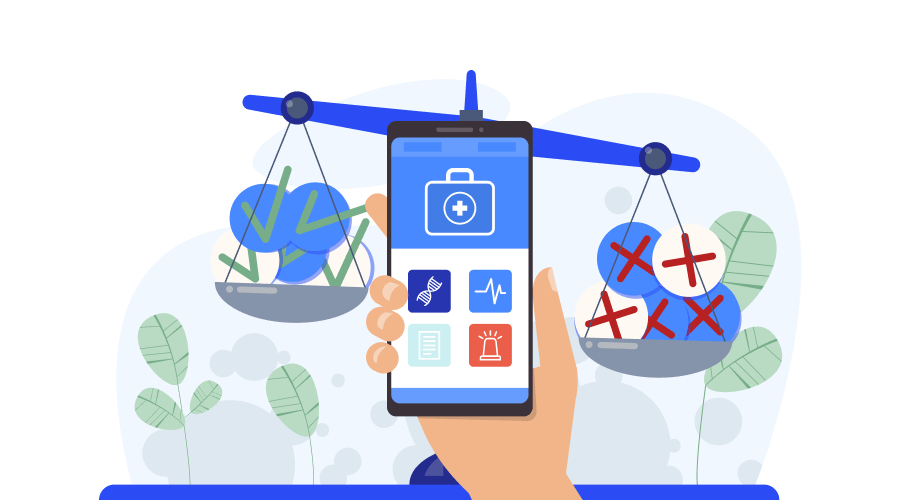
The landscape of healthcare is undergoing a profound shift with the rise of chronic disease management apps, marking a pivotal moment in the care of patients with long-term health conditions.
This transformative technology is ushering in a new era of healthcare, one where the focus is on proactive, preventive measures, improving chronic care and disease management using software, and fostering deeper collaboration between patients and their healthcare teams.
|
Top Benefits
|
Major Drawbacks
|
|---|---|
|
|
Main Advantages of a CDM System
Chronic disease management solutions offer a multitude of advantages for health services providers, patients, and healthcare systems in effectively managing long-term health conditions. Let’s have a closer look at the benefits of having dedicated chronic care management software.
Improved Patient Outcomes
First of all, CDMS facilitates enhanced disease control by enabling healthcare professionals to closely monitor and manage chronic conditions. This heightened vigilance leads to better control of symptoms and disease progression, ultimately improving patient outcomes.
Then, the software aids in reducing complications by allowing for early detection of changes in health indicators. This enables timely interventions, which can effectively minimize the risk of complications arising from the chronic condition.
Moreover, the software empowers patients by providing them with tools for self-management, education, and monitoring. As a result, it contributes to a better quality of life for patients, as they become more engaged in their own healthcare journey.
Learn how an RPM Solution Helps Tracking Urological Conditions
Enhanced Care Coordination
One of the key benefits of chronic care management apps is streamlined communication, which fosters collaboration among healthcare providers, specialists, and care teams, ensuring a coordinated approach to patient care.
Integrated electronic health records further enhance this by centralizing patient data, allowing seamless sharing of information across various departments and facilities. This integration leads to efficient referrals and consultations and simplifies the process of care transitions between providers and specialists. Together, these features enhance the overall effectiveness of healthcare delivery.
Here’s how we developed a Booking Platform for Long-Term Care Coordination
Patient Empowerment
Through CDMS, patients gain access to their health information via secure portals that allow them to view vital details such as health records, lab results, care plans, and medication lists.
Additionally, these platforms serve as valuable educational resources, offering a wealth of articles, videos, and materials on chronic disease management, lifestyle modifications, and self-care practices.
Through self-monitoring tools provided by the software, patients are empowered to track symptoms, medications, and lifestyle factors. This active engagement in their health not only promotes a better understanding of their conditions but also encourages a more proactive approach to managing their well-being.
Data-Driven Insights
Through its analytics and insights capabilities, the software generates detailed reports, dashboards, and population health analytics, allowing healthcare teams to identify trends, patterns, and high-risk patients with precision.
By integrating clinical guidelines and protocols directly into the system, chronic disease management software supports providers in making informed treatment decisions rooted in evidence-based care.
Moreover, the data gained through this software serves as a catalyst for quality improvement initiatives, fostering continuous enhancements in care delivery and treatment protocols. Ultimately, it also elevates the standard of care provided to individuals managing chronic diseases.
We know all about data analytics.
Looking for effective solutions to leverage data and benefit from informed decisions? It’s not rocket science.
Resource Optimization
One key benefit of chronic disease management is its focus on preventive care, enabling early detection, continuous monitoring, and effective management of chronic conditions through apps. By doing so, the software plays a pivotal role in preventing costly complications and unnecessary hospitalizations.
At the same time, providers can streamline administrative tasks, reduce paperwork, and optimize staff time, which results in more efficient workflows across the board. This includes the ability to use data analytics to prioritize high-risk patients for targeted interventions or telehealth services, ensuring that resources are utilized effectively to meet the diverse needs of patients managing chronic diseases.
Continuous Care Delivery
Through regular check-ins, the software promotes ongoing communication and facilitates follow-up appointments with patients, ensuring an uninterrupted continuity of care. Furthermore, it enables healthcare providers to closely monitor patient progress, treatment adherence, and the achievement of health goals over time in a proactive approach to managing chronic conditions.
Bearing this in mind, it’s evident that CDM software plays a pivotal role in preventive care by sending timely reminders to both patients and providers regarding upcoming screenings, tests, and preventive care measures.
Fostering Innovation
Chronic disease management software represents a significant leap forward in healthcare. By integrating the latest innovations in digital health, wearables, artificial intelligence for healthcare, and telehealth, these platforms offer breakthrough solutions for managing chronic conditions.
Here are more Powerful Opportunities Wearable Technology Offers
Moreover, they serve as invaluable tools for research, facilitating large-scale data collection and analysis. This enables healthcare professionals to delve into disease trends, treatment effectiveness, and patient outcomes on a profound scale, ultimately contributing to the ongoing advancements in care practices.
Through this combination of technological prowess and research capabilities, chronic care management software drives progress in the broader landscape of healthcare.
Patient Retention
Patients’ active engagement in their care often results in heightened satisfaction and a sense of ownership over their health journey. This, together with improved communication between patients and providers to address concerns, answer questions, and align on care preferences, improves patient retention for the provider, and hence, the general profitability of the app.
To sum up, these advantages contribute to a more efficient, effective, and patient-centered approach to chronic disease management across healthcare settings.
Possible Drawbacks of Introducing CDM
While chronic disease management systems offer numerous benefits, there are also potential drawbacks and challenges that healthcare organizations may encounter. It is essential to consider these factors when implementing and using such systems to ensure they effectively meet the needs of patients and providers.
Initial Costs and Implementation Challenges
The high initial investment required can pose a significant financial hurdle, particularly for smaller healthcare practices with limited budgets. The complexity of integrating the software with existing electronic health records, systems, and workflows can present substantial challenges, demanding additional time and resources to navigate.
Even more so, the process of staff training and onboarding for the new system can be time-consuming and disruptive to normal operations during the transition period, further adding to the drawbacks of implementing such technology. These factors underscore the need for careful planning, budget considerations, and effective change management strategies.
Technical Issues and System Downtime
Software glitches and bugs, including system crashes, slow performance, or unexpected errors, have the potential to disrupt workflows and compromise patient care delivery.
Like any other app, CDMS is not immune to data loss, corruption, or breaches if the system lacks adequate backup mechanisms or proper maintenance protocols.
Additionally, the software’s dependency on internet connectivity presents a challenge, particularly in areas with poor or unreliable internet access. This affects the continual functioning of remote monitoring, telehealth consultations, and cloud-based features, potentially limiting the software’s effectiveness in such environments.
Information Overload and Alert Fatigue
One significant drawback of chronic disease management software is the potential for information overload, where the system inundates healthcare providers and patients with excessive data and alerts.
This flood of information can make it difficult for providers to sift through and prioritize tasks effectively, leading to a sense of overwhelm. Additionally, the prevalence of alert fatigue is a notable concern, as the software generates a high volume of automated alerts, reminders, or notifications. Over time, this information stream can desensitize patients, causing them to ignore or overlook critical notifications, potentially compromising their care and safety.
These challenges illustrate the importance of refining alert systems, streamlining data presentation, and implementing strategies to mitigate the impact of information overload within healthcare applications.
Digital Divide
The digital divide poses a notable barrier, as not all patients have access to smartphones, computers, or reliable internet connections, limiting their ability to utilize patient portals or remote monitoring devices. Also, disparities in health literacy and technological proficiency can further complicate matters, with some patients struggling to navigate the software or comprehend their health information effectively.
From a different perspective, CDMS adoption can be impeded by resistance from healthcare providers or staff, especially if they perceive the technology as cumbersome or time-consuming to integrate into their workflows. So, there may exist a need for tailored solutions, complete with comprehensive training programs to ensure the equitable and successful implementation of this software for all health stakeholders.
Overreliance on Technology
Excessive reliance on CDM technology can lead to a diminished personal connection between healthcare providers and patients, potentially affecting the quality of care delivered. Moreover, an overemphasis on telehealth or remote monitoring within the software may result in missed opportunities for vital in-person care.
Physical examinations and face-to-face interactions still remain crucial for comprehensive assessments and building patient-provider relationships and could be compromised if not adequately balanced with the use of digital tools.
Maintenance and Upkeep
One more challenge is the necessity for regular software updates, patches, and upgrades to maintain system security, functionality, and compliance with industry standards. This ongoing maintenance requires dedicated time, resources, and attention from healthcare IT teams.
As a consequence, healthcare providers are often dependent on the software vendor for crucial support, maintenance, and troubleshooting services. This can lead to added costs, delays in resolving issues, and potential disruptions in the operation of the app within a broader service system.
Potential for Health Disparities
Chronic care management software, despite its potential to improve healthcare outcomes, also presents issues that can perpetuate existing disparities in patient care, as it may not always be tailored to accommodate the diverse cultural, linguistic, and socioeconomic backgrounds of patients.
This lack of customization can hinder patient engagement, comprehension, and adherence to treatment plans. Additionally, there are inherent risks of bias within the software, particularly in AI algorithms or decision-support tools, which may contribute to disparities in care and unequal treatment outcomes.
To avoid neglecting diversity, you must consider the development and implementation of more inclusive, culturally sensitive, and equitable chronic care management solutions in healthcare.
Loss of Autonomy for Providers
The standardized care plans and protocols inherent in these systems can restrict providers’ autonomy, limiting their ability to tailor treatments to the unique needs and preferences of individual patients.
Here too, the concept of vendor lock-in poses a tangible problem, making it challenging for healthcare organizations to switch to different software providers. This difficulty may arise due to proprietary data formats, complex data migration processes, or contractual obligations that bind organizations to a specific vendor.
Due to this fact, providers have to be aware of the importance of carefully assessing the long-term implications and flexibility of chronic disease management software solutions before adoption to mitigate potential drawbacks.
Overall, while these potential drawbacks highlight important considerations, it’s crucial to note that many challenges can be minimized through careful planning, training, ongoing evaluation, and customization of the software to match the specific needs and workflows of healthcare organizations.
Learn about the essentials of a Healthcare App Development Strategy
Chronic Care Management Integration Prospects
The future prospects of chronic care management software development are promising, with ongoing advancements in technology, data analytics, telehealth, artificial intelligence, and patient-centered care.
As healthcare continues to evolve toward a more personalized, proactive, and data-driven approach, chronic disease management software is poised to play a pivotal role in improving patient outcomes, reducing healthcare costs, and enhancing the overall quality of care. Here are some key areas of its development and future prospects.
Personalized and Precision Medicine
Moreover, predictive analytics, powered by advanced AI and machine learning algorithms will be able to process vast amounts of patient data, foresee disease risks, and recommend highly personalized interventions, marking a transformative leap towards proactive and precise chronic disease management.
AI-Powered Decision Support
Integrating Natural Language Processing will introduce voice-enabled interfaces and chatbots, enhancing user experience by enabling intuitive interactions with the software, thus improving efficiency and accessibility for both patients and healthcare professionals.
Seamless Data Exchange
As a part of the movement toward equity and globalization, open-source initiatives are being championed to support collaboration, innovation, and affordability. It means fostering a community-driven approach to the development of chronic disease management solutions that benefit patients and providers alike.
Patient Self-Management
Additionally, the software will provide patients with access to virtual coaching, peer support networks, and educational resources, empowering them to take an active role in managing their conditions and fostering a sense of community and support within the digital space.
Real-Time Analytics and Predictive Modeling

Utilizing predictive modeling tools will also make it easier to forecast patient outcomes, anticipate disease progression, and identify crucial opportunities for early intervention, thereby optimizing treatment strategies.
Explore the Top 9 Data Modeling Techniques
Ecosystem Collaboration and Partnerships

Academic research collaborations will equally continue to leverage the expertise of research centers and other institutions, harnessing findings, clinical trials, and evidence-based practices to drive innovation in software development. These collaborative efforts promise a future where software solutions are not only cutting-edge but also deeply rooted in the collective wisdom and expertise of the healthcare community.
As chronic disease management software continues to evolve, its future development is likely to focus on personalized, proactive, and patient-centered care models that leverage the full potential of technology, data analytics, and interdisciplinary collaboration.
By addressing these future prospects, developers and organizations can create innovative health software solutions that empower patients, support healthcare providers, optimize resources, and ultimately improve the lives of individuals living with chronic conditions.
We at Velvetech use our healthcare and pharma technology know-how to create integrated and easy-to-use chronic disease management solutions for all your needs. Feel free to contact us to open a new chapter in a chronic wellness journey.