For the past few years, healthcare mobile app development has accelerated at an unprecedented speed. Clear as a bell that mHealth apps are starting to shape its industry with a great number of various products present on the market.
Powered by artificial intelligence, the full-tilt progress of mobile technologies, and the constant security enhancements, medical apps are giving a solid base for groundbreaking solutions we could not possibly imagine some years ago.
Not only vast opportunities but also numbers tell us that the peak growth is yet to come. According to the research, CARG (Compound Annual Growth Rate) for 2019 to 2025 for the global mobile health apps market is 38.26%. A figure to think about.
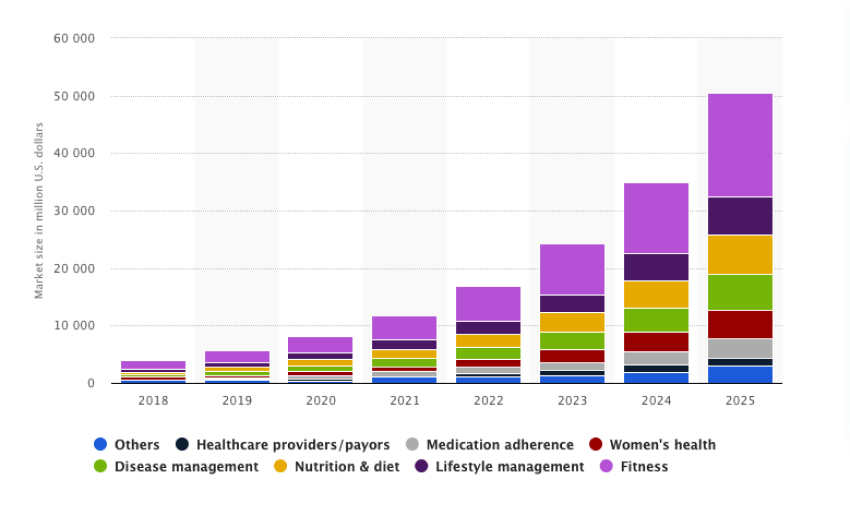
Source: Statista
In this article, we’ll cover the most significant aspects relating to health mobile app development. Hopefully, it will help you expand opportunities, spot unobvious nuances, and get inspired.
The key topics to be explored include:
- The difference between health and medical apps
- Types of mobile healthcare apps
- Benefits of healthcare applications
- Challenges of healthcare mobile app development
- Use cases of mobile apps in healthcare
- Healthcare application development approaches
- The cost of medical mobile app development
- Technology that empowers mHealth apps
The Difference Between a Health App and a Medical App
They might sound quite similar and even confusing, but there’s a difference between health and medical applications. So, if you’re considering developing a mobile app for the healthcare sector, then you should know the distinctions between these two categories of apps. Here they are.
Medical apps:
- Target healthcare professionals or patients with a specified diagnosis
- Usually, focus on diagnosis based on analytical data
- Comply with medical evidence
- Adhere to industry regulations
- Are typically more expensive to develop
Health apps:
- Address general public
- Deal with any health aspects that don’t entail medical evidence
- Focus on medical information to boost healthy conditions
- Are less dependent on regulations
- Generally, cost less to implement
As you see, both types of apps help improve the health state or solve any related issues. Yet, the software requirements will vary in each particular case. Usually, the team should consider the following distinctions in mHealth app development for these two categories:
|
Distinction
|
Medical Apps
|
Healthcare Apps
|
|---|---|---|
| Goal | Managing medical diagnosis, treatment, and diseases. | Supporting medical, administrative, and patient services. |
| Target audience | Healthcare professionals, clinicians, patients, and researchers. | Healthcare providers, patients, administrators, insurers, and other stakeholders. |
| Functionality | Typically involve symptom tracking, medication reminders, drug management, and medical reference. | Can include appointment scheduling, telemedicine consultations, EHR, billing, and administrative tools. |
| Compliance | Must adhere to strict regulatory standards like FDA, HL7, medical device standards, and many more. | Compliance with regulations such as HIPAA, GDPR, PCI, and regional medical data privacy laws. |
| Data security | Both require robust security measures to protect sensitive patient information and maintain regulatory compliance. | |
| Integrations | Integration with medical devices and wearables is common for data collection and analysis. | Integrate with various systems such as EMR/EHR, HIS, and lab systems. |
| Main challenges | Compliance with regulatory standards, interoperability, and ensuring reliability of medical information. | Scalability, data privacy, compatibility across platforms, and usability across diverse user demographics. |
Types of Healthcare Mobile Apps
There are various types of mobile healthcare applications. For example, they can be divided by their functionality. Some of them aim to elevate health monitoring, others help streamline operational efficiency, and some elevate medical research and drive medicine to a whole new level.
However, from the user’s perspective, all apps are classified into two types: healthcare apps for doctors or medical organizations and solutions for patients or non-professional users.
For Patients
With the rise of healthcare awareness and shifted preferences in the consumerization of healthcare, more and more patients turn to mobile apps. People want to track not only fitness activities or their diets but also have better control over the core health metrics.
Being part of our daily lives, mobile devices and applications help patients monitor their health, arrange remote consultations with doctors, detect and prevent some diseases, and get assistance with medications.
Find out how we helped a family clinic Develop a Medical Reference App
Examples of mobile health apps aimed to deliver value for patients include:
- Fitness and wellness
- Telehealth
- Mental health
- Reminders
- Appointment scheduling
- Woman’s health
- Healthcare education
- Self-diagnosis
For Providers
Hospitals and other healthcare providers that leverage mobile app development can significantly improve their administrative operations and deliver better treatment outcomes.
The examples of mobile health applications for this category of users majorly include:
- Practice management
- Telehealth
- Care coordination
- Appointment scheduling
- Staff communication
- Inventory management
- Billing
- Medicine reference
Learn how we helped a dental marketplace Improve Appointment Scheduling
Generally, mHealth apps designed for medical practices incorporate various integrations and combine technologies like IoT, AI and Machine Learning, or even blockchain. Down the line, we’ll cover in more detail the role of these technologies in the development of custom mHealth apps.

Choosing a Winning App Development Strategy
Advantages of Healthcare Apps
If you’re considering healthcare app development, then you can certainly name a few benefits that mobile technology delivers for both patients and doctors. With their wide adoption, the medical industry undergoes significant transformation and avidly welcomes progress.
Let’s list some of the advantages that affect the way healthcare providers deliver their services and patients take care of their wellbeing.
Benefits for Patients
- Enhanced patient experience
- Easier access to healthcare services
- Better quality of care
- Streamlined appointment scheduling
- Up-to-date information on drugs and treatment
- Increased health awareness
- Better control over PHI
- More affordable care
Benefits for Healthcare Providers
- Streamlined communication with patients
- Enhanced cooperation between professionals
- More informed and accurate decision-making
- Improved facility and equipment management
- Increased access to medical knowledge and expertise
- Lower risks of professional burnout
- Cost reduction for healthcare services
Turn to our team of experts to build a healthcare app.
Seize the vast opportunities with a mobile solution tailored to the healthcare sector and your unique needs.
Top 6 Considerations to Focus on When Developing an mHealth App
Designing a product and finding a proper solution for a particular issue can be a complex process. In order to create an impeccable app that satisfies all interested parties, it is wise to mind the key challenges of healthcare mobile app development and focus on the crucial points.
User-Driven Approach
Here are the key healthcare mobile app development tips to walk through with us.
1. Digital Strategy
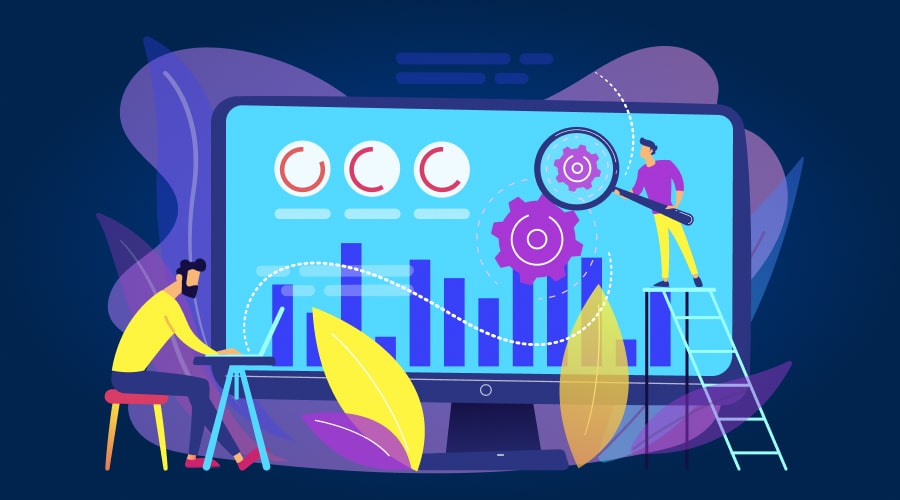
Even if this point might seem less connected to the development process of a health app, digital strategy is the number one step to think about. You should thoroughly analyze the market and your competitors, set clear goals, and identify the needs your potential solution will address.
Most probably, you already know what type of app you’re going to deliver and who the target audience is. Whether it’s an application for patients or medical providers, you need to build a mobile app growth strategy. How will your solution be distributed and monetized? What size of the user base you’d like to reach?
Learn How to Enhance Mobile App Engagement
Another moment to focus on is choosing the OS platform. Android remains the position of leading mobile operating system, but that certainly shouldn’t make you neglect iOS users. If you have a limited budget, then you can first launch an app for one platform and then create it for another.
Remember that there’s always an option to start your medical app development as an MVP project, try and test how it aligns with user needs, and what adjustments should be implemented. After, you can move to deliver a full-fledged product.
2. Interoperability and Compatibility
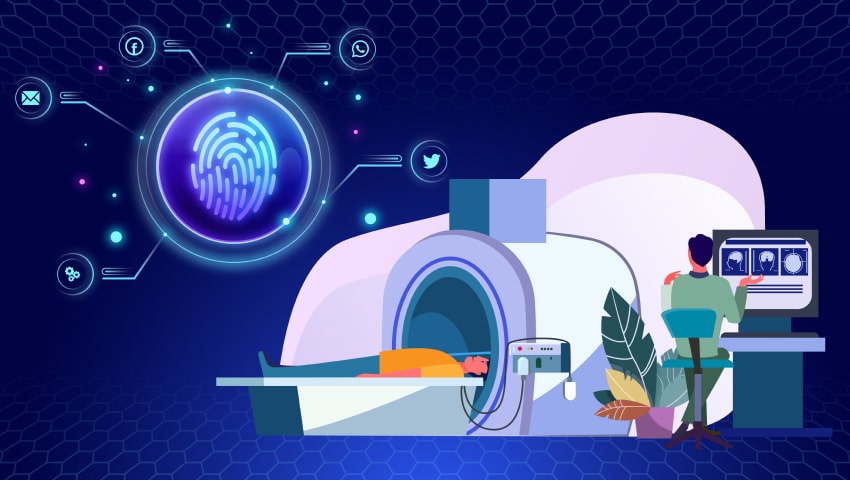
When working on your app, interoperability is one of the most significant considerations. It refers to the ability of the applications, devices, and systems to successfully connect and coordinate with each other.
Hospital staff may use a great variety of software and equipment: Practice Management Systems and EHR solutions, dermatological sensors, scheduling applications, etc. Thus, you need to ensure that the app you are creating can effectively interact with all existing software applications in a typical for your healthcare facility ecosystem.
Another fact to take into account is hosting. The benefits of the cloud are essential: it protects data from loss by hosting it on different servers and provides higher performance and 100% uptime. That is why a vast majority of enterprise healthcare mobility solutions like scheduling applications rely on it.
Nevertheless, many hospitals still tend to install traditional hosting – shared or dedicated – associating it with a less expensive one compared to the cloud. Therefore, a compatibility layer built into your app would be an asset that will bring your app to function with the existing setup.
3. Data Security and Regulatory Compliance

Security is a crucial point in app development at all times, notably in the healthcare environment. Medical software is home to a trove of sensitive data and private information. Hence, the responsibility for safety and privacy is not subject to neglect.
Storing app data on devices would not be the best choice in terms of extra security measures. Storing data on the app server – which is initially built for speed and efficiency, not for security – may also cause possible data leakage. Sounds puzzling?
Data Encryption
The solution, in this case, would be ensuring confidentiality through encryption and the use of secure communication channels. Think about applying end-to-end encryption that can provide further means to protect sensitive healthcare data.
Authentication
Implement the right multi-factor authentication method, where it is needed the most. By protecting access to your app, this additional guard layer will mitigate the authentication risks. Avoid misusing it, for you do not want to burden the workflows for clinicians and staff.
Possible Penetration
Be ready to face the menaces and protect your app from possible penetration. Forewarned is forearmed. Hacker, social engineer, or man-in-the-middle attacks can threaten your app. Focus on double-checking all possible breaches and eliminating security flaws.
Regulatory Compliance
Another focal point is rules and laws regulating medical data. They vary depending on the region and the type of medical content. Conduct research before developing your app to make it safe according to these rules.
Healthcare messaging standards and general requirements for protecting personal health information provide a secure way of data exchange. Thus, make sure your app is compliant with them.
Here’s a list of the most principal ones:
- HIPAA. This act is a must to follow when you consider building a health app. HIPAA regulates the flow of PHI and how it should be processed by healthcare and insurance companies in order to protect it from fraud and theft.
- FHIR. This is an important standard describing data formats, elements, and APIs that you should take into account if your solution deals with EHR.
- Health Level 7. HL7 is another set of standards that aims to protect patient data. It helps to develop a healthcare app that will ensure safe data transfer between various medical organizations.
- Direct. The standard provides guidance for encryption and digital signing of messages that include PHI.
Not as easy as ABC? If you only begin your way in this field, opt for an experienced team of developers as they are aware of what standards to follow and know what set of policies medical data should fall under.
4. UI and UX Considerations
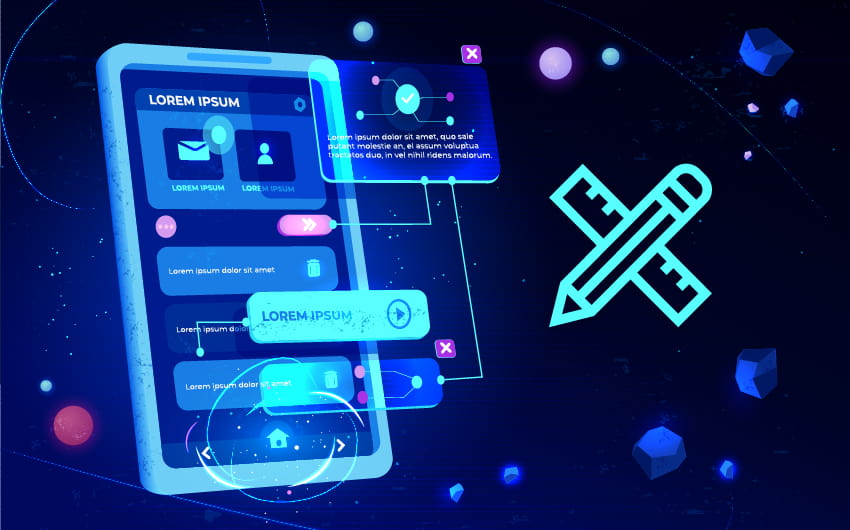
Another subject whose importance has never faded is user experience and user interface design in a healthcare mobile app. While developing an application and polishing its particulars, UI/UX should draw your careful attention. Practically speaking, it plays a major role in keeping the audience involved.
These days both doctors and patients frequently use medical applications and dedicate a lot of time to entering varied data. Thus, try to eliminate complex design and emphasize ease of use. Stay simple. Visuals should be relevant and harmonious, containing plain target elements.
Read more about the UI/UX in Healthcare
Most likely, patients using the app suffer from conditions or might be under treatment in a vulnerable state. Following this, peaceful and comforting emotions are the best message design could deliver. It would not be superfluous to mindfully choose fonts, sizes, and colors, and keep an eye on overall readability. Anything that bewilders or causes spending extra time on acting will inevitably drive away your users.
Here is an enthralling story from TEDx about why Healthcare UX, in general, is important and how it can be improved:
5. API Components
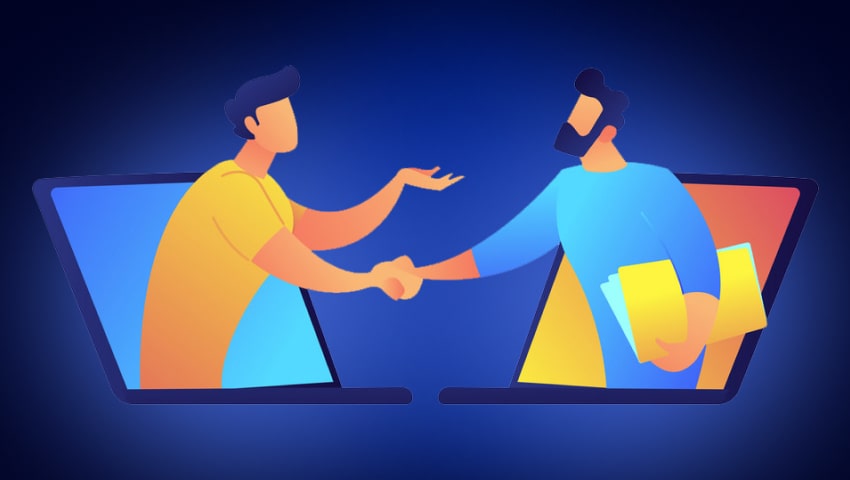
API makes it easy for software programs to interact with each other and exchange data. Imagine that there are two river banks – unrelated to each other apps – that are connected by a bridge, or API, allowing data to flow between them no matter how these apps were initially designed.
First of all, you will need APIs when integrating a new app with an existing healthcare environment and different third-party services and tools. In this case, your goal is to ensure interoperability, streamline operations, and provide patients with a higher quality of care.
Research the available solutions – make sure they are open, have up-to-date documentation, and are supported by the developer community. Consider that you might need to request additional API from vendors and suppliers to simplify workflows in some cases. Remember that not each of them is open to third parties.
Another scenario is to encourage healthcare providers and app developers to integrate their services with your solution. In this case, you need to provide an API.
When working on your own API software development, stay focused on security and privacy concerns. It is vital to make sure that the records remain private and are accessed, for example, only by doctors, patients, or insurance companies. Consider writing well-defined API documentation.
6. Healthcare Mobile App Development and IoT Devices
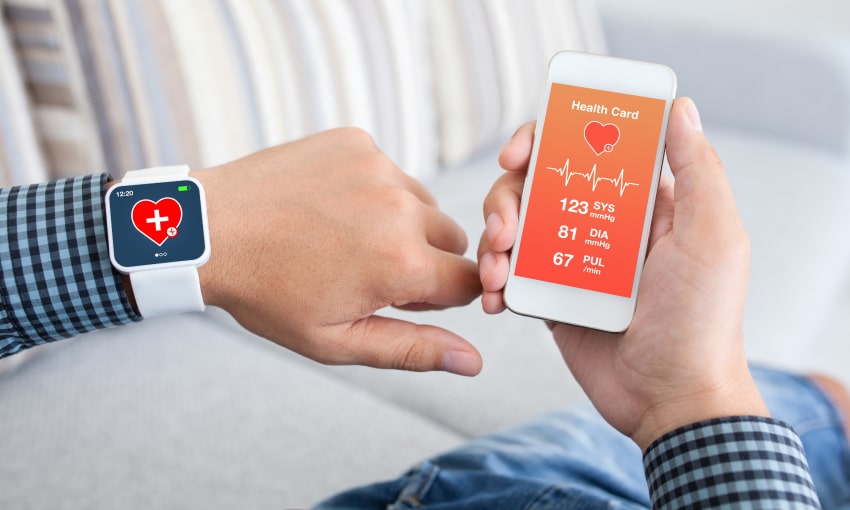
There has been a growing buzz around IoT solutions for the past few years. Statistics prove that it is not just a hype or vague assumption. Based on the summary of Reports and Data, the Medical Internet of Things market is poised to hit 260.75 billion US$ by 2027 with a CAGR of 19.8%.
Today, health is wealth. An increasing number of people of all generations lead a healthier lifestyle stimulating the growth of the global wellness market. As public health awareness rises, it entails higher medical service requirements.
Here IoT devices come in handy being a better, faster, and in some cases cheaper solution. They help save time and simplify treatment by providing remote patient monitoring and medical assistance, enhanced chronic disease treatment, or smart hospital solutions.
Explore how we built an RPM Solution for Urology
So, what are the IoT devices leveraged in the healthcare sector? Here are some popular types:
- Wearables
- Hearables
- Moodables
- Healthcare charting
- Ingestible sensors
- Computer vision technology
Taking into account the complexity of the solved issues, a variety of devices and communication protocols or standards, there are a few challenges in app development for medical IoT to keep in view.
Data Security
We know that the data transfer flows from IoT devices and sensing units to a system and is usually kept in cloud storage afterword. Remain alert when applying cloud-based functionality. Consider deploying top-notch encryption and providing up-to-date protection.
Integration: Multiple Devices and Protocols
IoT may connect a large number of devices. To create a flexible system, all of them should connect and aggregate information without a hindrance. Even if there is no uniformity of communication protocols yet, make sure that your app is developed according to such guidelines as HIPAA and FIPS, which contain a lot of rules and regulations. Also, keep in mind thу API consideration we mentioned above.
Data Overload
IoT sensors and devices can generate a vast amount of data. When developing your IoT app, consider storage capability that would allow holding a colossal volume of information for an indefinite time. Get insights on the data size stored in the cloud. Skilled analytic experts and data engineers may help you achieve this goal.
Find out how to create an Effective Cloud Data Management Strategy
Use Cases of Healthcare Apps
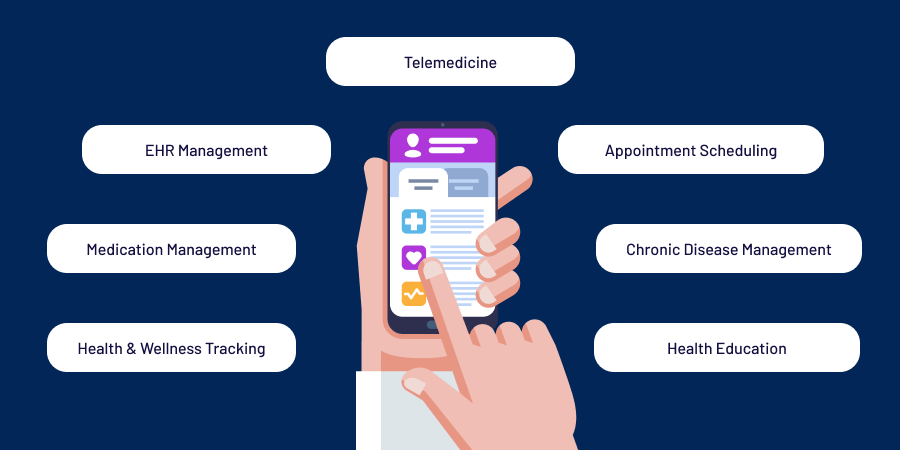
Having already covered a lot of ground today on the mobile development of medical applications, we still feel the urge to share more on the particular uses of the technology in the field. While there’s a vast variety of them, we’ll focus on the seven essential examples of how mobile health applications are majorly used nowadays.
1. Telemedicine and Remote Consultations
As the name implies, telemedicine apps enable patients to consult with healthcare professionals remotely, which greatly facilitates access to medical advice and treatment from anywhere at any time.
Using these apps, patients can schedule virtual appointments, conduct video consultations, and receive prescriptions or referrals without the need for in-person visits. This is especially beneficial for individuals in rural or remote areas, those with mobility issues, or the ones seeking convenient healthcare options.
2. Electronic Health Records Management
Today’s healthcare organizations deal with tons of data, and most of it is electronic. Thus, it’s nearly impossible to do without a robust EHR system that ideally should have a mobile app pairing it.
EHR management apps allow healthcare providers to access and manage patients’ electronic health records securely. They allow professionals to view patient history, lab results, medications, and treatment plans in real time, enhancing the coordination of care and decision-making.
3. Medication Management and Adherence
As we’re used to doing many things on the go and having immediate access to all we may need, it’s no wonder that even medication management has become mobile. These specific apps help us track our medication schedules, set reminders for doses, and receive alerts for refills.
They promote medication adherence by reducing the risk of missed doses, drug interactions, and improper usage. Healthcare providers on their side can monitor patients’ adherence patterns and intervene when necessary to optimize treatment outcomes and prevent complications.
4. Health and Wellness Tracking
These are likely the most popular apps that we all know. Health and wellness applications enable users to monitor various aspects of their health. We can track our physical activity, diet, sleep, stress levels, and more.
Users can set health goals, track progress over time, and receive personalized insights and recommendations for lifestyle modifications. Taking it a step further, integration with wearable devices and sensors allows for continuous monitoring of biometric data, empowering users to take proactive steps towards better health.
Contact our IoMT development team.
Ready to leverage wearables and need help of experts that know both IoT and medical landscapes?
5. Appointment Scheduling and Management
Another familiar to many of us health app use is appointment scheduling. It’s designed to streamline the booking process for patients by allowing them to schedule appointments, view professionals’ availability, and receive reminders.
Of course, healthcare providers benefit from improved appointment management, too. It reduces no-show rates and optimizes clinic workflows. Furthermore, integration with practice management systems automates scheduling tasks, minimizes administrative burden, and enhances the overall patient experience.
6. Chronic Disease Management
Today, the advances in healthcare application development allow for supporting patients and providers in managing conditions such as diabetes, hypertension, asthma, and cardiovascular disease.
The apps offer tools for symptom tracking and self-monitoring and they also enable medication adherence and lifestyle management. Sometimes, it can be a separate app that delivers just this functionality. However, often, we see that one solution combines several features like chronic disease management and appointment scheduling. This refers to any of the mentioned in this section areas of application.
7. Health Education and Information
Finally, we’re at the end of our list. The last example we want to mention is the use of mHealth apps for education. The applications contribute to delivering accessible and reliable health information to users. This naturally helps them make informed decisions about their wellbeing.
With these apps, we can access a range of resources like articles, videos, infographics, and interactive content. All of that provides us with knowledge on various topics, diseases, and treatments. Essentially, it plays a crucial role in promoting health literacy, raising awareness about public health issues, and encouraging preventive care practices.
How to Build a Healthcare App
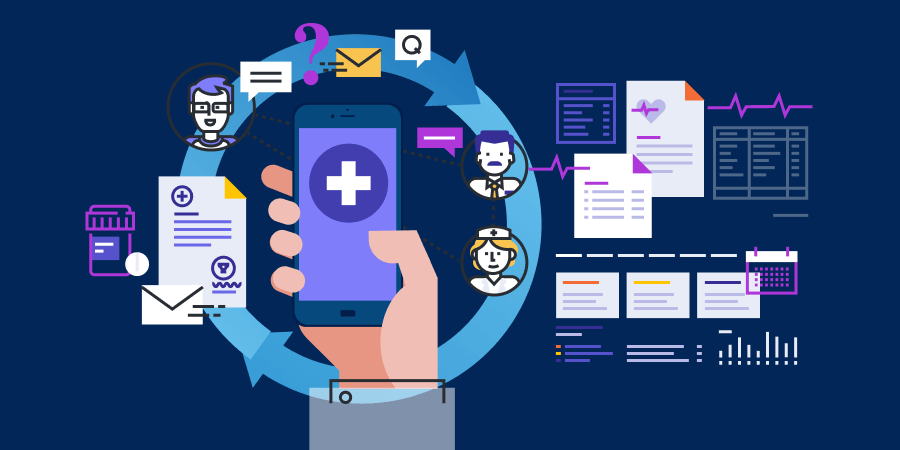
No matter what type of app you’re going to create, there are two ways to approach it. The first one is to use in-house resources and the other one is to outsource app development to an external team of experts. While both of these options will have common steps, let’s take a closer look at the specifics.
In-House App Development
Of course, prior to anything, you need to work on the requirements and goals. This includes defining the target audience, your healthcare app features, compliance with standards and concepts, and integration needs with existing systems. Keep in mind Apple’s Human Interface Guidelines for CareKit and HealthKit and Android.os.health documentation.
The main focus here will be on assembling a team. As you’re doing the project in-house, pay attention to covering expertise in software development, UI/UX design, healthcare regulations, and domain knowledge. Ensure that your team members understand the healthcare landscape and can collaborate effectively to meet project goals.
Then, you can proceed to create a prototype or MVP to validate the concept and gather feedback from stakeholders and end-users. Based on this feedback, refine the app’s design and architecture, considering usability, scalability, and security. At this stage, your team will be elaborating on the development of a full-fledged mobile solution.
The last essential part will be conducting rigorous testing that should encompass functional, usability, security, and interoperability tests. After that, you can deploy the app on the chosen platform in coordination with backend systems. Don’t forget about maintenance afterward.
While this is just a rough outline of key points to have in mind, the process is way more complex and includes numerous nuances. It would take a separate article to describe all of them in detail, and this article was rather written to provide you with a comprehensive picture of the main aspects of app development for healthcare.
Outsourcing mHealth Development
The crucial difference between this and the previous option, as you can guess, is that here you’ll need to select a software development partner. Research and evaluate potential outsourcing vendors based on their expertise, experience, portfolio, and ability to meet project requirements.
Speaking about project requirements, your future team will help you define them and set the right goals, so you won’t have to break your mind. Since you can pursue the development of your medical app for iPhone, Android, or both at once, look for companies that have expertise in native app development and cross-platform, depending on how you want to build the solution.
Once you’ve partnered with the right team and they helped you set the road ahead, which is project scope, timelines, and deliverables, you can take on a journey and monitor the progress. It doesn’t mean, of course, that your involvement is unnecessary. Regular, transparent, and effective communication is of utmost importance for the success of your project.
Maintain open communication channels to address any concerns, clarify requirements, and track project progress effectively. Leave the rest to your partner. It will take care of the entire development lifecycle and make sure that your healthcare app is secure, compliant with regulations, and aligns with your initial goals.

Expanding a Team
How Much Does It Cost to Develop a Healthcare App?
This is a nagging question for everyone who intends to develop a healthcare app. However, this is a tricky question for software development companies because there’s no simple answer. Too many factors impact the cost.
You might know that the total price of app development depends on the implemented functionality, UI/UX design complexity, set of features, integrations, and even the number of app users you’d like to reach after your product launch.
The choice of OS platform also affects the cost. Based on our extensive experience in building mobile solutions, the development of a healthcare application for Android is usually more time-consuming than for iOS, which often means more expensive.
Learn more about the Differences in Android and iOS App Development
In general, health app development involves a team made of a Business Analyst, Project Manager, QA Specialist, UI/UX Designer, and 2 Developers. Talking about the HIPAA-compliant app of average complexity, the project estimation can look like this:
- Analysis and prototyping – 200 hours
- Project management – 180 hours
- Development – 1300 hours
- QA testing – 180 hours
- Deployment – 80 hours
Thus, healthcare app implementation requires around 1940 hours.
Depending on the engagement model, development team qualification and location, the average hourly rate range is between $30-100. Consequently, you can expect the budget to vary from $58,200 to $194,000 for a healthcare application that doesn’t imply anything too sophisticated.
Advanced Technology in Mobile Health

Today, the potential of AI and ML for healthcare is hard to overestimate. By deriving fresh and meaningful insights from the enormous amount of data, the market comes with new solutions for the medical industry.
AI and ML functions built into the apps enable us to check symptoms, guide patients to the correct care based on their diagnosis, detect cancer beforehand, assist radiology, or even fight depression.
Learn more: Applicable Uses of Artificial Intelligence in Healthcare
Advanced data analytics also contributes to improved healthcare. Integrated into mobile applications, it personalizes health insights, enables remote monitoring and care coordination, and supports clinical decisions.
Fast forward a couple of years, we’ll see a great number of solutions for biopharmaceutical development, rare disease treatment, and cloud-based digital drug discovery.
Taking leading positions among healthcare mobile app trends, IoT, AI, and ML technologies invade digital markets and stimulate the transition and update of software systems and solutions. This all facilitates mobile health transformation. In a partnership with blockchain technology, they can participate in forming a reliable and innovative mHealth app industry.
Discover How IoT Solutions Are Used in Healthcare
If you want to leave a mark in this field, remember the importance of some facets while approaching the creation of your prominent app. Interoperability, easy-to-operate UX, and compatibility require your careful attention as their role is to make interactions, data transfer, and overall usability efficient. Security and regulatory compliance are not less if not more principal since they cover healthcare data safety and privacy.
Ready to Make a Breakthrough?
Healthcare mobile app development has a prosperous future. We can hope that in due time mHealth solutions will be a part of every medical ecosystem bringing service, quality, and customer satisfaction to the highest standards.
If you are looking for a customized healthcare solution, it is time to contact us. Our team is highly competent and ready to take on a challenge. Choosing Velvetech as a software vendor will smoothly guide you through the development process of a competitive application.
About the author

Reach Out to Us